

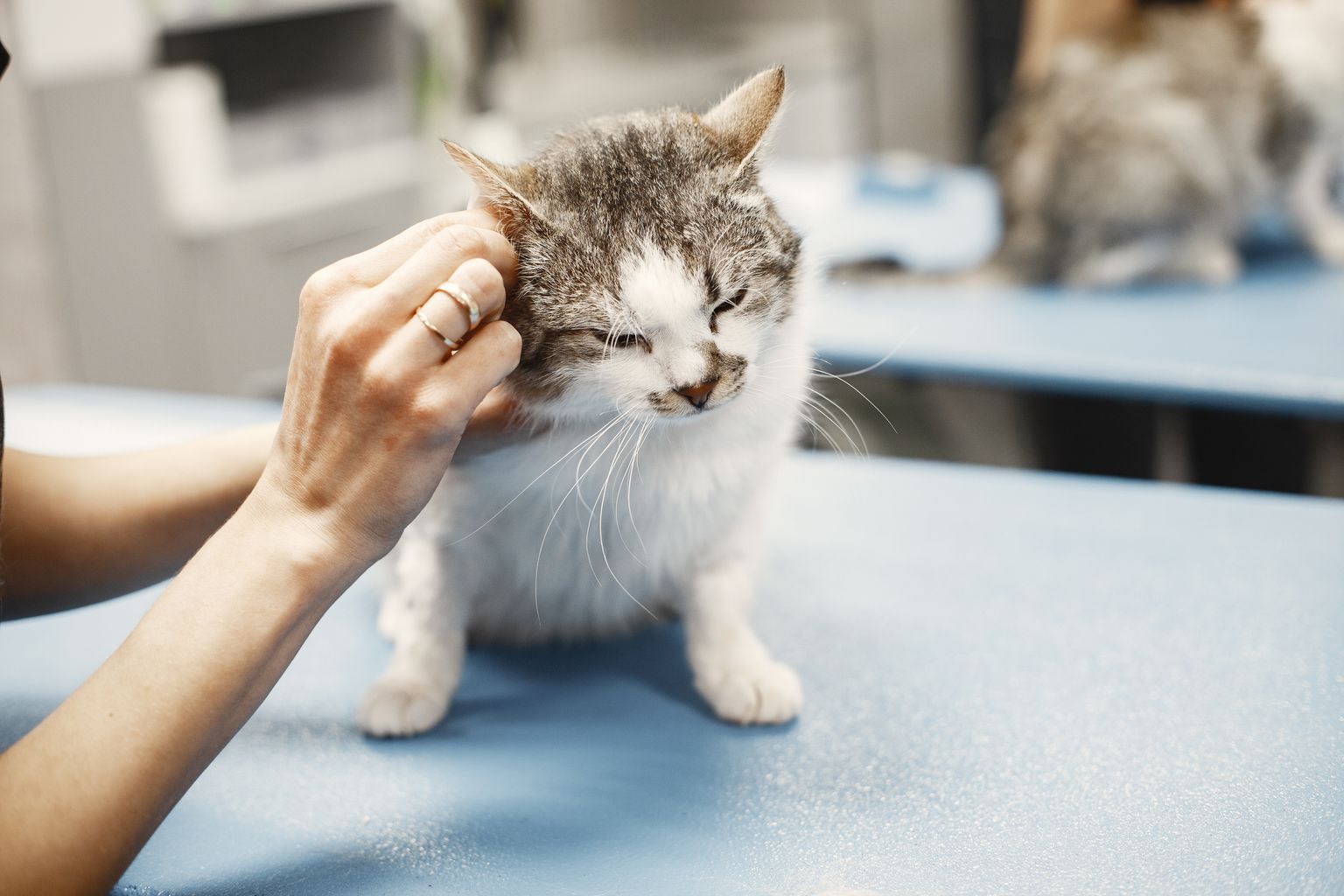
Your cat won’t stop scratching one ear, shakes their head every few minutes, and there’s dark, crumbly gunk inside the ear flap. That combination points straight at ear mites. Learning how to get rid of ear mites in cats comes down to four moves: clean the ears, kill the mites with a proven treatment, cover every pet in the home, and continue for the full three-week mite life cycle. Most failed treatments skip one of those four.
Here at Pet Products Guide we write practical pet care guides for everyday owners. We are not veterinarians, so please read our disclaimer and check with your vet before starting any treatment.
Quick answer: To get rid of ear mites in cats, have a vet confirm them, clean the dark debris from the ears, and use a mite treatment your vet prescribes, such as a spot-on or ear drops. Treat every pet in the home and keep going for the full three-week course.
What Are Ear Mites in Cats?
Ear mites are tiny parasites called Otodectes cynotis that live in a cat’s ear canal and feed on wax and skin debris. They spread fast between pets through close contact, and they cause intense itching. Kittens, outdoor cats, and cats from shelters or multi-pet homes catch them most often.
The Merck Veterinary Manual calls Otodectes cynotis “a common cause of otitis externa, especially in cats but also in dogs.” Otitis externa is the medical name for inflammation of the outer ear canal. Vets also call an ear mite infestation otodectic mange.
The mites can’t jump or fly, but they crawl well. According to Dr. William Miller Jr., a veterinary dermatology professor quoted by the Cornell Feline Health Center, a mite that lands on a cat’s back usually gets groomed off and swallowed. One that reaches the ear canal is safe, because paws and tongues can’t get in there.
Cats also pick up mites from shared bedding, grooming tools, and boarding facilities. Dogs and ferrets can carry them too. If you’ve brought home a new kitten, an ear check belongs on the first vet visit, along with the other basics in our guide on how to take care of a kitten.
How Do You Know If Your Cat Has Ear Mites?
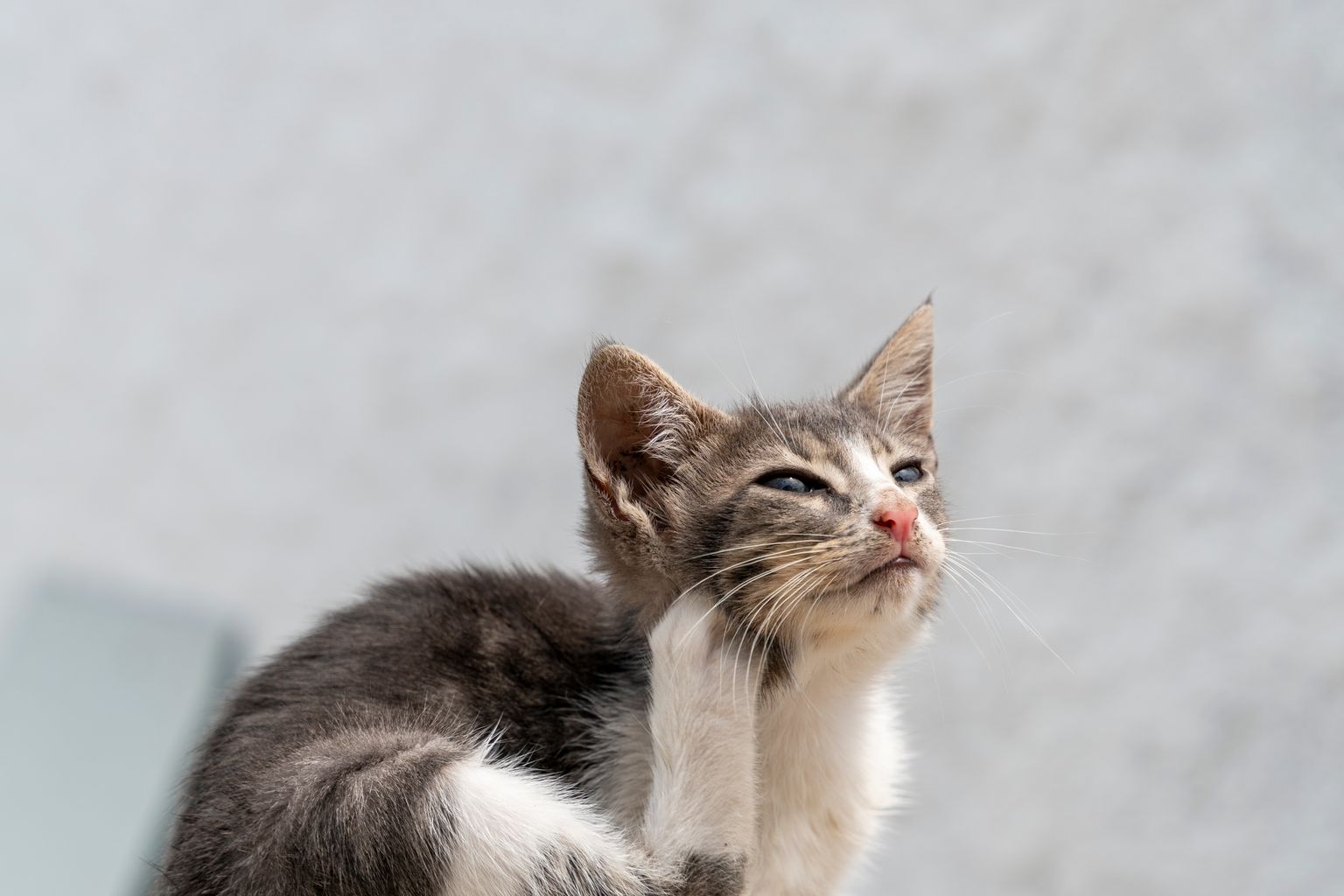
The clearest sign of ear mites is dark brown or black debris that looks like coffee grounds, paired with nonstop ear scratching and head shaking. Mites can affect one or both ears. A vet confirms them by looking through an otoscope or checking a swab of ear debris under a microscope, since several other ear problems look similar.
Common Signs of Ear Mites
Watch for these signs, especially in a kitten or a cat that recently met another animal:
- Scratching at the ears, sometimes hard enough to leave scabs
- Frequent head shaking
- Ears held flat or drooping
- Dark, dry, crumbly debris in the ear canal
- A bad smell from the ears
- Red, inflamed skin inside the ear flap
The Merck Veterinary Manual lists “head shaking, continual ear scratching, and ear droop” as the classic signs, and notes the itch “is variable but may be severe.” Some cats barely react, so a calm cat can still have mites.
Ear Mites vs. Dirty Ears vs. Ear Infection
| What you see | Ear mites | Dirty ears (normal wax) | Ear infection |
|---|---|---|---|
| Debris | Dark brown to black, dry, coffee-ground texture | Light tan or brown, small amount | Yellow, brown or black, often wet or greasy |
| Itch level | Intense | Little or none | Moderate to intense, often painful |
| Smell | Sometimes | None | Often strong |
| Ears affected | One or both | Both | One or both |
| What to do | Vet check, then mite treatment | Gentle cleaning if needed | Vet check for the right medication |
Mites and infections often show up together, because scratching breaks the skin and lets bacteria and yeast in. That overlap is the main reason a vet check comes first.
How to Get Rid of Ear Mites in Cats: Step by Step
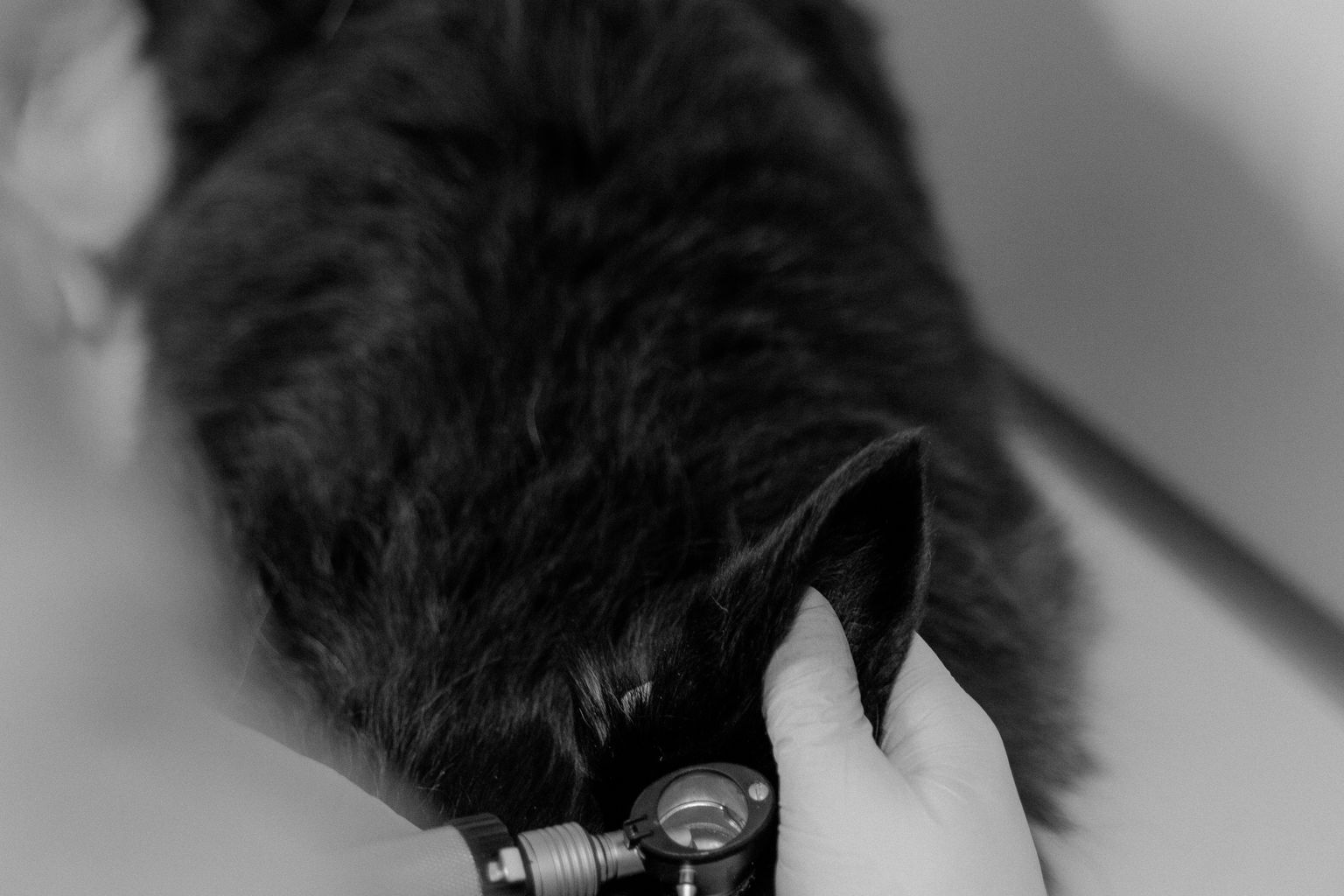
To get rid of ear mites in cats, follow four moves in order: Clean, Kill, Cover, Continue. Clean the debris out, kill the mites with a proven treatment, cover every pet in the home, and continue for at least three weeks. The steps below break those moves into seven practical tasks.
- 1
Step 1: Get a vet diagnosis
A vet confirms the mites, checks that the eardrum is intact, and looks for a secondary infection. That last point matters, because some ear products are unsafe when the eardrum is damaged. Tell your vet about every other pet in the house at this visit, so you leave with a plan that covers all of them.
- 2
Step 2: Clean the ears gently
Cornell’s Dr. Miller says treatment “generally begins with a thorough cleaning of the cat’s ears to remove any wax or debris that may shield the mites from topical medications.” Use a cleaner your vet recommends. Fill the canal, massage the base of the ear for 20 to 30 seconds, let your cat shake, then wipe the outer ear with a cotton pad. Keep cotton swabs out of the canal, since they push debris deeper.
- 3
Step 3: Use the mite treatment your vet prescribes, exactly as labeled
Most cats get a single-dose spot-on or a course of ear drops. Follow the label or your vet’s schedule to the letter, and never use a dog product on a cat. For ear drops, a towel helps: wrap your cat snugly with only the head out, hold the ear flap up, and give the drops before your cat has time to object. Ask your vet to show you the first time, so you know how far the nozzle should go.
- 4
Step 4: Treat every cat and dog in the home
The Merck Veterinary Manual says “affected and in-contact animals should receive appropriate parasiticide treatment in the ears.” A pet with no symptoms can still carry mites and pass them straight back. If your dog needs an ear clean while you’re at it, our guide on how to clean dog ears walks through it.
- 5
Step 5: Finish the full course
Stop early and the mites come back. The veterinary reference WikiVet notes that eggs hatch into larvae about four days after they’re laid, and the full life cycle takes three weeks. A treatment has to keep working until every egg that was already in the ear has hatched and died.
- 6
Step 6: Wash bedding, blankets and grooming tools
Use hot water for anything washable, and vacuum the spots where your cat sleeps. Mites can pass between pets on shared items.
- 7
Step 7: Go back for the recheck
Your vet looks in the ears again after treatment to confirm the mites are gone and any infection has cleared. Keep that appointment even if your cat seems fine.
The pattern behind all seven steps is simple. A fix only works if it outlasts the three-week life cycle and reaches every animal the mites can hop to.
What Kills Ear Mites in Cats? Treatments Compared
Prescription parasite treatments kill ear mites in cats most reliably. Vets mainly use spot-on products absorbed through the skin, such as selamectin or imidacloprid with moxidectin, and ear drops containing ivermectin or milbemycin. Ear cleaning supports all of them by removing the debris mites hide in.
The Merck Veterinary Manual lists topically applied selamectin and moxidectin as approved options for ear mites, and adds that “ear cleansing with an appropriate ceruminolytic agent is indicated as part of any treatment.” A ceruminolytic is an ear cleaner that breaks down wax. Cornell’s Dr. Miller says there are “many topical, oral, and systemic agents” and that “most, such as ivermectin, are highly effective.”
| Treatment type | Active ingredients (examples) | How it’s given | Prescription? | Best for |
|---|---|---|---|---|
| Spot-on (absorbed through skin) | Selamectin; imidacloprid + moxidectin | Applied to the skin at the back of the neck | Yes | Cats that fight ear handling; homes that also need monthly flea and worm control |
| Ear drops | Ivermectin; milbemycin | Placed in the ear canal | Yes | Cats that accept ear handling; vet-guided treatment of one cat |
| Infection medication | Combination ear ointments | Placed in the ear canal | Yes | Cats with a bacterial or yeast infection on top of mites |
| Over-the-counter ear mite drops | Varies by brand | Placed in the ear canal, repeated over days | No | Mild cases a vet has already confirmed, in cats above the label’s age limit |
| Ear cleaner | Varies by brand | Fills the canal, then wiped out | No | Every case, to clear debris before medication |
For most owners figuring out how to get rid of ear mites in cats, spot-ons are the easiest choice, because you never have to wrestle the ear open. They also cover other parasites, which helps in a multi-pet home.
One hard rule: keep dog flea and tick products away from cats. Many contain permethrin, which is highly toxic to cats and can cause drooling, tremors and seizures. Cats can even react after grooming a recently treated dog.
Can You Get Rid of Ear Mites in Cats Without Going to the Vet?
You can buy over-the-counter ear mite drops in US pet stores, but treating without a vet visit carries real risk. Ear mites look a lot like yeast and bacterial infections, some drops are unsafe if the eardrum is damaged, and many labels set minimum ages and weights for kittens.
A vet visit fixes three problems at once. It confirms the mites are really there, it checks the eardrum, and it catches infections that over-the-counter drops won’t treat. Prescription spot-ons also usually need fewer applications than store drops.
Kittens need extra care. Labels set a minimum age and body weight, and some prescription spot-ons start at 9 weeks and 2 pounds. Read the box before you buy anything, and call your vet for a kitten that’s younger or smaller than the label allows.
Before you buy store drops, check four things on the label:
- Species: the box should say it’s for cats. Skip anything labeled for dogs only.
- Age and weight: your cat must meet the minimums printed on the box.
- Schedule: note how often to apply it and for how many days, then mark the dates on a calendar.
- Warnings: look for any line about damaged eardrums or ear discharge, which means a vet should look first.
If you do use store drops for a vet-confirmed case, follow the label schedule and keep going for the full three weeks. Treat every pet in the house. Call your vet if the itching isn’t easing within a week or two, or if your cat cries, paws at the ear harder, or tilts the head after a dose.
Do Home Remedies Work for Ear Mites in Cats?
Most home remedies for ear mites in cats work poorly or not at all, and a few cause harm. Oils can smother some mites over several weeks but leave eggs untouched, while vinegar, hydrogen peroxide and rubbing alcohol mainly sting inflamed skin. Prescription treatments clear mites faster and more completely.
Cornell’s Dr. Miller does mention one old-time remedy: “A few drops [of baby oil] put into an affected ear several times a day for a month or so will usually smother the mites.” That’s a month of drops several times a day, and it does nothing for a secondary infection. Most owners and cats find a single prescription spot-on far easier.
| Remedy | Kills mites? | Risk | Verdict |
|---|---|---|---|
| Baby oil or mineral oil | Can smother mites with weeks of use | Mess; misses infection | Slow; ask your vet first |
| Olive oil | Same smothering idea as baby oil | Can trap debris; misses infection | Slow and unreliable |
| Apple cider vinegar | No good evidence | Stings raw, scratched skin | Skip it |
| Hydrogen peroxide | No good evidence | Irritates the ear canal | Skip it |
| Rubbing alcohol | No good evidence | Stings and dries the skin; painful if the eardrum is damaged | Skip it |
| Essential oils | No good evidence | Many are toxic to cats | Avoid |
| Garlic | No good evidence | Toxic to cats | Avoid |
The pattern is the same as with every treatment: anything that doesn’t keep working through the full three-week life cycle lets newly hatched mites restart the infestation.
How Long Does It Take to Get Rid of Ear Mites in Cats?
Getting rid of ear mites in cats takes at least three weeks, because the mite life cycle runs about three weeks from egg to adult. Your cat’s itching usually eases within days of starting treatment. The mites themselves are gone only after every egg already in the ear has hatched and died.
The timeline explains why stopping early fails. Eggs hatch into larvae about four days after they’re laid, so a treatment that stops after a few days misses the next wave. Some prescription spot-ons last a month on one dose, which covers the full cycle; drops and home care need daily or repeated use for the whole period.
Here’s roughly what the three weeks look like:
- Day 1: your vet confirms the mites, the ears get cleaned, and treatment starts for every pet.
- First few days: scratching and head shaking start to ease as adult mites die.
- Around day 4 onward: eggs laid before treatment keep hatching, so the treatment has to still be working.
- Day 21 and beyond: the life cycle is complete, and your vet rechecks the ears.
Call your vet if scratching hasn’t improved after a week, if the debris keeps coming back after the course ends, or if your cat seems in pain. A second dose or a different treatment may be needed.
How to Keep Ear Mites From Coming Back
The best way to keep ear mites from coming back is a monthly parasite preventive that lists ear mites on its label, used on every pet in the home. Regular ear checks, quarantining new pets until a vet clears them, and washing shared bedding cover the rest.
- Ask your vet about a monthly preventive. Several prescription spot-ons control ear mites along with fleas and worms.
- Check ears weekly. A quick look and sniff while you’re petting your cat catches dark debris early.
- Keep new pets apart at first. Get a new cat or kitten checked before they share beds and bowls with your other pets.
- Treat parasites as a household problem. Ear mites and fleas both spread between cats and dogs, so plan prevention for everyone. Our guide on how to get rid of fleas on dogs covers the dog side.
- Wash shared bedding in hot water every week or two in multi-pet homes.
Outdoor cats meet other animals all the time, so they’re the ones most likely to pick up mites again. Cornell notes that infestation is most common among outdoor cats, whether they’re fighting or cuddling up with other cats.
When to See a Vet Right Away
See a vet right away if your cat has bleeding or pus from the ear, a swollen ear flap, a head tilt, loss of balance, or walks in circles. Those signs suggest a deeper infection or a damaged eardrum. A kitten with mites who’s lethargic or not eating also needs prompt care.
Cornell warns that untreated mites can lead to otitis externa that spreads to the middle and inner ear and damages the eardrum, “which can permanently affect the animal’s hearing and sense of balance.” Constant scratching can also cause an aural hematoma, a blood-filled swelling of the ear flap.
A cat who keeps scratching after the full course also needs another visit. The problem may be an infection, an allergy, or mites caught again from another pet.
If your cat seems in severe pain or can’t keep their balance, call your vet or an emergency clinic now.
The Bottom Line
Knowing how to get rid of ear mites in cats spares your cat weeks of itching, and the fix is very doable. Get a vet to confirm them, clean the debris out, use a proven prescription treatment, treat every pet in the house, and keep going for the full three weeks. Skipping any of those steps is what lets mites come back. For a cat who hates having their ears touched, ask your vet whether a spot-on fits, since it goes on the back of the neck and covers the whole cycle with less handling. For more practical care advice, browse our health and grooming guides.
Frequently Asked Questions
Can ear mites in cats spread to humans?
Ear mites spread easily between cats, dogs and ferrets, but human cases are very rare. A few medical case reports describe Otodectes cynotis in a person’s ear. Washing your hands after handling your cat and treating every pet in the home keeps the risk low.
Can I cuddle my cat with ear mites?
Yes, you can cuddle your cat while they have ear mites, since the mites rarely bother people. Wash your hands afterward, especially after touching the ears or applying medication. Keep your cat away from other pets’ beds until treatment is underway, because mites spread between animals through close contact.
Can ear mites infest a house?
Ear mites live on animals, mainly in the ear canal, and they don’t set up colonies in a house the way fleas can. They can pass between pets on shared bedding and grooming tools, though. Washing bedding in hot water and vacuuming sleeping spots during treatment is enough for most homes.
Will ear mites eventually go away?
No, ear mites don’t go away on their own. The mites keep breeding in the ear canal, and the scratching gets worse. Cornell warns that untreated mites can cause an outer ear infection that spreads deeper and damages the eardrum, which can permanently affect hearing and balance. Treatment is the only reliable fix.
What color are ear mites?
Ear mites are about the size of a pinhead, so most owners never spot them, though Cornell notes you can sometimes see them moving. What you do see is their debris: a dark brown to black, dry, crumbly material that looks like coffee grounds. Light tan wax is usually normal, while dark gunk points toward mites or infection.
What kills ear mites in cats instantly?
Nothing kills ear mites in cats instantly in a way that ends the problem. Prescription treatments such as selamectin, moxidectin or ivermectin start killing mites quickly, and itching often eases within days. Eggs keep hatching for about three weeks, though, so the treatment has to cover that whole life cycle.
What can be mistaken for ear mites in cats?
Yeast infections, bacterial ear infections, heavy wax build-up, allergies and ear polyps can all look like ear mites. Each causes itching, head shaking or dark discharge. Mites and infections also often appear together. A vet can tell them apart with an otoscope or a microscope check of the ear debris.