

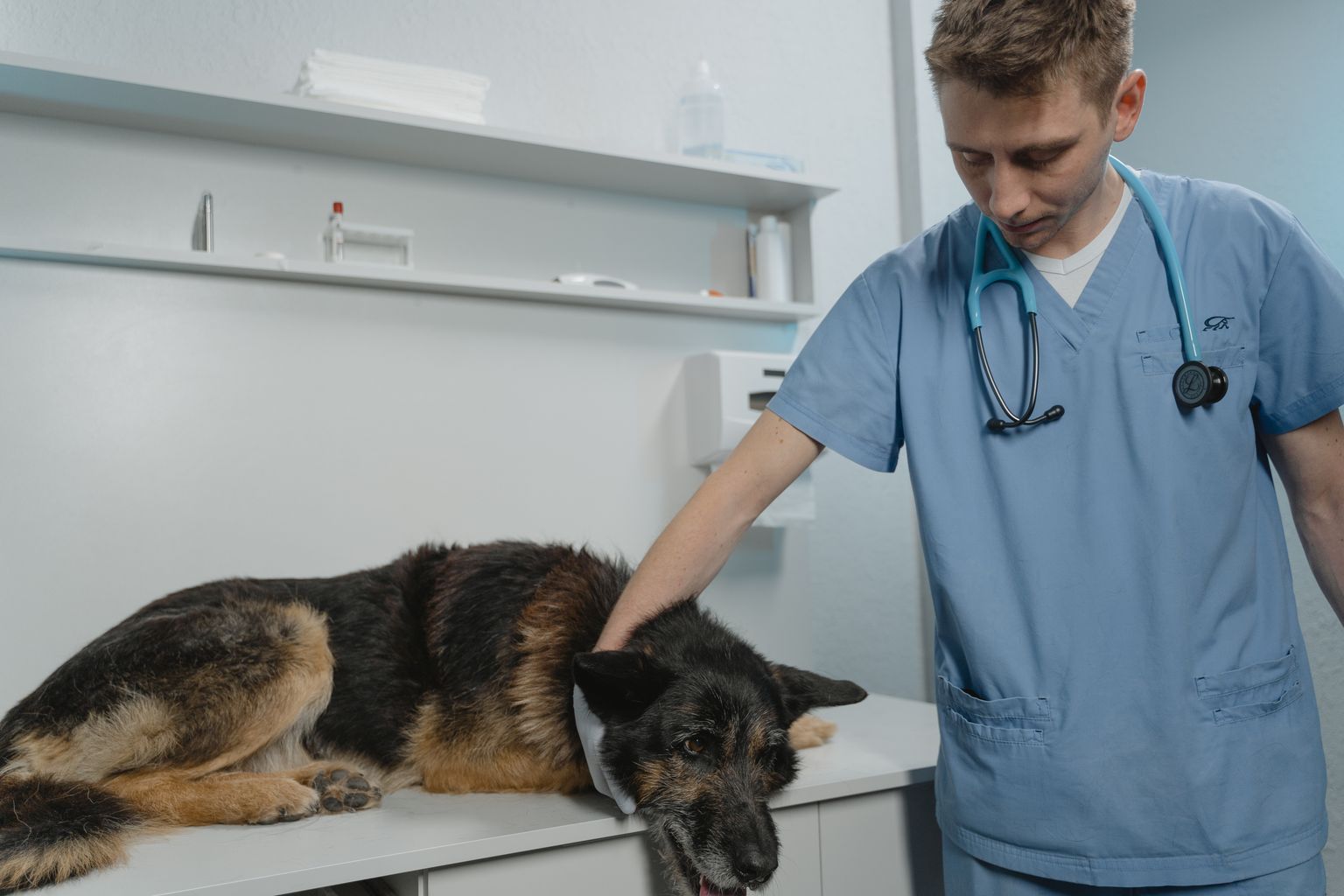
Disclaimer: This blog is for general information only and isn’t a substitute for advice from your veterinarian. If your dog seems unwell after a tick bite, contact your vet promptly.
Finding a tick buried in your dog’s fur is unpleasant, but it’s a quick fix once you know the method. The safest way to remove a tick from a dog is to grip it with fine-tipped tweezers as close to the skin as you can get, then pull straight up with slow, steady pressure until it lets go. If you have a tick hook, slide it under the tick and rotate it out instead.
Do it as soon as you spot the tick, since the longer it feeds, the more chance it has to pass on an infection. Skip the old tricks like smothering it in petroleum jelly or touching it with a hot match. Those make the tick more likely to release fluid into the bite rather than less. Below you’ll find exactly what to use, how to handle a tick head that breaks off, and which signs mean your dog should see a vet.
How do dogs get ticks in the first place?
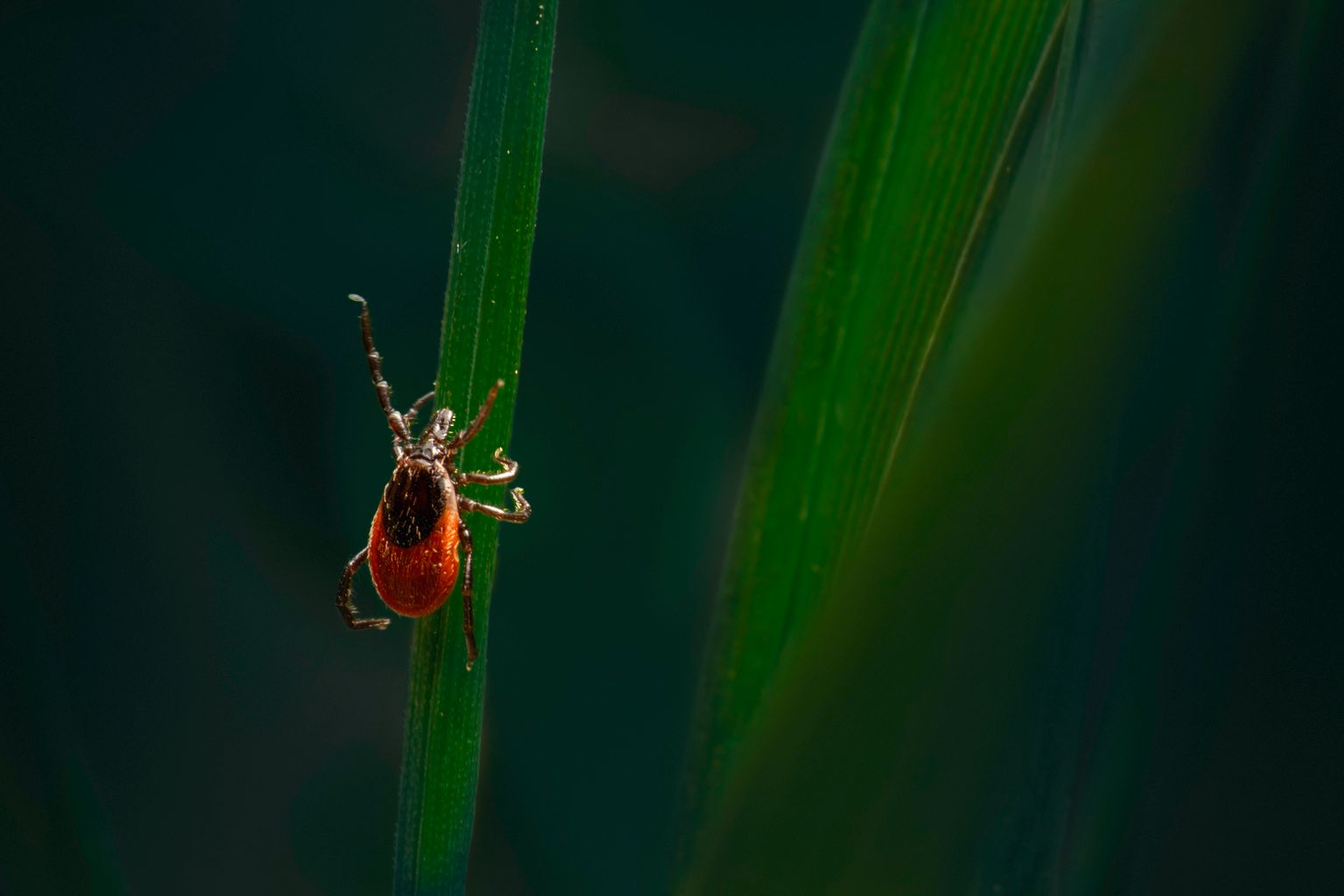
Ticks can’t jump or fly. They climb to the tips of long grass, bracken and low shrubs, hold on with their back legs and stretch their front legs out, waiting for something warm to brush past. Scientists call this questing, and a tick can sit like that for a long time before an animal comes along. When your dog pushes through that grass, the tick grabs the fur, crawls to a thin-skinned spot and bites.
That’s why ticks turn up most often after walks through long grass, woodland edges, farmland and overgrown paths. Your own garden counts too if the lawn edges are left long. Tick season is usually spring through autumn, but in mild climates some species stay active almost all year.
How do you find ticks on your dog?
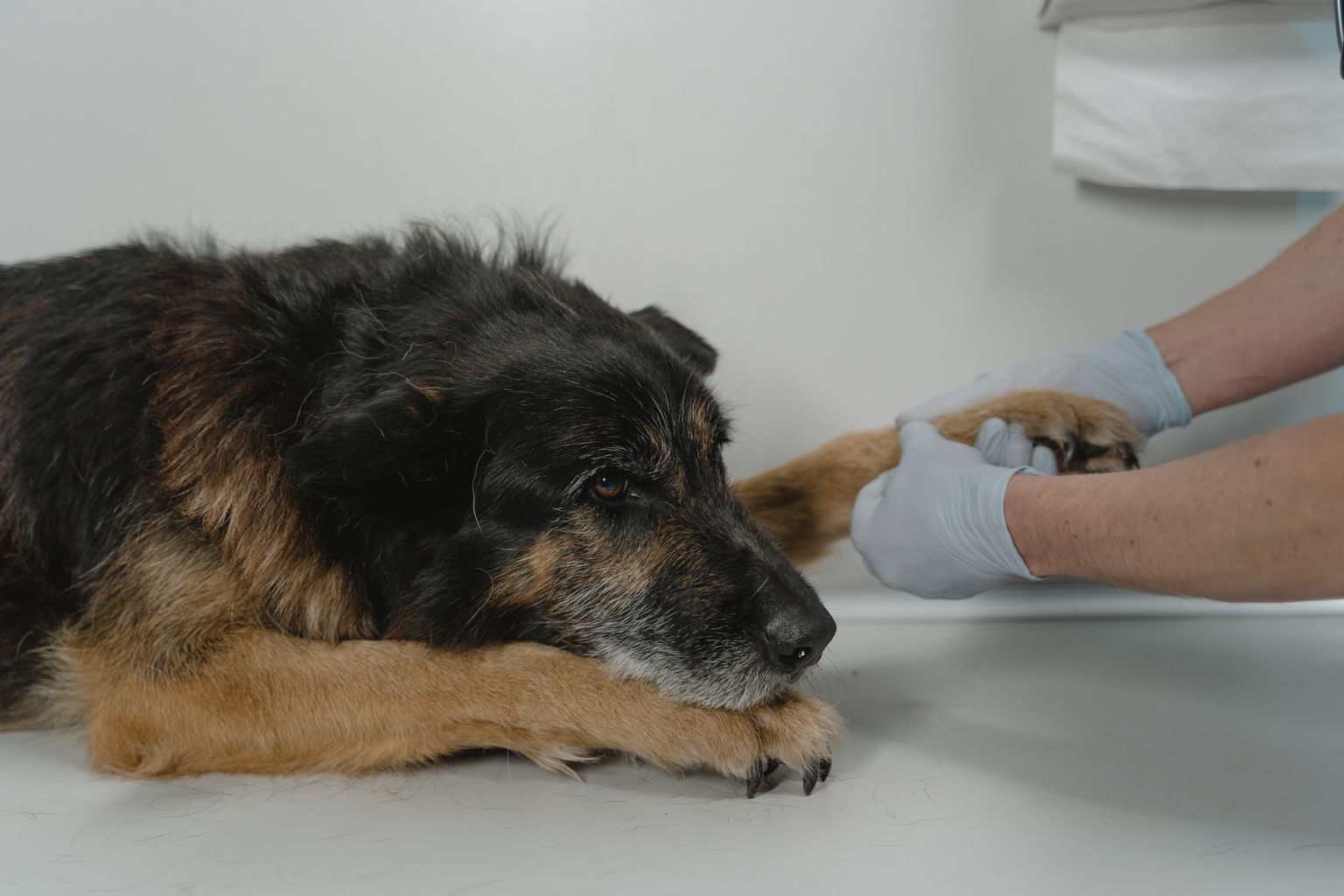
Run your fingertips slowly through your dog’s coat, pressing down to the skin, and feel for a small bump the size of a sesame seed up to a coffee bean. Looking alone isn’t enough. A tick that has just attached can be as small as a poppy seed, and on a dark or thick coat you’ll feel it long before you see it. When removing ticks from dogs, the hardest part is often finding all of them.
Ticks like warm, tucked-away places, so check these spots first:
- Inside and around the ears, including the folds
- Under the collar and along the neck
- Around the eyes, lips and chin
- Between the toes and pads
- In the armpits and groin
- Under the tail and around the bottom
If your dog has a black or very fluffy coat, a short trim in spring makes ticks much easier to find. You can also part the fur with a fine comb and use your phone torch. A quick ear look fits naturally into the same routine you use to clean your dog’s ears.
Is it a tick or a skin tag?
Look for legs. A tick has small legs right next to the skin at the head end, while a skin tag or wart is just skin with no legs at all. An engorged tick often looks like a grey or brownish bean, and it may feel hard. If you can’t tell, leave it alone and ask your vet. Yanking at a skin tag hurts.
What do you need to get a tick off a dog?
Gather everything before you start so you aren’t hunting for a jar with a tick wriggling in your tweezers. To get a tick off a dog safely you’ll want:
- Fine-tipped tweezers or a tick removal tool. Blunt household tweezers tend to squash the tick or tear it in half.
- Disposable gloves. Ticks can carry infections that affect people too, so avoid handling them with bare fingers.
- A small jar or zip bag with rubbing alcohol to drop the tick into.
- Soap and water or antiseptic for the bite and your hands.
- Treats and a helper if your dog is wriggly. One person holds and feeds, the other works.
Good light matters more than people expect. Work near a window or use a torch, and a magnifying glass helps with tiny ticks.
How do you remove a tick from a dog with tweezers?
Here’s how to remove a tick from a dog with tweezers, following the method the CDC recommends for tick removal:
- Part the fur. Spread the hair so the tick and the skin around it are clearly visible. Wet fingers or a little water help flatten long hair.
- Grip at the skin line. Hold the tweezers almost flat against your dog’s skin and grab the tick by its head and mouthparts, as close to the skin as possible. Don’t grab the fat body.
- Pull straight up, slowly and steadily. Keep even pressure and don’t twist, jerk or rock the tweezers. Twisting with tweezers is what usually snaps the head off. It can take a few seconds for the tick to release, so be patient.
- Check what came out. Look at the tick. If you can see the head and legs, you got it all.
- Drop it in alcohol. Put the tick in your jar or bag of rubbing alcohol and seal it.
- Clean up. Wash the bite with mild soap and water or a pet-safe antiseptic, then wash your hands and the tweezers.
Give your dog a treat at the end. You want the next tick check to feel like a good thing.
Is removing a large engorged tick any different?
Same method, but take extra care not to squeeze. A fat, engorged tick is easy to grab by the body, and that’s exactly the mistake. Squeezing pushes the tick’s gut contents back into your dog. Slide the tweezer tips down past the body to the head at skin level before you pull.
How do you get rid of very small ticks?
Tiny nymph ticks need fine, pointed tweezers and a steady hand. A magnifier helps a lot here. If there are dozens of small ticks, which can happen after a walk through heavy undergrowth, call your vet. They may suggest a fast-acting tick treatment rather than picking each one off.
How do you use a tick removal tool?
A dedicated tick removal tool, usually a small plastic hook with a slot at one end, is the easiest option for most owners and is what we’d keep in a dog walking bag. These hooks work differently from tweezers. You slide the slot under the tick from the side until the tick sits snugly in the notch, then rotate the hook two or three full turns in one direction and lift gently. The turning motion loosens the mouthparts so the tick comes out whole.
Hooks often come in two sizes, a small one for nymphs and a larger one for adult or engorged ticks. They’re cheap, so it’s worth having one at home and one in the car.
What should you never use to remove a tick?
Plenty of online advice tells you to make the tick “back out” on its own. It doesn’t work, and it can make things worse. The CDC specifically warns against petroleum jelly, heat and nail polish, because they can stress the tick into releasing more saliva and gut fluid into the bite. Avoid these as well:
- A lit match or hot needle. You’re very likely to burn your dog.
- Essential oils, especially tea tree oil. Tea tree oil is toxic to dogs even in small amounts, and it won’t loosen the tick anyway.
- Alcohol, dish soap or vinegar poured on the tick. Fine for disposal, useless for removal.
- Your fingers. Pinching with fingers almost always squeezes the body.
So when someone asks what they can put on a dog to remove a tick, the honest answer is nothing. Mechanical removal is the safe way to do it.
What if the tick head gets stuck in your dog?
If the head or mouthparts break off and stay in the skin, don’t panic and don’t dig. Trying to pick them out with a needle or tweezers causes more damage and raises the risk of infection than the fragment itself does. Clean the spot, leave it, and let your dog’s body push it out as the skin heals.
A small, firm bump at the bite site is normal for a week or two. Call your vet if the area becomes very red, swollen, hot, oozing or painful, or if the bump keeps growing.
How long does a tick need to be attached to make your dog sick?
It depends on the infection. Lyme disease bacteria usually need the tick to stay attached for roughly 24 to 48 hours, according to the Animal Medical Center in New York, but the AKC notes that some other tick-borne infections can pass within a few hours. That’s why fast removal matters more than perfect technique. A slightly messy removal today beats a perfect one tomorrow.
Keep the tick sealed in alcohol and label the bag with the date. If your dog gets sick later, your vet can identify the species, which helps narrow down which disease to test for.
When should you call the vet after removing a tick?
Watch your dog closely for the next few weeks. Signs of tick-borne illness can take one to three weeks to show up, and Lyme disease in dogs can take longer. Call your vet if you notice:
- Fever, low energy or loss of appetite
- Lameness that moves from leg to leg, or swollen, painful joints
- Swollen lymph nodes
- Pale gums, bruising or nosebleeds
- Redness, swelling or discharge at the bite site
Treat these as an emergency and go straight to the vet: weakness or wobbling in the back legs, a change in your dog’s bark, gagging or vomiting, or difficulty breathing. Those can be signs of tick paralysis, which is caused by toxins in certain ticks, such as the paralysis tick in eastern Australia and some dog ticks in North America.
How can you protect your dog from ticks?
You can’t keep an outdoor dog away from ticks completely, but you can make bites rare and short. Check your dog every day during tick season, especially after walks in long grass, because a tick removed within hours is far less of a risk than one found after two days.
The most effective protection is a vet-recommended tick preventive. Options include monthly chews, spot-on treatments and long-acting collars, and the right one depends on your dog’s age, weight, health and the ticks in your area. Ask your vet whether a Lyme vaccine makes sense where you live too; we cover how it fits into the core and lifestyle shots in our guide to pet vaccinations. Natural sprays and home remedies may repel a few pests briefly, but none of them reliably stop ticks.
At home, keep lawn edges short, clear leaf litter, and wash dog bedding regularly. A regular bath schedule also gives you another chance to spot hitchhikers, and our post on how often you should bathe your dog helps you find the right rhythm without drying out their skin.
Conclusion
Learning how to remove a tick from a dog comes down to a few simple habits. Find the tick fast, grip it right at the skin with fine-tipped tweezers or a tick hook, then pull straight up (or rotate, if you’re using a hook) and drop it into a sealed jar of rubbing alcohol. If the head stays behind, leave it alone and let the skin push it out. Skip the petroleum jelly, hot matches and essential oils, because none of them make a tick let go safely.
For the next few weeks, watch for fever, limping, low energy or a sore bite site, and call your vet if anything seems off. Pair daily tick checks with a preventive your vet recommends, and most ticks won’t stay attached long enough to cause trouble. You’ll find more practical dog care guides like this one on Pet Products Guide.
Frequently Asked Questions
Can I remove a tick from my dog at home?
Yes. Most ticks are easy to remove at home with fine-tipped tweezers or a tick hook. See your vet if the tick is in a hard-to-reach place like the eye, if your dog won’t let you near it, or if there are lots of ticks.
What will draw a tick head out of a dog?
Nothing you apply will draw it out. Leave the fragment alone, keep the area clean, and your dog’s skin will push it out as it heals. Call your vet if it looks infected.
Should you twist a tick when removing it from a dog?
Not with tweezers. Pull straight up with steady pressure, because twisting with tweezers often breaks the head off. Hook-style tick tools are the exception, since they’re designed to be rotated.
Does Vaseline make a tick come out?
No. Petroleum jelly doesn’t make ticks let go quickly, and smothering the tick may cause it to release more fluid into the bite. Remove it mechanically instead.
How do you dispose of a tick after removing it from a dog?
Drop it into a sealed jar or bag with rubbing alcohol, or wrap it tightly in tape. Never crush it with your fingers. Keeping it sealed and dated is useful in case your dog gets sick later.
Can a tick bite on a dog make people sick?
The tick on your dog can move to you, so wear gloves and check yourself after removing it. Your dog can’t pass Lyme disease directly to you, but both of you can be bitten by ticks from the same walk.
