

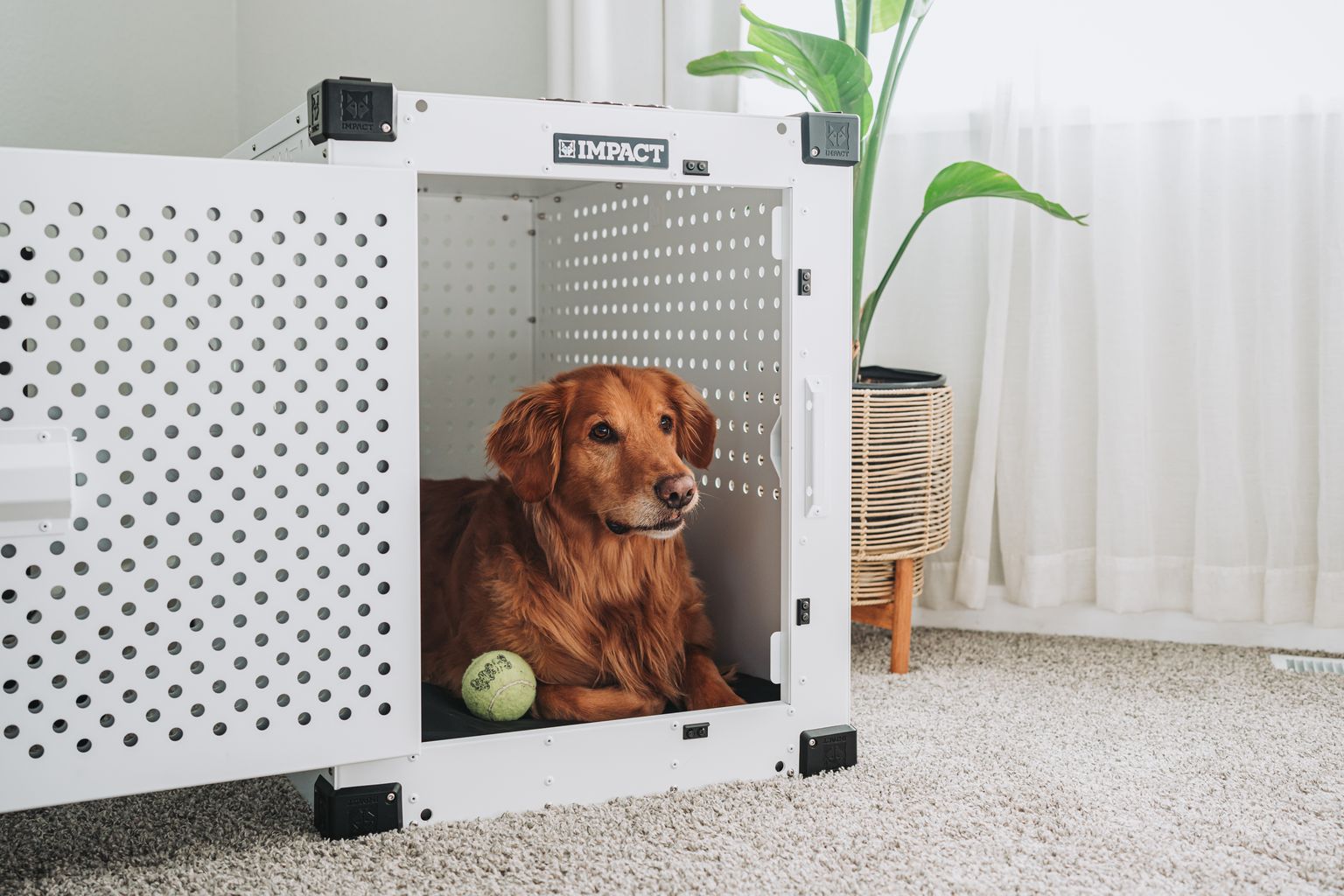
Crate training a dog comes down to one idea: the crate has to become the place your dog chooses to go, long before you ever shut the door and leave. If you want to know how to crate train a dog without tears (yours or theirs), the method is simple. Pick a crate that fits, pair it with food and calm moments, close the door for a few seconds at a time, and stretch those seconds into minutes and then hours over a few days to a few weeks. Most problems people run into, like whining, refusing to go in, or accidents, trace back to moving faster than the dog is ready for. This guide walks through each stage in order, with time limits by age, a sample schedule, and fixes for the hiccups that come up along the way.
Why crate train a dog at all?
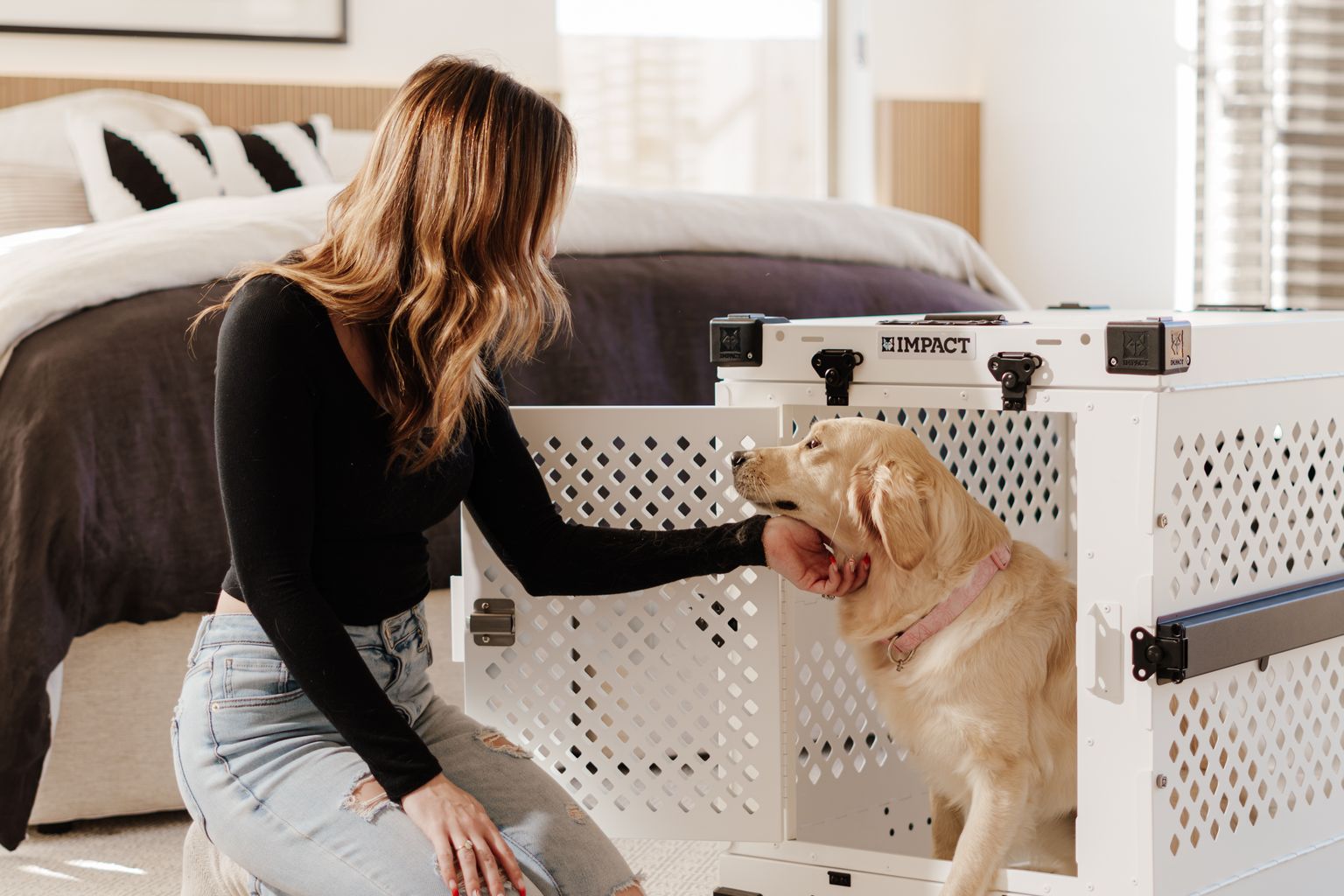
A crate gives your dog a small, predictable space of their own, and that helps in more ways than people expect. Dogs generally avoid soiling the spot where they sleep, so a properly sized crate is one of the most reliable house training tools you can use. It also keeps a curious puppy away from electrical cords, shoes, and the bin while you shower or cook.
Crate training a dog pays off later too. A dog who is relaxed in a crate handles vet stays, grooming appointments, car trips, and hotel rooms far better than one meeting a crate for the first time on a stressful day. If you are setting up your house for a new arrival, the crate fits right into a broader plan for creating a pet-friendly home, since it gives your dog a quiet base while they learn the rules of the rest of the house.
One thing a crate is not: a place to park a dog for most of the day, or a punishment. Use it that way and the dog learns to dread it, which undoes every step below.
How to choose the right crate before you start
The right crate makes training easier, and the wrong one can stall it. Get this part sorted before day one.
Size
Your dog should be able to stand up, turn around, and lie down stretched out. Much bigger than that and many puppies will use one end as a bathroom and sleep at the other. For a growing puppy, buy the crate that will fit their adult size and use a divider panel to block off the extra space, moving it back as they grow. The American Kennel Club’s crate training advice recommends exactly this approach, and it saves you buying three crates in a year.
Type
Each style suits a different kind of dog and household:
| Crate type | Best for | Watch out for |
|---|---|---|
| Wire | Puppies, warm homes, dogs who like to see out | Can feel exposed; add a cover over part of it |
| Plastic (airline style) | Travel, dogs who like a den feel | Less airflow; harder to clean in corners |
| Soft-sided fabric | Calm adult dogs, short trips | Easy to chew or claw through; not for puppies |
| Heavy-duty metal | Escape artists and strong chewers | Heavy and expensive |
If your dog resists one style, try another. Some dogs settle far better in a covered, den-like crate than an open wire one.
Placement
Put the crate somewhere your dog can still hear and see the family, like a corner of the living room, rather than a garage or spare room. At night, keep it in or near your bedroom for the first few weeks.
How to crate train a dog: step-by-step
Every dog moves through these stages at their own pace. A relaxed eight-week-old puppy might cover the first three steps in a weekend, while a nervous rescue might spend a week on step one. Both are normal.
Step 1: Introduce the crate with the door open
Set the crate up, prop or remove the door so it cannot swing shut and startle your dog, and put a soft towel inside. Sit beside it with a handful of small treats. Toss one near the entrance, then one just inside, then one at the back. Let your dog walk in and out freely. Do not push them in or close anything yet.
Between sessions, sneak a couple of tasty treats into the crate when your dog is not looking. Finding a surprise in there makes them check it on their own.
Step 2: Feed meals inside the crate
Food is the fastest way to build a good feeling about a space. Place the bowl right at the entrance at first, then a little farther back at each meal until your dog is eating at the very back. Once they eat calmly inside, close the door while they eat and open it the moment they finish.
Over the next several meals, leave the door shut a little longer after the bowl is empty, working up to about 10 minutes. If your dog whines to get out, you moved too quickly. Go back to a shorter time for a few meals.
Step 3: Add a cue and short closed-door sessions
Pick a word, such as “crate” or “bed,” say it, point to the crate, and reward your dog the moment they step in. Close the door, sit nearby for five to ten minutes, then let them out calmly. No big celebration when the door opens; the crate should be the place where good things happen, and coming out should feel ordinary.
Repeat this several times a day. Then start walking into another room for a minute or two before coming back. Humane World for Animals’ crate training guide suggests your dog is ready for the next stage when they can stay quietly for about 30 minutes while you are mostly out of sight.
Step 4: Give your dog something to do in there
A long-lasting chew turns crate time into the best part of the day. A rubber toy stuffed with wet food or kibble and frozen overnight can keep a dog busy for 20 minutes or more. Choose something sturdy that will not break into swallowable pieces; our roundup of the best dog toys for chewers covers options that hold up to strong jaws. Keep these special chews for crate time only, so they stay exciting.
Step 5: Practice short absences
Once 30 minutes with you nearby is easy, start leaving the house for short stretches. Crate your dog 5 to 20 minutes before you go so the crate is not linked to the jingle of your keys. Keep goodbyes and hellos low key. Begin with a quick trip to the mailbox, then a 15-minute errand, then longer outings.
Step 6: Move to overnight crating
For the first nights, keep the crate next to your bed. Puppies often need a bathroom trip in the night, and being close lets you hear them and reassures them that they are not alone. Once your dog sleeps through comfortably, you can move the crate a little at a time to wherever you want it long term.
Step 7: Keep the crate positive for life
Even after your dog is fully crate trained, keep tossing the occasional treat inside and leave the door open when you are home. Dogs who keep using their crate as a nap spot tend to stay comfortable in it.
How long can a dog stay in a crate?
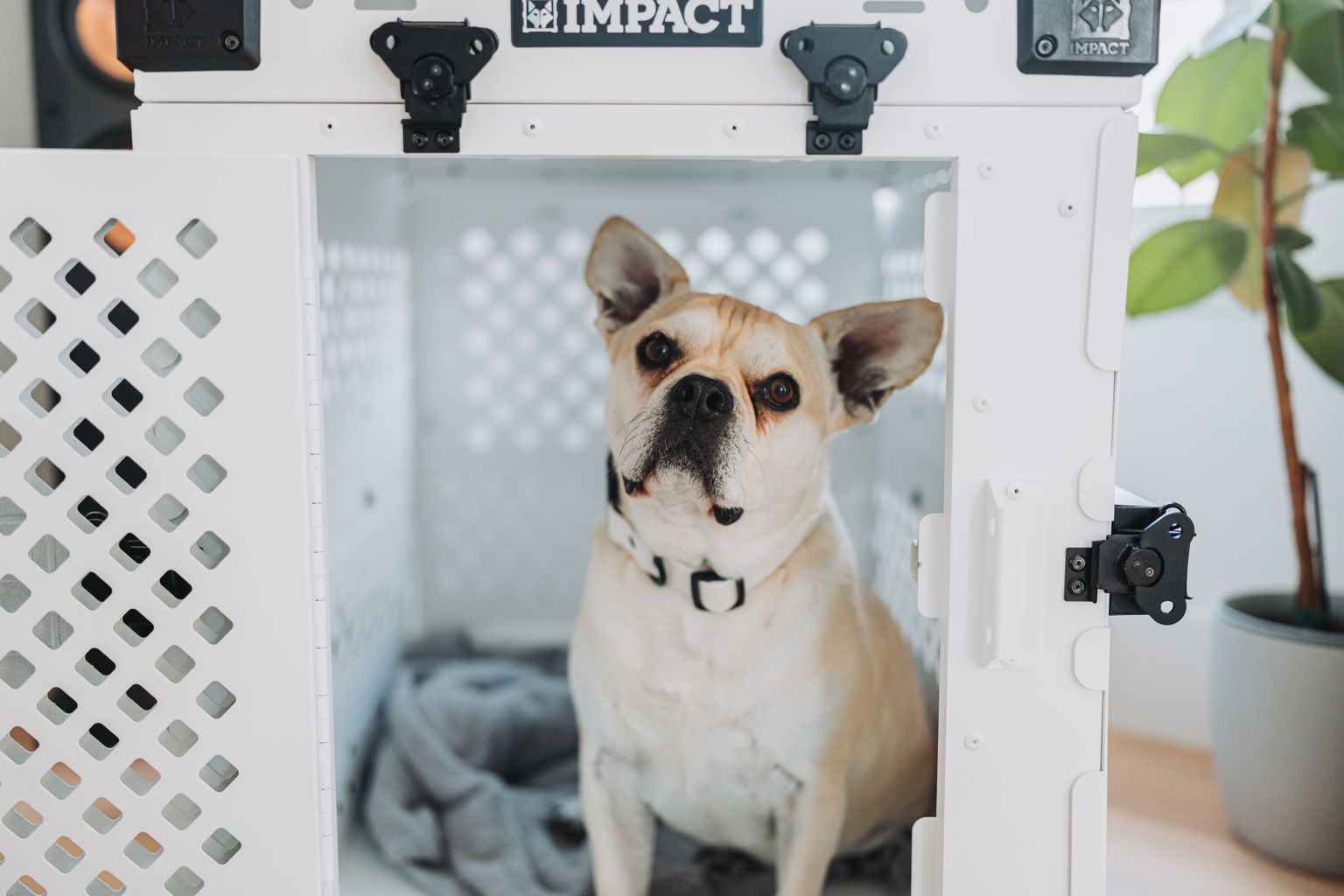
This is where many owners go wrong. Puppies physically cannot hold their bladder for long, and adult dogs need exercise and company. Humane World for Animals advises that puppies under six months should not be crated for more than three or four hours at a time, and adult dogs should not be crated for more than about four to five hours during the day.
Here is a practical guide for daytime stretches:
| Dog’s age | Daytime crate limit |
|---|---|
| 8 to 10 weeks | 30 to 60 minutes |
| 11 to 14 weeks | 1 to 3 hours |
| 15 to 16 weeks | 3 to 4 hours |
| 6 months and older | Up to 4 to 5 hours |
Overnight is different, because dogs sleep. Many puppies can manage several hours at night by around 12 to 16 weeks, but younger ones will usually need one bathroom break. If your workday is longer than these limits, arrange a dog walker, a neighbor, or a puppy-proofed pen with room to move instead of a longer crate stretch.
A simple crate training schedule for a new puppy
Routine speeds things up because your dog learns what comes next. Adjust the times to your own day, but keep the pattern:
- 7:00 am: Out to the potty spot, then breakfast in the crate.
- 7:30 am: Potty break, short play session.
- 8:30 am: Crate nap with a chew (one to two hours for a young puppy).
- 10:30 am: Potty break, training, play.
- 12:00 pm: Lunch in the crate, potty break, then another crate nap.
- 3:00 pm: Potty, walk or play, short training session.
- 5:30 pm: Dinner in the crate, potty break.
- 7:00 pm: Family time out of the crate, supervised.
- 10:00 pm: Last potty break, then bed in the crate.
- 2:00 am (young puppies): Quiet, boring bathroom trip and straight back to bed.
Always offer a bathroom break right before and right after any crate session.
How to crate train a dog at night
Crate training at night trips up a lot of people because tired owners give in to the crying. A few habits make the first week much smoother:
- Tire your dog out with play and a walk in the evening, but finish with 30 calm minutes before bed.
- Pick up water about an hour or two before bedtime for young puppies (unless your vet says otherwise).
- Take them out right before you go to sleep.
- Keep the crate beside your bed so you can drop your fingers to the door if they fuss.
- If they wake and cry, take them out on a leash, let them go, and bring them straight back with no play or chat.
If whining continues and you are sure they do not need to go out, wait for a few seconds of quiet before you respond. Letting them out mid-cry teaches that crying opens the door.
How to crate train an adult dog
Adult dogs and rescues can absolutely learn to love a crate, but they come with history. Some have never seen one, and others link it to a shelter or a bad experience. Follow the same steps, just slower, and let the dog set the pace. Feeding every meal in the crate with the door open for a full week is a good starting point.
Older dogs often hold their bladders well, which makes the house training side easier. Senior dogs with sore joints may prefer a larger crate or a gated area with a thick orthopedic bed instead of a tight space.
If an adult dog panics in a closed crate (drooling heavily, scratching at the door, bending bars), stop crate training and talk to your vet or a certified behavior professional. Dogs with true separation anxiety can injure themselves trying to escape, and a crate is not the fix for that.
Common crate training problems and how to fix them
Whining or barking
First, figure out which kind of whining you are hearing. Whining within a minute or two of going in usually means the dog is not ready for that much time yet, so go back a step. Whining after a long, quiet stretch is more likely a bathroom need, hunger, or boredom. Never punish whining, and never shout at a crated dog. For mildly anxious dogs, a vet-approved option from our list of the best calming treats for dogs can take the edge off while you work on training.
Refusing to go in
Make the crate more rewarding and stop asking for so much. Leave the door off, scatter treats inside, and feed every meal there for a few days. Check that nothing scary happened, like the door clanging shut on their tail.
Accidents in the crate
The crate is probably too big, the sessions too long, or the bedding too absorbent. Add a divider, shorten crate time, and use a hard surface or a thin mat until your puppy stays clean. The AKC suggests adding a full bed only once your dog reliably keeps the crate dry and does not shred fabric.
Escaping or chewing the crate
This usually points to stress or not enough exercise. Add more physical and mental activity before crate time, and if the chewing is frantic, treat it as possible anxiety rather than mischief.
Crate training mistakes to avoid
- Never use the crate as punishment. Your dog should never be sent to the crate in anger.
- Take the collar off first. Tags and buckles can snag on wire.
- Don’t rush the closed door. Skipping the feeding and short-session steps is the most common reason dogs end up hating the crate.
- Keep exits boring. A huge greeting when the door opens makes the crate feel like the boring part of life.
- Don’t crate for too long. Stick to the time limits above.
How long does it take to crate train a dog?
Expect anything from a few days to several weeks. Young puppies with no bad associations often settle into a crate within one to three weeks of consistent practice. Adult dogs, rescues, and naturally anxious dogs can take a month or more. Practicing several short sessions every day matters more than any single long session, and going back a step on a bad day is a normal part of the process.
Conclusion
Crate training works when your dog sees the crate as their own safe room rather than a cage. Start with the right size, make it the place where meals and chews happen, close the door for seconds before minutes, and respect the time limits for your dog’s age. Go slower with adult dogs and rescues, and stop and get professional help if you see real panic. For more practical guides on caring for your dog, browse the latest articles on Pet Products Guide.
Frequently Asked Questions
What is the fastest way to crate train a dog?
Feed every meal in the crate, keep a frozen stuffed chew just for crate time, and run several short closed-door sessions a day while you are home. Consistency across the day speeds things up far more than long sessions do. Many puppies are comfortable within a week or two this way.
Should I cover my dog’s crate?
Many dogs settle faster with a breathable cover over the top and sides, because it blocks visual distractions and makes the space feel den-like. Leave the front partly open for airflow and remove the cover if your dog tries to pull it through the bars.
Where should a dog sleep while crate training?
In the first weeks, put the crate in your bedroom or just outside the door. Being near you keeps a puppy calmer and lets you hear when they need a bathroom trip. Once they sleep through reliably, you can move the crate gradually to a permanent spot.
Should I ignore my dog crying in the crate at night?
Not completely. If your puppy has not been out in a few hours, take them straight to the potty spot and back without play. If they have just been out, wait for a short pause in the crying before you respond so they do not learn that noise opens the door.
Can you crate train an older dog?
Yes. Adult dogs can learn to like a crate at any age. Use the same steps at a slower pace, feed meals inside with the door open for several days, and watch for signs of panic, which call for a vet or behaviorist rather than more crate time.
Should I put water in my dog’s crate?
For short sessions, water is usually not needed. For longer stretches, a bowl or bottle that clips to the crate door prevents spills. With young puppies at night, many owners remove water an hour or two before bed to reduce night trips.

1 comment
[…] are a reasonable middle ground for socialization. Those weeks at home are also a good time to learn how to crate train a dog, so your puppy has a calm, safe spot while outings stay […]