

Pet hair is a lot easier to stop at the source than to chase around the house once it has settled into the sofa, the rug, and your favorite black sweater. If you want to know how to prevent pet hair from taking over, the short answer is to catch loose fur on your pet before it falls, give that fur fewer places to cling, and clean the spots where it collects on a fixed schedule. Brushing a few times a week, washing pet bedding weekly, covering the furniture your pet uses most, and running a good filter will do more than any single gadget. You won’t get a shed-free home with a dog or cat in it, but you can get a home where the fur stays under control.
Why does pet hair end up everywhere?
Every dog and cat sheds. Hair grows in cycles, and once a strand reaches the end of its resting phase, it lets go. Some breeds drop a little all year. Others, especially double-coated dogs like Huskies, German Shepherds, and Labradors, “blow” a big chunk of their soft undercoat in spring and again in fall as the days get longer or shorter. Indoor cats that live under artificial light often shed steadily all year instead of in two big waves.
Once the hair is loose, three things spread it around your home:
- Your pet. Every shake, scratch, and roll on the carpet drops hair in a new spot.
- Airflow. Fans, heating vents, and even people walking past lift light fur and carry it into corners, under furniture, and along baseboards.
- Static and texture. Fabrics with loose weaves or a raised pile grab hair and hold it, which is why it seems to “grow” on velvet cushions and wool throws.
That’s why cleaning alone feels like a losing battle. If you only vacuum, you’re dealing with the last step. The habits below work on all three stages.
How to prevent pet hair at the source
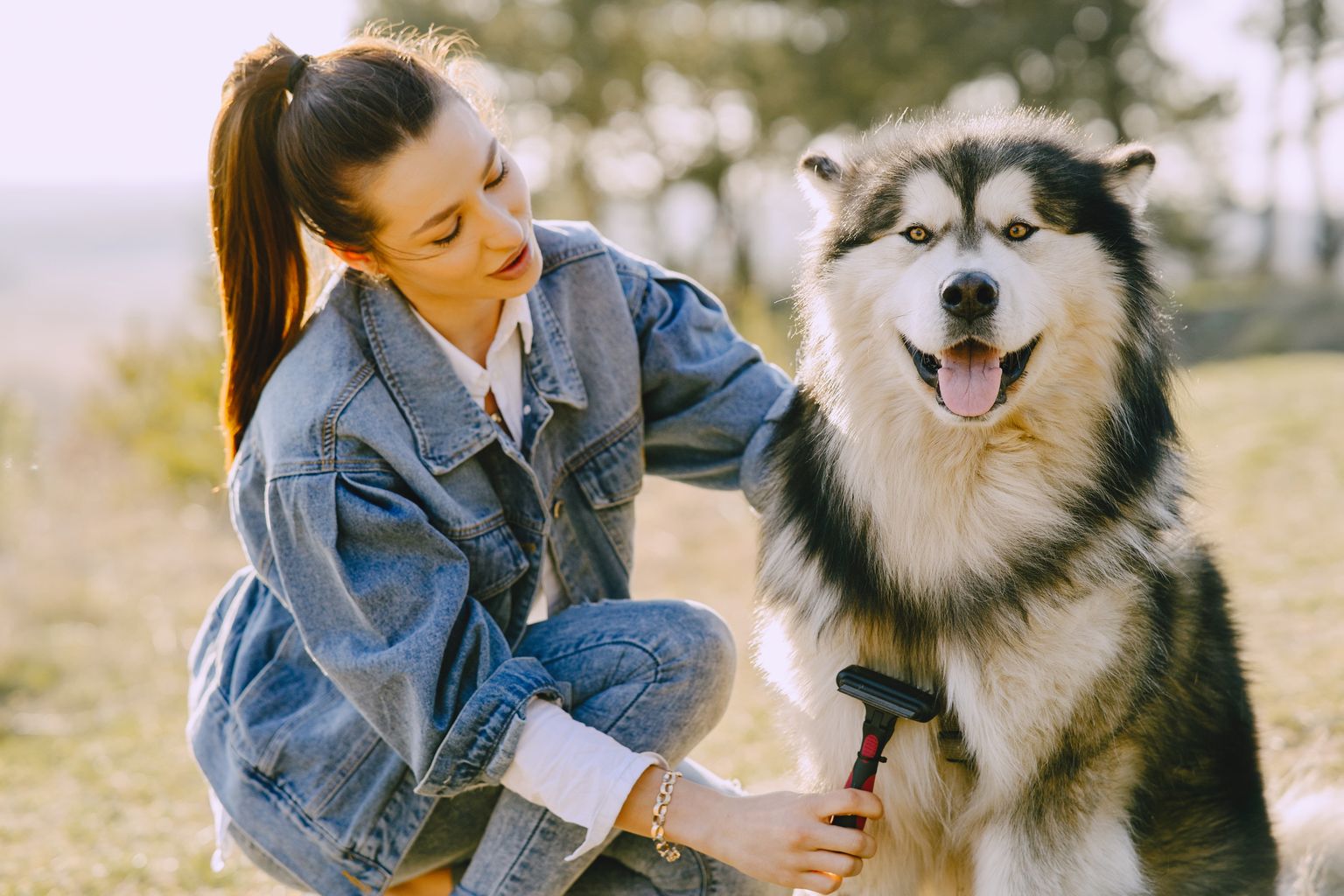
The cheapest and most effective fix happens on your pet, not on your floor. Every hair you pull out with a brush is one less hair you’ll vacuum off the rug later.
Brush more often than you think you need to
Most people brush when the coat looks messy. A better rule is to brush on a schedule, and more often during shedding season. Short, calm sessions of five to ten minutes beat one long wrestling match on a Sunday. Focus on the places where loose undercoat builds up: behind the ears, the neck, the back of the thighs, the base of the tail, and the belly.
Brush outside, on a balcony, or in one easy-to-clean room like a tiled bathroom. If you brush on the living room rug, you’re moving the hair a few feet, not removing it.
Pick the right brush for the coat
The wrong brush skims the top layer and leaves the loose undercoat behind, which is the part that ends up on your couch. Use this as a starting point:
| Coat type | Example breeds | Best tool | How often |
|---|---|---|---|
| Short, smooth | Beagle, Boxer, short-haired cats | Rubber curry brush or grooming mitt | 1 to 2 times a week |
| Double coat | Husky, German Shepherd, Golden Retriever | Undercoat rake plus slicker brush | 3 to 4 times a week, daily in shedding season |
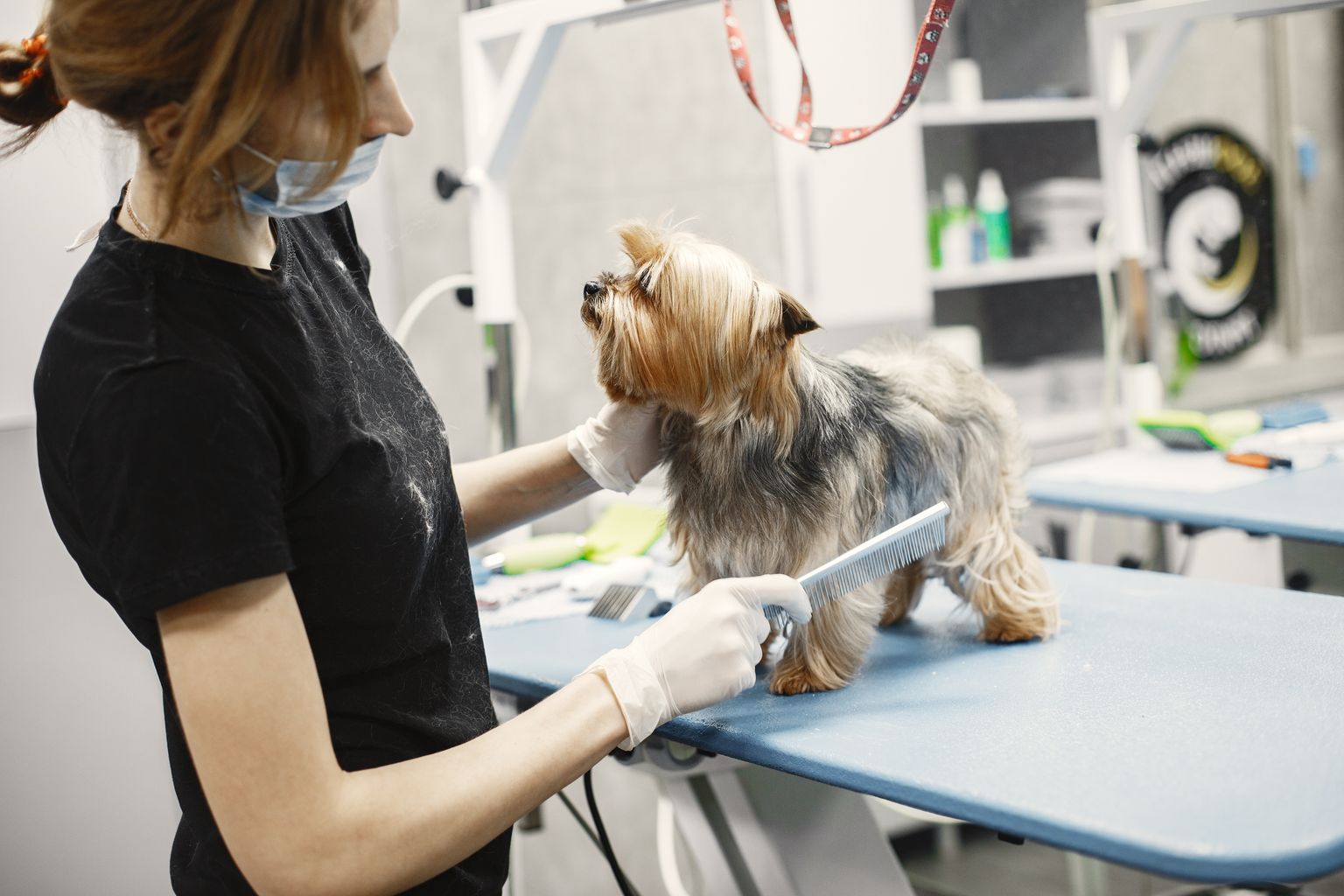
| Long, silky | Shih Tzu, Yorkie, Persian cat | Slicker brush and wide-tooth comb | Every day or two |
| Wiry | Schnauzer, many terriers | Slicker brush, plus hand-stripping or regular grooming | Weekly |
One caution: don’t shave a double-coated dog to stop shedding. The undercoat helps regulate temperature, and shaving can affect how it grows back. You’ll still get shedding, just with shorter hairs that stick into fabric even more stubbornly.
Bathe on a sensible schedule
A bath followed by a good blow-dry and brush-out loosens a surprising amount of dead undercoat in one go. Groomers use this trick during heavy shedding weeks. Don’t overdo it, though. Too many baths can dry out the skin, and dry, itchy skin can lead to more scratching and more loose hair. Our guide on how often you should bathe your dog breaks down a sensible schedule by coat type and lifestyle.
Feed for a healthy coat
A dull coat that falls out in clumps often points to a diet problem. Complete and balanced food with enough quality protein and fatty acids, especially omega-3s, supports healthy skin and a stronger coat. A healthier coat won’t stop normal shedding, but it does cut down on the brittle, broken hair that drifts everywhere. For cats, formulas built around skin, coat, and hairball control are worth a look. Talk to your vet before you add supplements.
Rule out a medical cause
Normal shedding is even and gradual. If your pet suddenly drops much more hair than usual, or you notice bald patches, red skin, constant scratching, or a greasy or flaky coat, book a vet visit. Fleas, allergies, skin infections, hormone issues, and stress can all cause abnormal hair loss, and no vacuum will fix those.
How to keep pet hair off furniture and bedding
Even with good grooming, some hair will fall. Your next goal is to control where it lands.
Give your pet a washable spot of their own
Pets have favorite spots, and that’s where most of the hair builds up. Instead of fighting it, put a washable cover, throw, or pet bed on that exact spot. Fold it inward when you pick it up so the hair stays inside, then shake it outdoors before it goes in the washing machine. Washing pet bedding and throws once a week keeps the fur from piling up and getting ground into the cushions underneath.
If you’re setting up a home around a new dog or cat, our guide to creating a pet-friendly home has more ideas on choosing furniture and layouts that make cleanup easier.
Choose fabrics that pet hair doesn’t grab
This is the step most people skip, and it makes a big difference over the years. Smooth, tightly woven surfaces let hair sit on top, where a quick wipe removes it. Loose, fuzzy, or textured fabrics trap it.
| Hair slides off | Hair clings |
|---|---|
| Leather and faux leather | Velvet and chenille |
| Tightly woven microfiber | Wool and boucle |
| Canvas and denim | Corduroy |
| Satin-finish cotton sheets | Loose knits and fleece |
Color helps too. A sofa or blanket close to your pet’s coat color hides the hair between cleanings.
Use the rubber glove trick
For hair already stuck in upholstery, put on a slightly damp rubber dishwashing glove and sweep your hand across the fabric in one direction. The hair rolls up into clumps you can pick off. A rubber pet hair brush or a fabric shaver works the same way and lasts longer than a pack of lint roller sheets.
How to control pet hair on floors and in the air
Floors and air are where hair travels, so they need a routine rather than a rescue mission.
Vacuum with the right tool
A vacuum with strong suction and a motorized brush head pulls hair out of carpet far better than one that just skims the surface. Many newer models have anti-tangle brush rolls, which saves you from cutting knotted fur off the roller every week. A sealed system with a HEPA filter keeps fine hair and dander from blowing back out of the exhaust.
For carpets, a rubber broom or even a window squeegee dragged across the pile pulls up embedded hair that the vacuum misses. You’ll be surprised by how much comes up from a “clean” rug.
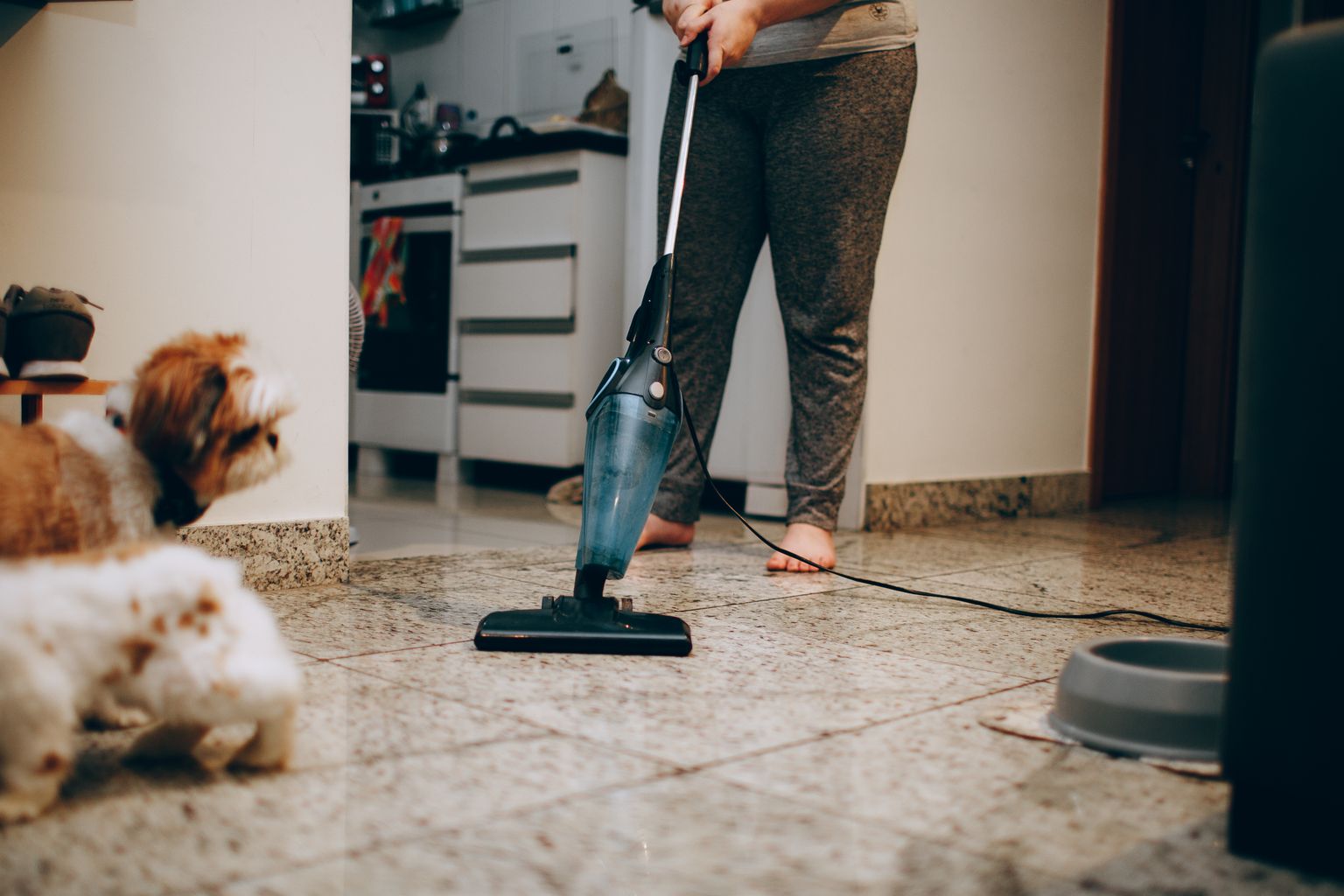
If you have a heavy shedder, a robot vacuum set to run daily is one of the few gadgets that pays off. It won’t deep clean, but it stops the hair from building up between your bigger cleanings.
Damp-mop hard floors instead of sweeping
A dry broom pushes light fur into the air, and it settles somewhere else a few minutes later. Vacuum hard floors first, then use a damp microfiber mop or a microfiber dust mop. Microfiber grabs hair instead of flicking it away. Pay attention to the edges of rooms, under beds, and behind doors, since that’s where drifting fur ends up.
Filter the air
A room air purifier with a true HEPA filter can capture at least 99.97% of airborne particles at 0.3 microns, according to the U.S. Environmental Protection Agency. That covers pet dander and the finest floating fur, which matters if anyone in your home has allergies. It won’t pull hair off your floor, so treat it as a helper that works alongside your cleaning routine.
Your central heating and cooling system matters too. Swap the HVAC filter more often when you have pets, typically every one to three months, and more often during spring and fall shedding. A clogged filter just pushes hair back into the room.
How to prevent pet hair on clothes and in the laundry
Pet hair on your clothes usually comes from three places: your furniture, your closet, and your washing machine.
- Keep your closet door shut and don’t let pets nap on piles of clean laundry or on your bed if you can help it.
- Tumble clothes in the dryer first. Put furry items in the dryer for about ten minutes on a low or no-heat setting before washing. This loosens hair and sends it into the lint trap instead of the washer.
- Add wool dryer balls or a dryer sheet to help lift hair and cut static.
- Clean the washer drum and filter regularly, and wash pet bedding separately from your clothes.
- Keep a lint roller by the door for a quick once-over before you head out.
A simple routine to control pet hair at home
The best way to keep pet hair under control is to stop thinking of it as a big weekend job. Small, regular habits stop the buildup, and they take less total time. Here’s a routine you can adjust to your pet and your space:
| How often | What to do |
|---|---|
| Daily | Quick brush in shedding season, run a robot vacuum or do a quick vacuum of main walkways |
| 2 to 3 times a week | Full brush-out, vacuum rugs and upholstery, wipe down your pet’s favorite furniture |
| Weekly | Wash pet bedding and throws, damp-mop hard floors, clean under furniture and along baseboards |
| Monthly | Check the HVAC and air purifier filters, clean the vacuum brush roll, deep clean the washer |
| Spring and fall | Add extra brushing sessions, consider a professional deshedding groom, steam clean carpets |
Common mistakes that make pet hair worse
A few habits quietly make the problem bigger:
- Brushing indoors on carpet. You’re just relocating the hair.
- Relying only on lint rollers. They’re fine for a quick fix but do nothing about the source.
- Dry sweeping. It throws fine fur into the air, where it lands somewhere else.
- Shaving a double-coated dog. It doesn’t stop shedding and can affect how the coat regrows.
- Ignoring the filters. A full vacuum bag or a clogged HVAC filter recirculates the hair you’re trying to remove.
- Waiting until it looks bad. By the time hair is visible on every surface, it’s already in the air and the fabric.
Conclusion
You can’t stop a healthy dog or cat from shedding, and you shouldn’t try. What you can do is catch most of the loose hair with regular brushing, give the rest fewer places to cling, and clean the spots where it collects before it builds up. Start with the two habits that make the biggest difference, a grooming schedule that fits your pet’s coat and a weekly wash of their bedding, then add better fabrics, a HEPA filter, and the laundry tricks as you go. For more practical pet care guides and product advice, browse the latest posts on Pet Products Guide.
Frequently Asked Questions
Can you stop a dog or cat from shedding completely?
No. Shedding is a normal part of the hair growth cycle, and even so-called low-shedding breeds lose some hair. You can greatly reduce how much ends up in your home with regular brushing, a healthy diet, and a cleaning routine, but no product or diet will stop it entirely.
What repels pet hair?
Nothing truly repels it, but smooth, tightly woven surfaces like leather, faux leather, and microfiber don’t hold onto hair, so it wipes off easily. Anti-static sprays and dryer sheets can also reduce how much hair sticks to fabric by cutting static.
What material will dog hair not stick to?
Leather, faux leather, tightly woven microfiber, canvas, and denim resist dog hair best. Hair sits on top of these materials instead of weaving into them. Velvet, chenille, wool, corduroy, and fleece are the worst choices if you have a heavy shedder.
How can I prevent pet hair from sticking to my clothes?
Keep pets off your bed and out of the closet, run furry clothes through a ten-minute no-heat dryer cycle before washing, use wool dryer balls or a dryer sheet, and clean your washer and lint trap often. A lint roller by the door handles anything that’s left.
Does an air purifier help with pet hair?
Yes, but mostly for fine floating hair and dander rather than hair on the floor. A purifier with a true HEPA filter captures very small airborne particles, which helps with allergies and dust. You’ll still need to brush your pet and vacuum regularly.
How often should I brush my pet to reduce shedding?
It depends on the coat. Short-coated pets do well with one or two sessions a week, long-haired pets need brushing every day or two, and double-coated dogs benefit from three or four sessions a week, or daily during spring and fall shedding season.
