

Most cats are happy with a box that gets scooped every day and fully emptied, washed, and refilled every one to three weeks. Exactly how often to change cat litter depends mostly on the type you use. Clumping litter can usually go two to three weeks between full changes for one cat, while non-clumping litter needs a fresh start once or twice a week because urine soaks down and stays there. Add more cats and every one of those numbers shrinks. Cats are picky about bathroom hygiene, and a box that smells stale to them (long before it smells bad to you) is one of the most common reasons a cat starts going on the rug instead. Below you’ll find a simple schedule for each litter type, what changes the math, and the quickest way to clean the tray when you do a full swap.
How often should you clean your cat’s litter tray?
Scoop the litter tray at least once a day, and twice a day if you can. With two or more cats sharing boxes, twice a day is close to required.
Scooping and changing aren’t the same job. Scooping means lifting out poop and urine clumps and leaving the clean litter behind. Changing means dumping everything, washing the tray, and starting over with fresh litter. You need both. Scooping keeps the box usable day to day, and a full change clears out the dust, crumbs, and dried urine residue that scooping misses.
A good rhythm is once in the morning and once in the evening. If you see your cat use the box, wait until they’ve walked away before you scoop. Hovering over a cat mid-business can make them nervous about the box.
Daily scooping also protects you. The CDC advises cat owners to change litter boxes daily because the Toxoplasma parasite that can be shed in cat feces takes one to five days to become infective. Removing waste every day means it’s gone before that happens. If you’re pregnant or have a weakened immune system, the CDC recommends having someone else handle the box, or wearing disposable gloves and washing your hands well afterward.
Why is changing cat litter regularly important?
A clean box keeps your cat using it. Cats have a far stronger sense of smell than we do, and a tray full of old urine and dust is unpleasant to them well before you notice anything. When the box gets too dirty, many cats simply go somewhere else, and once a cat picks a new spot on the carpet, that habit is much harder to break than it was to prevent.
There’s a health side too. A cat that dislikes its box may hold urine longer, and stress is a known trigger for feline idiopathic cystitis, a painful bladder inflammation. Ammonia from built-up urine also makes the air around the box worse for everyone in the house.
The tray doubles as a daily health check. When you scoop every day, you learn what normal looks like for your cat. Call your vet if you notice:
- Much bigger or more frequent urine clumps than usual, which can point to kidney disease or diabetes.
- Small clumps, frequent trips, or straining.
- Blood in the urine or very loose stool that lasts more than a day or two.
A cat, especially a male, who strains and produces little or no urine needs a vet right away. A urinary blockage is an emergency.
How often should you change cat litter?
For one cat with daily scooping, change clumping litter every two to three weeks, non-clumping litter once or twice a week, and silica crystals about every three to four weeks. Here’s the full schedule. Treat these as starting points, not rules.
| Litter type | Scooping | Full change (1 cat) | Full change (2+ cats) |
|---|---|---|---|
| Clumping clay | Daily | Every 2 to 3 weeks | Every 1 to 2 weeks |
| Non-clumping clay | Daily (solids) | 1 to 2 times a week | Every 2 to 3 days |
| Silica gel (crystal) | Daily (solids, stir) | About every 3 to 4 weeks | Every 2 weeks or sooner |
| Natural clumping (tofu, corn, wheat, walnut) | Daily | Every 2 to 3 weeks | Every 1 to 2 weeks |
| Pine pellets | Daily (sift) | When most pellets turn to sawdust, often weekly | Several times a week |
| Paper pellets | Daily (solids) | 2 to 3 times a week | Every 1 to 2 days |
Clumping cat litter
Clumping litter is the easiest to maintain. Urine forms a solid clump you can lift out whole, so very little waste stays in the box. For one cat, a full change every two to three weeks usually keeps things fresh. Some owners stretch it to a month, but by then most boxes have a layer of crumbled clumps and dust at the bottom that you can smell when your cat digs.
Between full changes, top up with fresh litter after scooping so the depth doesn’t drop. Each clump you remove takes some litter with it.
Non-clumping cat litter
Non-clumping clay absorbs urine, but it can’t lock it into something you can remove. Once the litter at the bottom is saturated, urine starts pooling in the pan, and that’s where the ammonia smell comes from. Plan on a full change once or twice a week for a single cat. With more cats, every two to three days is more realistic. Scoop out poop daily in between.
Silica gel litter
Silica crystals soak up urine and hold it inside each bead while the moisture evaporates. A full box can last around three to four weeks for one cat. Scoop out solids every day and give the crystals a stir so urine spreads across fresh beads instead of saturating one corner. When the crystals stay yellow after stirring or the box starts to smell, it’s done, even if the calendar says otherwise.
Natural litter
Natural litters vary a lot by material. Clumping plant-based litters made from tofu, corn, wheat, or walnut shells behave much like clumping clay, so a full change every two to three weeks works for one cat. Keep the bag sealed and dry, because damp plant litter can grow mold.
Pine pellets break down into sawdust as they absorb urine. In a sifting box, the sawdust drops to the lower tray and the intact pellets stay on top, so you only need a full change when most pellets have crumbled. That’s often about once a week for one cat. Paper pellets don’t clump and don’t hold smell well, so they need changing more often than any other type. They’re mainly worth it for cats recovering from surgery, when vets want a soft, dust-free litter.
What factors affect how often you change cat litter?
Litter type sets the baseline, but a few other things push your schedule earlier or later.
Number of cats
Two cats sharing one box doubles the waste going into it, and the litter wears out about twice as fast. Expect to scoop twice a day and roughly halve the time between full changes.
The better fix is more boxes. The standard guideline from vets and shelters is one litter box per cat, plus one extra. So two cats need three boxes, and three cats need four. Spread them around the house rather than lining them up in one room, since one cat can block another from a row of boxes in the same spot. More boxes means less traffic per box, so your full changes stay closer to the single-cat schedule.
Your cat’s habits
Some cats pee in big puddles, some dig to the bottom of the tray, and some kick half the litter onto the floor. A large male cat will wear through litter faster than a small female. Unneutered males also have much stronger-smelling urine, so their boxes usually need changing sooner.
Type of litter box
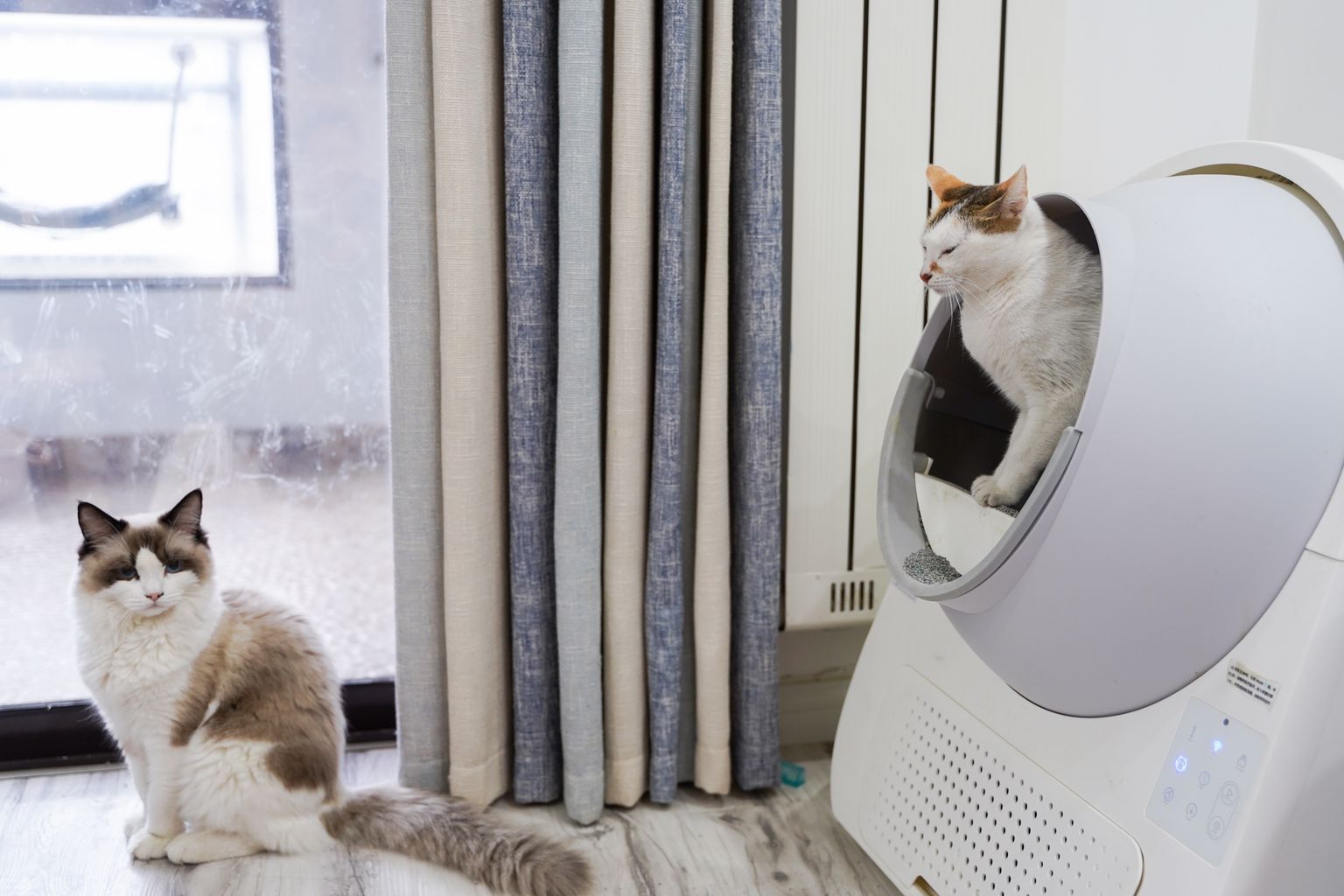
Self-cleaning boxes rake waste into a sealed bin, so the litter stays cleaner for longer and full changes can be spaced out. Covered boxes hold smell inside, which you won’t notice but your cat will, so they often need changing a little earlier than an open tray.
Signs it’s time for a full change
A schedule tells you roughly how often to change cat litter, but the box itself will usually tell you exactly when. Do a full change sooner if:
- The box smells even right after you scoop.
- Clumps fall apart when you lift them, or the scoop comes up with wet, sticky litter.
- There’s a layer of dust, crumbs, or discolored litter that won’t sift out.
- Urine is pooling at the bottom of a non-clumping box.
- Your cat sniffs the box and walks off, perches on the edge, or starts going somewhere else.
That last one matters most. If your cat starts peeing next to the box, try a full change and a scrub before assuming it’s a behavior problem.
How do you choose the right cat litter?
Let your cat choose. Most cats have a strong preference for texture, and the litter that’s easiest for you is useless if your cat won’t step in it. Most cats prefer a fine, soft, sand-like texture and no added scent.
Your own routine matters too. If you can’t scoop more than once a day or don’t want to do full changes every few days, a clumping or silica litter will be far easier to live with than non-clumping clay. For homes where smell is the main worry, our guide to the best cat litter for odor control compares how each type handles it.
If you want to try something new, set up a second box with the new litter next to the old one, or mix it in gradually over a week or two. A sudden switch is a common trigger for accidents.
Kittens need a little extra thought. Scoop their box at least twice a day, and many vets suggest an unscented, non-clumping or kitten-safe litter until they’re past the stage of tasting everything, since clumping clay can swell if swallowed. Our guide on how to take care of a kitten covers the rest of the new-kitten checklist.
How do you clean your cat’s litter tray?
Every full change should include a proper wash of the tray. It takes about ten minutes:
- Empty the box. Tip all of the old litter into a sturdy trash bag. Placing the bag over one end of the box and flipping it keeps dust down.
- Scrape off stuck litter. Use the scoop or a plastic scraper to clear anything stuck to the sides and corners.
- Wash with mild, unscented soap and warm water. Skip bleach, ammonia-based cleaners, and anything citrus or heavily scented. Ammonia smells like urine to a cat, and strong scents can put them off the box.
- Rinse well and let it dry completely. Litter poured into a damp tray sticks to the bottom and starts clumping before your cat has even used it. Paper towels or a clean towel speed this up.
- Refill to the right depth. Then put the box back in the same spot. Cats like routine, and moving the box on cleaning day can confuse them.
How much litter should you put in the tray?
About 2 to 3 inches suits most cats and most litters. Clumping litter can go a little deeper, closer to 3 or 4 inches, so clumps form before urine reaches the pan. Too shallow and urine hits the bottom, making clumps stick and smell build faster. Too deep and many cats dislike sinking in, plus you throw out more litter at every change.
How often should you replace the litter box itself?
Plan on replacing a plastic litter box about once a year. Every time you scoop, you leave tiny scratches in the plastic, and bacteria and urine settle into those grooves until no amount of scrubbing gets the smell out. Replace it sooner if you see deep scratches, cracks, or stains that won’t wash off. Stainless steel boxes don’t scratch the same way and can last for years.
How do you dispose of cat litter?
Bag it, tie it, and put it in your regular household trash. That’s the safest option for almost every litter type.
Don’t flush cat litter, even brands labeled flushable. Clumping clay swells and can block pipes, and wastewater treatment doesn’t reliably kill Toxoplasma, which has been linked to infections in wildlife downstream. Don’t add used litter to a home compost pile either, because backyard compost rarely gets hot enough to kill the parasites and bacteria in cat feces.
How can you stop the litter tray from smelling?
Keep it clean. A tray that smells is a tray that needs scooping or a full change, and no spray or scented litter fixes that. A few habits make the biggest difference:
- Scoop daily and top up the litter so the depth stays steady.
- Use an unscented litter with activated carbon, which traps ammonia instead of covering it up.
- Keep the box in a quiet, low-traffic spot with some airflow, not shut in a closet or a hot laundry room.
- Wash the tray properly at every full change, not just a quick rinse.
If your cat has had an accident, the smell will keep pulling them back to that spot until it’s fully broken down. An enzyme cleaner works best, and you’ll find step-by-step tips in our article on how to remove pet odor from carpets and floors.
Conclusion
Knowing how often to change cat litter comes down to a routine that works for most homes: scoop every day, do a full change every two to three weeks with clumping litter or once or twice a week with non-clumping, and wash the tray each time. Shorten that schedule for more cats, and let the smell, the state of the clumps, and your cat’s behavior tell you when to change it early. Keep one box per cat plus one, replace the box once it’s scratched up, and you’ll rarely deal with a smelly house or a cat who refuses the box. For more practical care and buying advice, browse Pet Products Guide.
Frequently Asked Questions
How often should you completely change cat litter?
For one cat with daily scooping, change clumping litter completely every two to three weeks and non-clumping litter once or twice a week. Silica crystals can last about three to four weeks. With more cats, change it more often.
Is it OK to change cat litter once a week?
Yes, a weekly full change is a good routine for most litter types and fits non-clumping litter well. With clumping litter and one cat, weekly is more than enough as long as you scoop daily.
How often should you change cat litter for one cat?
With one cat, scoop daily and do a full change every two to three weeks for clumping litter, or once or twice a week for non-clumping litter.
How often should you change cat litter with 2 cats?
Scoop twice a day and roughly double your usual frequency for full changes, unless each cat has its own box. Ideally give two cats three boxes, which keeps each one on a near single-cat schedule.
Can you just keep adding litter instead of changing it?
Not indefinitely. Topping up keeps the depth right between changes, but the old litter underneath still holds broken-down clumps, dust, and bacteria. You still need to empty and wash the box on a regular schedule.
Why does my cat litter smell even after I change it?
The box itself is usually the problem. Old plastic boxes absorb urine smell into their scratches. Try a thorough wash, and if the smell stays, replace the box. Too few boxes for the number of cats can also cause it.
Do automatic litter boxes need the litter changed?
Yes, though less often. Follow the manufacturer’s guidance, empty the waste drawer regularly, and replace the litter when it starts to look dusty or smell.