
Quick answer: Dogs lick you mainly to show affection, get your attention, taste the salt on your skin, or calm themselves down. The habit starts in puppyhood and sticks because you react to it. It’s normal unless it starts suddenly, won’t stop, or comes with other changes. Then call your vet.
This blog is general information and is not veterinary advice. Talk to your vet about your dog’s health and behavior. Read our full disclaimer.
You sit down on the couch, and within seconds your hand is wet. Then your arm. Then your ankle. If you’ve ever wondered why does my dog lick me so much, you’re in good company: it’s one of the most common questions dog owners ask. Most of the time, licking is your dog talking to you in the only way it knows. Below, we break down the eight usual reasons, the signs that a sudden licking habit needs a vet visit, whether those licks are safe for you, and how to cut back on them kindly.
Overview Table
Most dog licks fall into one of eight reasons, and your dog’s body language tells you which one you’re seeing. Use this table to match the licking to its likely cause and the best response.
| Reason | What it looks like | What to do |
|---|---|---|
| Affection | Relaxed body, soft eyes, slow licks | Enjoy it, or calmly redirect |
| Puppyhood habit | Licks aimed at your face and mouth | Greet calmly at face level less often |
| Attention | Licks that start when you’re busy | Ignore it, reward calm behavior |
| Taste | Licks after workouts, lotion, or meals | Wash hands and skin |
| Scent check | Sniffing plus licking when you come home | Let it sniff, then move on |
| Grooming | Steady licks on arms, legs, small cuts | Cover wounds, redirect |
| Appeasement | Lick plus tense body, tucked tail, turned head | Give space right away |
| Stress relief | Licking during storms or before you leave | Find and ease the trigger |
Why Does My Dog Lick Me So Much? 8 Common Reasons
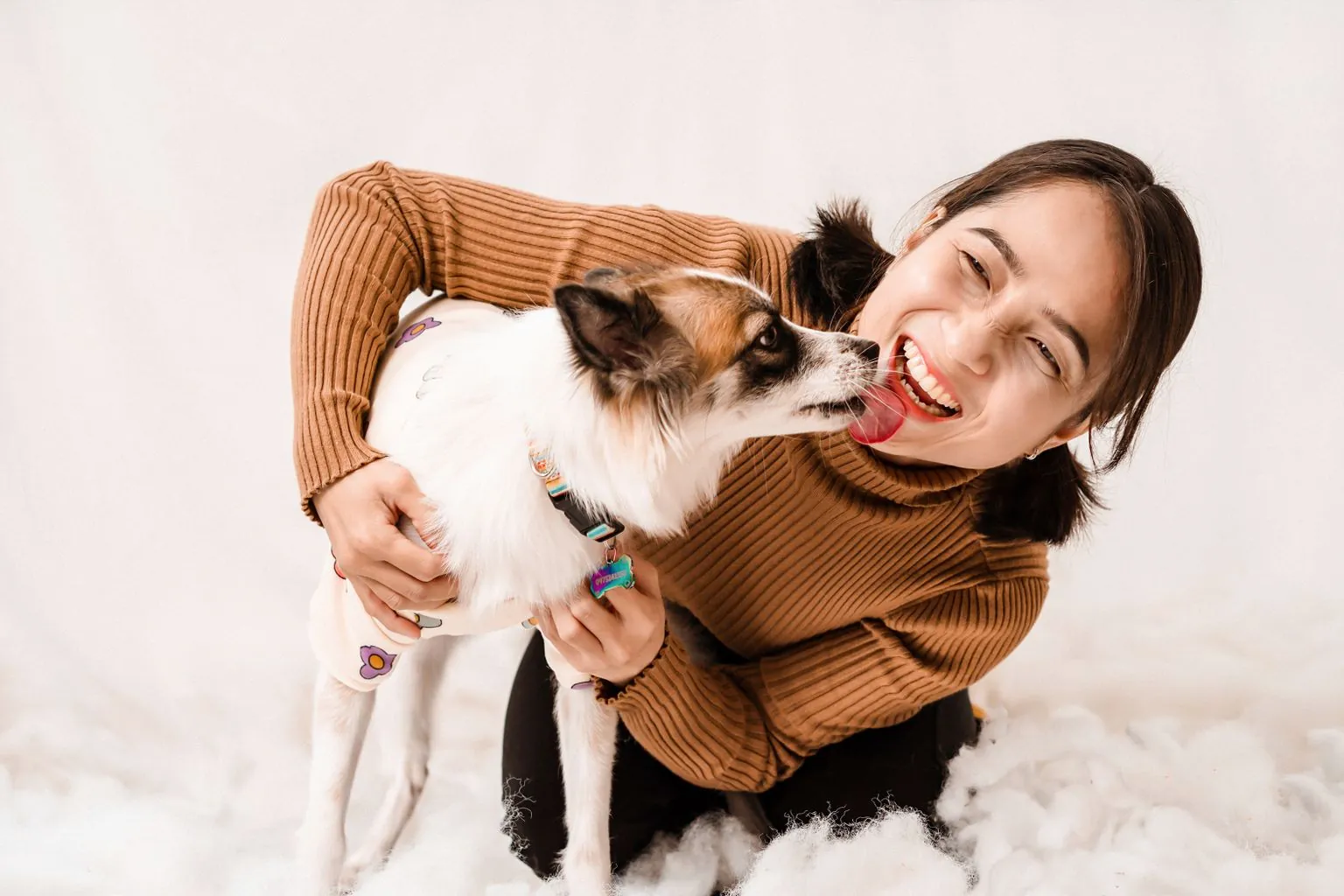
Most licking is social communication, and it rarely means anything is wrong. Dogs lick to bond, to greet, to ask for something, to learn about you, and to soothe themselves. The trick is reading the rest of your dog’s body while it licks. A loose, wiggly dog is saying something very different from a stiff dog with its ears pinned back.
1. Affection and Bonding
Licking is one of the ways dogs bond with the people they live with. A dog that licks your hand with a loose body and soft eyes is showing comfort and trust. Many dogs also lick more when you’re upset or crying. They notice your change in voice and body language, and licking is their way of checking in. If your dog leans into you, wags low and slow, and settles down afterward, the licks are friendly.
2. A Habit Left Over From Puppyhood
Licking starts in the first weeks of life. According to VCA Animal Hospitals, young puppies lick their mother’s mouth to encourage her to bring up food. Mother dogs also lick their puppies to clean them and keep them close. That early link between licking, food, and comfort carries over to people, which is why so many adult dogs aim straight for your face and mouth.
3. Your Dog Wants Your Attention
Dogs learn fast. If licking your hand once got you to laugh, talk, or push the dog away playfully, your dog learned that licking makes you respond. Even “no, stop that” counts as attention to a bored dog. Watch for licks that start when you’re on the phone, working, or eating. That timing points to a learned habit, and the fix is to stop rewarding it.
4. Your Skin Tastes Good
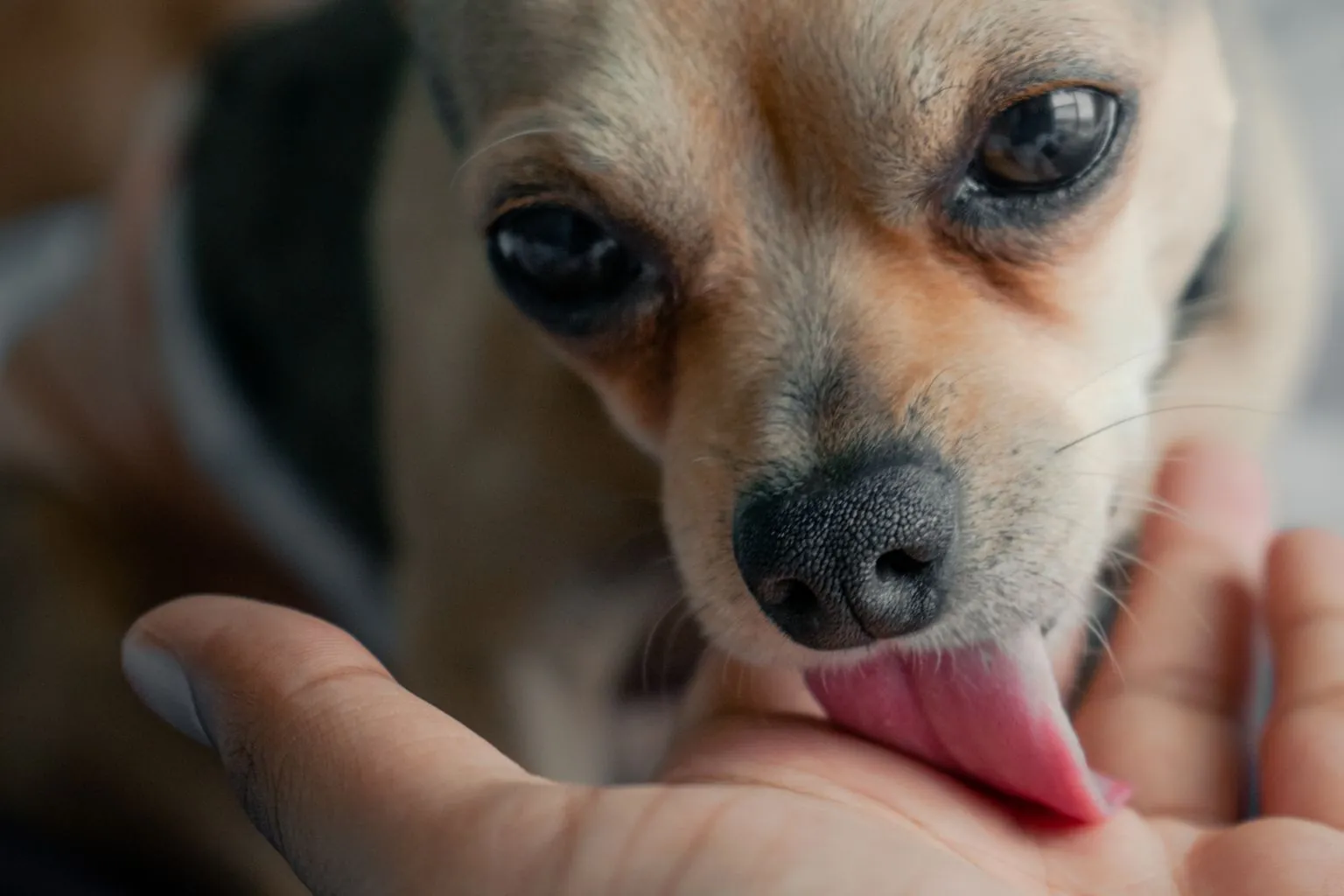
Human skin tastes salty, especially after a workout or a hot day. Lotions, sunscreen, and food smells add even more flavor. Dogs often lick hands right after you eat, cook, or put on cream. A hungry dog may lick more too, especially close to mealtime. A quick wash with plain soap usually ends the interest.
5. Gathering Information by Scent and Taste
Your dog’s nose and mouth work together to learn about everything around it. When you come home, your skin carries the smells of other people, other animals, and new places. Sniffing and licking your legs and hands is how your dog finds out where you’ve been. These licks come with lots of sniffing and usually stop once the “report” is done.
6. Grooming You
Dogs groom the members of their family, and to your dog, that includes you. Steady licking on your arms or legs can be a grooming habit. Some dogs also lick small cuts and scrapes. Dog saliva can carry germs, though, so keep your dog away from open wounds and cover them with a bandage.
7. Appeasement or “Please Give Me Space”
Some licks are polite requests to calm things down. Researchers Albuquerque and colleagues found in a 2018 study that dogs lick their mouths more often when looking at human faces, especially negative ones. A quick lick paired with a stiff body, a tucked tail, a turned head, or the whites of the eyes showing means your dog is uneasy. Stop the hug or the petting and give your dog room.
8. Stress or Anxiety Relief
Licking releases tension, so anxious dogs often lick more. You might see it during thunderstorms, fireworks, vet visits, or right before you leave the house. The licking may land on you, on the couch, or on the dog’s own paws. Easing the trigger with exercise, a predictable routine, and quiet time helps. For dogs that stay on edge, our guide to calming treats for anxious dogs covers what to look for and what to ask your vet first.
Why Is My Dog Licking Me All of a Sudden?
A sudden change in licking is worth a closer look. When a dog that rarely licked starts doing it nonstop, something has usually changed: its health, its routine, or its stress level. VCA Animal Hospitals notes that a dog licking you or objects excessively could be related to anxiety or pain.
Common causes of a sudden licking habit include:
- Pain. Sore joints, a hurt paw, or dental pain can make a dog restless and lick more.
- Nausea or tummy trouble. Gut problems can show up as licking. Researchers at the Université de Montréal studied 20 dogs that licked surfaces excessively and found gastrointestinal disorders in 14 of them. More than half of the dogs improved once the gut problem was treated.
- Itchy skin or allergies. Fleas, food allergies, and dry skin make dogs lick everything, including you. Our guide on fleas and itchy skin in dogs walks through the signs and safe home steps.
- A new stressor. A move, a new baby, a new pet, or a change in your work hours can all trigger extra licking.
- Boredom. Less exercise or less play time often means more licking.
The Montréal study looked at dogs licking floors and furniture, but it shows how often a licking habit can start in the body. When licking is constant and hard to interrupt, vets call it compulsive licking, and it needs a professional check.
Before the appointment, keep a short log for a few days. Write down when the licking happens, what your dog licks, and anything else you notice, like vomiting or scratching. A log like this helps your vet spot the pattern faster.
When to Call Your Vet
Book a vet visit if your dog’s licking comes with any of these:
- Licking that won’t stop, even when you call or distract your dog
- Vomiting, diarrhea, drooling, or gulping
- Changes in appetite, energy, or sleep
- Red skin, hair loss, or sores, especially on paws or legs
- Licking floors, walls, or the air
- Limping, or crying when touched
Call your vet or an emergency clinic right away if your dog may have eaten something toxic, or seems to be in strong pain.
Should I Let My Dog Lick Me?
Occasional licks on healthy, unbroken skin are low risk for most healthy adults. Dog saliva does carry germs, though, so a few simple limits make sense. Keep licks away from your face, mouth, eyes, and any cuts. Wash your hands after a licking session, especially before you eat.
Some people need to be more careful. The CDC says people with weakened immune systems are at higher risk from Capnocytophaga, a germ commonly found in dog saliva. That group includes people with cancer, diabetes, HIV, or no spleen. Babies, young kids, older adults, and pregnant people should also skip face licks.
A few everyday habits lower the risk for the whole family. Keep your dog’s vaccines and parasite prevention up to date, and book regular vet checkups. Teach kids to wash their hands after playing with the dog. Keep your dog’s food bowls and toys clean, and wash them in hot, soapy water every few days.
If your dog’s licking bothers you, it’s fine to say no. Setting a gentle limit doesn’t hurt your bond, as long as you also teach your dog a better habit.
How to Manage or Stop Your Dog’s Licking
Gently redirect the licking toward a better habit. The American Veterinary Society of Animal Behavior (AVSAB) advises against punishment-based training because it can harm your dog’s welfare and your relationship. Reward-based steps work better and keep your dog’s trust. Here’s a routine that works for most dogs:
- Rule out health problems first. If the licking is new or intense, see your vet before you start training.
- Stay calm and step away. When the licking starts, stand up or turn away quietly. Skip the talking, laughing, and pushing.
- Reward calm behavior. Praise your dog or give a small treat when it sits or lies quietly next to you.
- Teach a replacement cue. Ask for a “sit,” a hand target (“touch”), or “go get your toy.” Reward that behavior every time it replaces a lick.
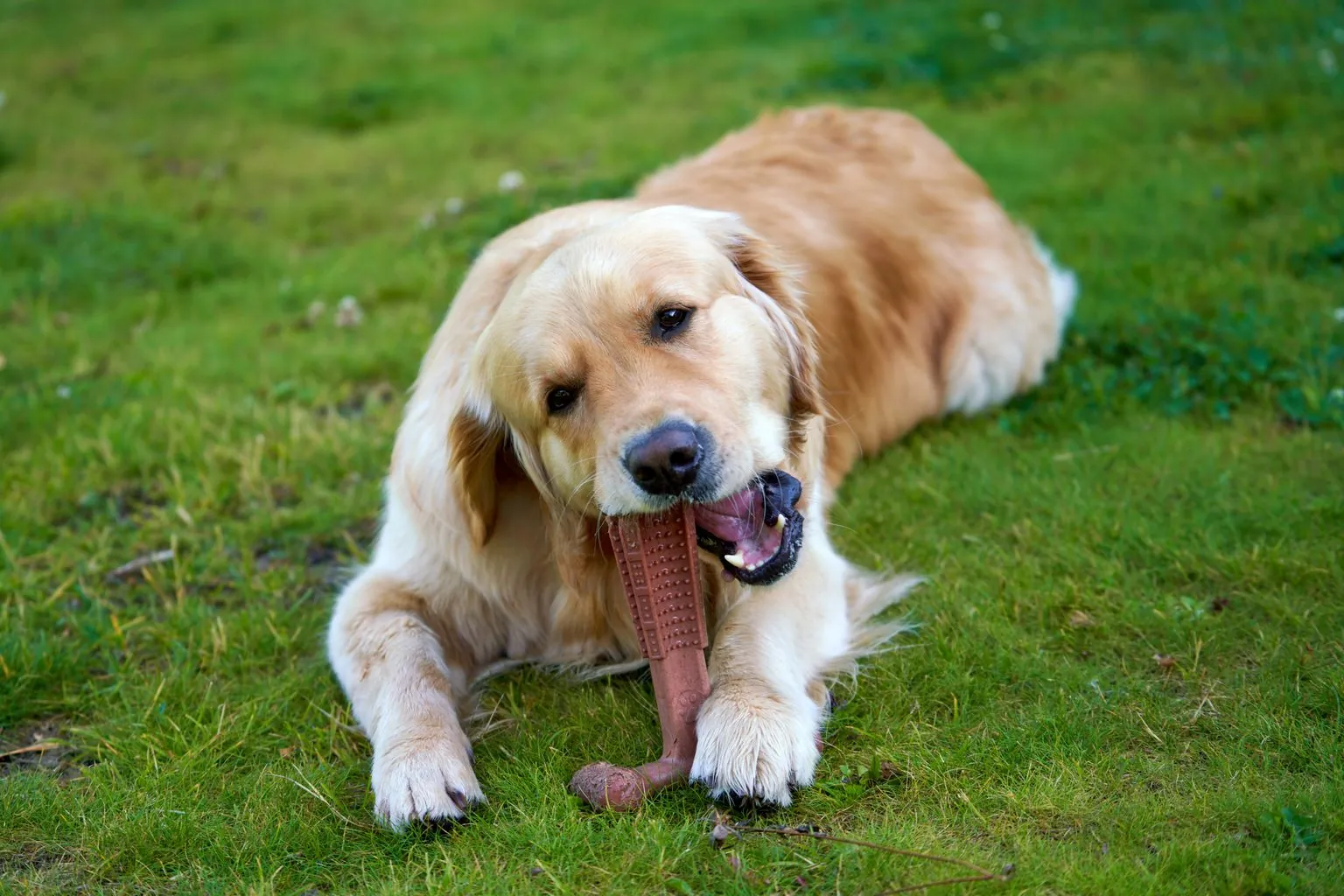
- Give the mouth a job. Chew toys, food puzzles, and lick mats give your dog a better place to lick and chew.
- Add exercise and play. A tired dog licks less. Daily walks, sniff time, and short training games burn off energy.
- Wash off tempting smells. Rinse off lotion, sweat, and food before you sit down with your dog.
Be patient and consistent. Everyone in the house needs to follow the same rules, or your dog will keep trying.
The Bottom Line
Most licking is normal dog communication. Your dog may be showing love, asking for attention, tasting your skin, or settling its nerves. Read the body language, keep licks off your face and any cuts, and redirect the habit with rewards. Watch closely for licking that starts suddenly or won’t stop, because that can point to pain, an upset stomach, or itchy skin. For more simple, practical help with your dog, browse our pet care guides, and call your vet whenever something feels off.
Frequently Asked Questions
Do dog licks really mean kisses?
Often, yes. Many dogs lick the people they love as a sign of comfort and trust. Licks can also mean your dog wants attention, likes the taste of your skin, or feels uneasy. Check the rest of your dog’s body. A relaxed dog is being friendly; a stiff, tense dog wants space.
Why does my dog lick me when I get home?
Licking you at the door is a greeting habit that starts in puppyhood, when puppies lick returning adults around the mouth. Your dog is also excited and is reading the smells you bring home. Keep arrivals calm and low-key, and reward your dog for keeping four paws on the floor.
Why does my dog lick me excessively at night?
Night licking is often self-soothing. Your dog is settling down before sleep, much like a person who fidgets before bed. Boredom and the salty taste of skin play a part too. Itchy skin or discomfort can also feel worse at night, so see your vet if the habit is new.
Why does my dog lick me when I pet her?
When you pet your dog and she licks you back, she is usually returning the affection. Watch her body, though. If she stiffens, turns her head away, or tucks her tail while licking, the licks may be a polite way of asking you to stop. Pause and let her come back.
Why does my dog lick me aggressively?
Hard, frantic licking usually comes from over-excitement, anxiety, or a habit your dog learned gets attention. Calmly end the interaction by standing up or stepping away, then ask for a sit and reward it. If the licking stays intense, talk to your vet or a certified trainer.
Do dogs lick their favorite person the most?
Dogs often lick the person they’re closest to or the one who reacts most. That might be the person who feeds them, plays with them, or laughs when they lick. No study proves a “favorite person” rule, so more licks mostly reflect your dog’s habits and history with you.
Why does my dog lick me in the morning?
Morning licks are often a greeting after a long night apart, and a reminder that breakfast is due. Your skin also tastes saltier after sleep. Getting up, feeding your dog on a steady schedule, and rewarding calm waiting usually cut down on the wake-up licks.
Is it bad if my dog licks me too much?
Licking is usually harmless, but constant licking can be a sign of stress, boredom, or a health problem like pain, allergies, or an upset stomach. Redirect the habit with toys and rewards, keep licks off your face, and see your vet if the licking started suddenly.