

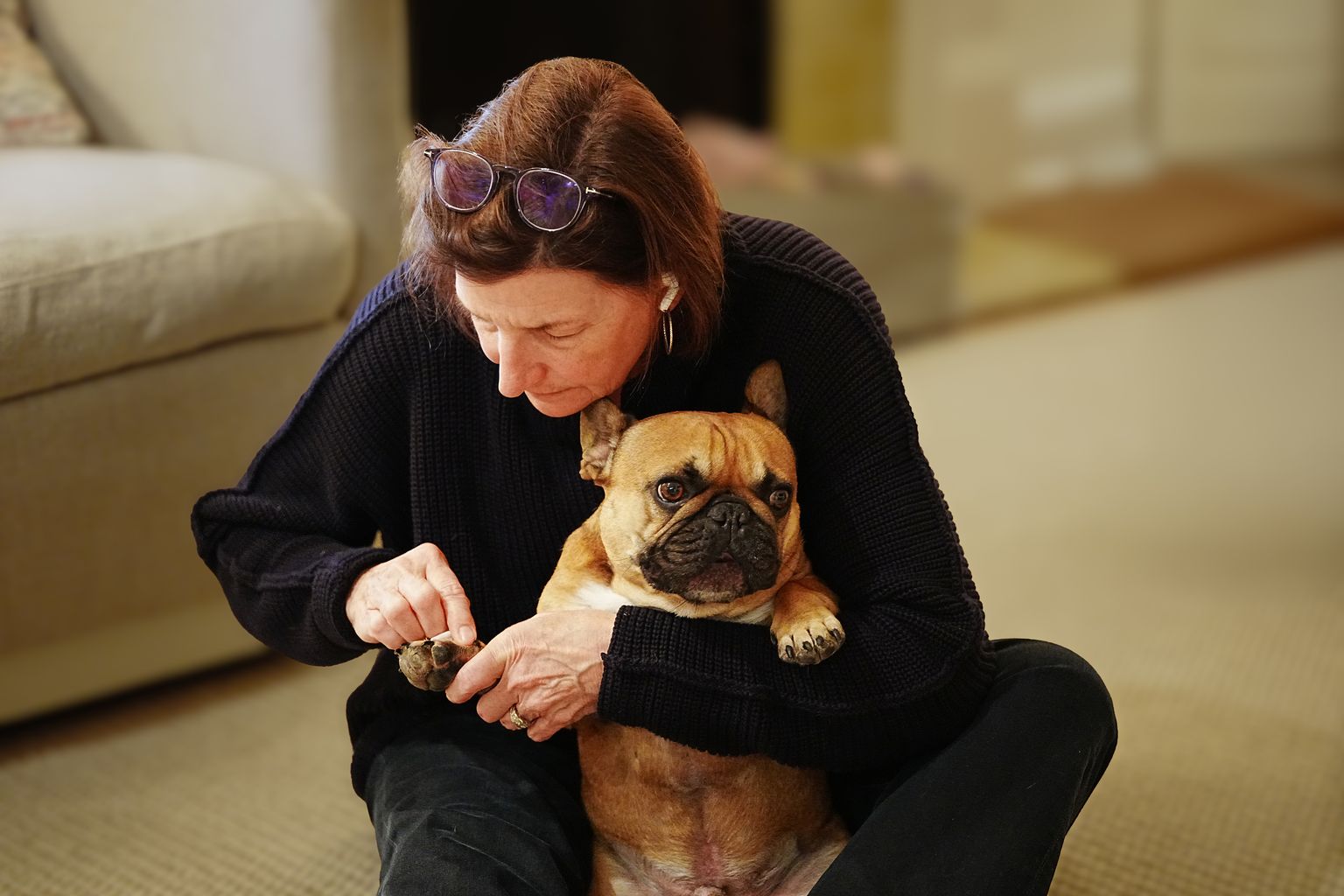
Learning how to trim dog nails at home is mostly about two skills: knowing where the quick is, and teaching your dog that having their paws handled is no big deal. Hold the paw firmly, take small slices off the tip at roughly a 45-degree angle, and stop as soon as you see a chalky white or gray-pink oval in the center of the cut surface. That oval means you’re close to the quick, the living part of the nail that bleeds if you cut into it. Most dogs need a trim every three to four weeks, and the whole job takes five minutes once you and your dog have the routine down. The hard part is usually the dog’s nerves (and yours), so this guide covers the gear, the anatomy, a short training plan for nervous dogs, black and overgrown nails, and exactly what to do if you nick the quick.
How often should you trim your dog’s nails?
Every three to four weeks suits most dogs, but the real test is the sound on your kitchen floor. If you can hear your dog’s nails clicking on tile or wood when they walk, the nails are touching the ground and they’re too long. When a dog stands normally, the nail tips should sit just clear of the floor.
Some dogs barely need trims. A Labrador who runs on pavement every day files their own nails down without anyone noticing. A small indoor dog who mostly walks on carpet and grass may need a trim every two weeks. Dewclaws, the “thumb” nails on the inside of the leg, never touch the ground at all, so they keep growing no matter how much your dog walks.
Long nails are more than a cosmetic problem. They push the toes sideways when your dog walks, which changes how weight sits on the foot and can strain joints over time. Very long nails can curl around and grow into the paw pad, which is painful and often needs a vet visit.
What do you need to trim dog nails at home?
You don’t need a full grooming kit. Here’s what makes the job easier:
| Tool | Best for | Things to know |
|---|---|---|
| Scissor or plier-style clippers | Most dogs, especially medium and large breeds with thick nails | The most popular choice. Easy to control and strong enough for tough nails. Many have a safety guard. |
| Guillotine clippers | Small and medium dogs with thinner nails | You slide the nail tip through a hole and a blade slices across. Can crush thick nails. |
| Nail grinder | Dark nails, anxious dogs, smoothing sharp edges | Files the nail down gradually, so it’s hard to hit the quick. The buzzing sound takes some getting used to. |
| Styptic powder | Every trim | Stops bleeding fast if you cut too short. Cornstarch or flour works as a backup. |
| High-value treats | Every trim | Small pieces of cheese, chicken or a lick mat with peanut butter (xylitol-free). |
| Good light | Every trim | A bright lamp or phone torch makes the quick much easier to see. |
Keep the blades sharp. Dull clippers squeeze the nail before they cut, and that pressure is uncomfortable for your dog. Most clippers need replacing every year or two with regular use. Human nail clippers are fine for a very young puppy, but they’re too weak for adult dog nails and tend to split them.
If you’re torn between clippers and a grinder, a lot of owners end up using both: clippers to take off length quickly, then a few seconds of grinding to round off the sharp edge so it doesn’t snag on carpet or scratch skin.
Where is the quick on a dog’s nail?
A dog’s nail is a claw: a hard outer shell wrapped around a core of blood vessels and nerves called the quick. The quick grows with the nail, so a dog whose nails have been long for months will also have a long quick.
On light or white nails, finding it is easy. Look at the nail from the side and you’ll see a pink section running from the toe toward the tip. Cut in the clear or white part beyond it and leave a little margin.
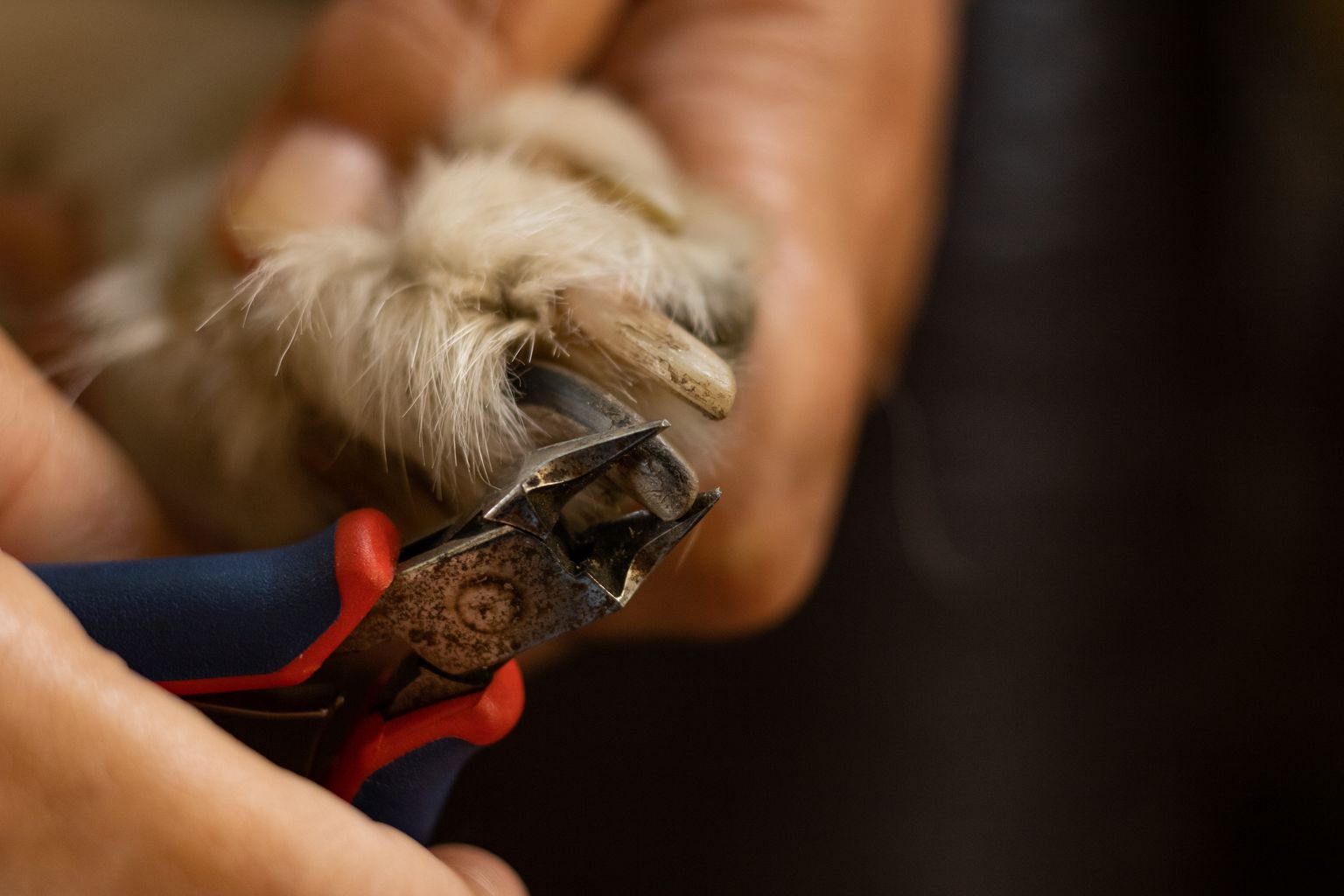
On black nails you can’t see through the shell, so you have to read the cut surface instead. As you take thin slices, the cut end looks pale and dry at first. When you get close to the quick, a small dark or gray-pink dot appears in the center, sometimes with a chalky white ring around it. That’s your signal to stop. The veterinary team at Washington State University’s teaching hospital recommends staying about 2 millimeters away from the quick and making several small cuts on dark nails rather than one big one.
How do you get your dog used to nail trims?
Most dogs who hate nail trims aren’t reacting to the clipping. They’re reacting to having their feet held, which feels unnatural and a little threatening to a lot of dogs. If you fix that first, the trimming itself gets much easier. Spread this over a week or two and keep each session to a minute or two:
- Touch the paws. While your dog relaxes next to you, touch a paw, then give a treat. Repeat with all four feet.
- Hold the paws. Gently hold a paw for a couple of seconds and press lightly on each toe. Treat.
- Introduce the tool. Let your dog sniff the clippers or grinder, then treat. Turn a grinder on near them without touching, then treat. Squeeze clippers near the paw so they hear the click, then treat.
- Touch the tool to the nail. Rest the clippers or grinder against one nail for a second. Treat.
- Trim one nail. Clip just the very tip of one nail and give a big reward. Stop there for the day.
- Build up. Add a nail or two each session until you can do a whole paw, then all four.
Stop while your dog is still calm. Ending on a good note matters more than finishing every nail. If your dog pulls away, growls or starts panting, go back a step. A lick mat smeared with something tasty, stuck to the wall or held by a helper, keeps a lot of dogs busy while you work. A long-lasting chew afterward helps too, and our list of the best dog toys for chewers has a few sturdy options that make good post-trim rewards.
Puppies are the easiest to train, so start handling their feet in the first week they come home, even if their nails barely need it.
How to trim dog nails step by step
Once your dog is comfortable having their paws handled, here’s the routine.
1. Set up in a calm, well-lit spot
Pick a time when your dog is relaxed, like after a long walk or straight after a bath, when the nails are softer and cut more cleanly. If you’re not sure how often bath day should come around, our guide on how often you should bathe your dog breaks it down by coat type. Small dogs can sit on your lap or a table with a non-slip mat. Large dogs are easier on the floor, lying on their side. Lay out the clippers, styptic powder and treats before you start so you’re not reaching for anything mid-trim.
2. Hold the paw firmly but gently
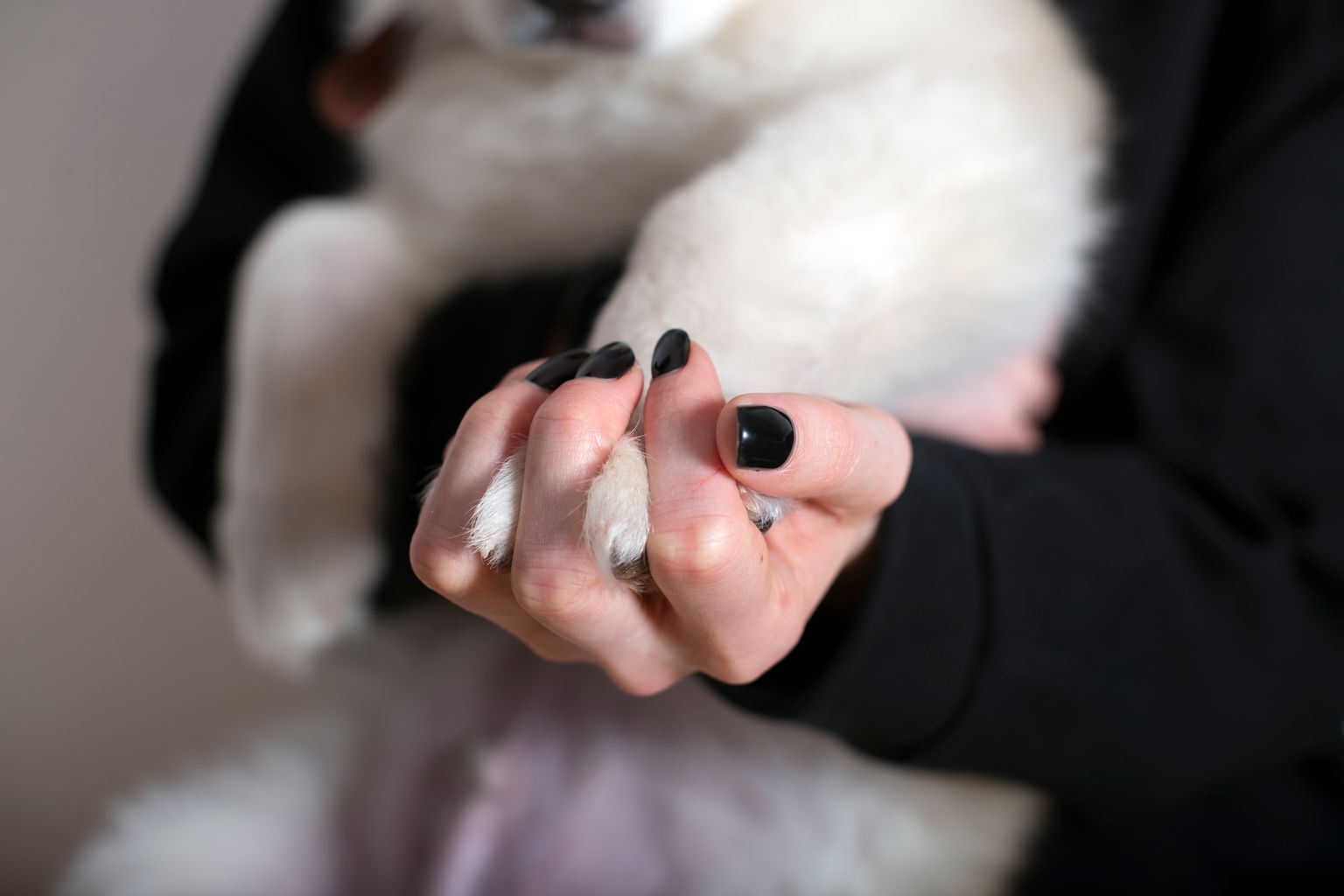
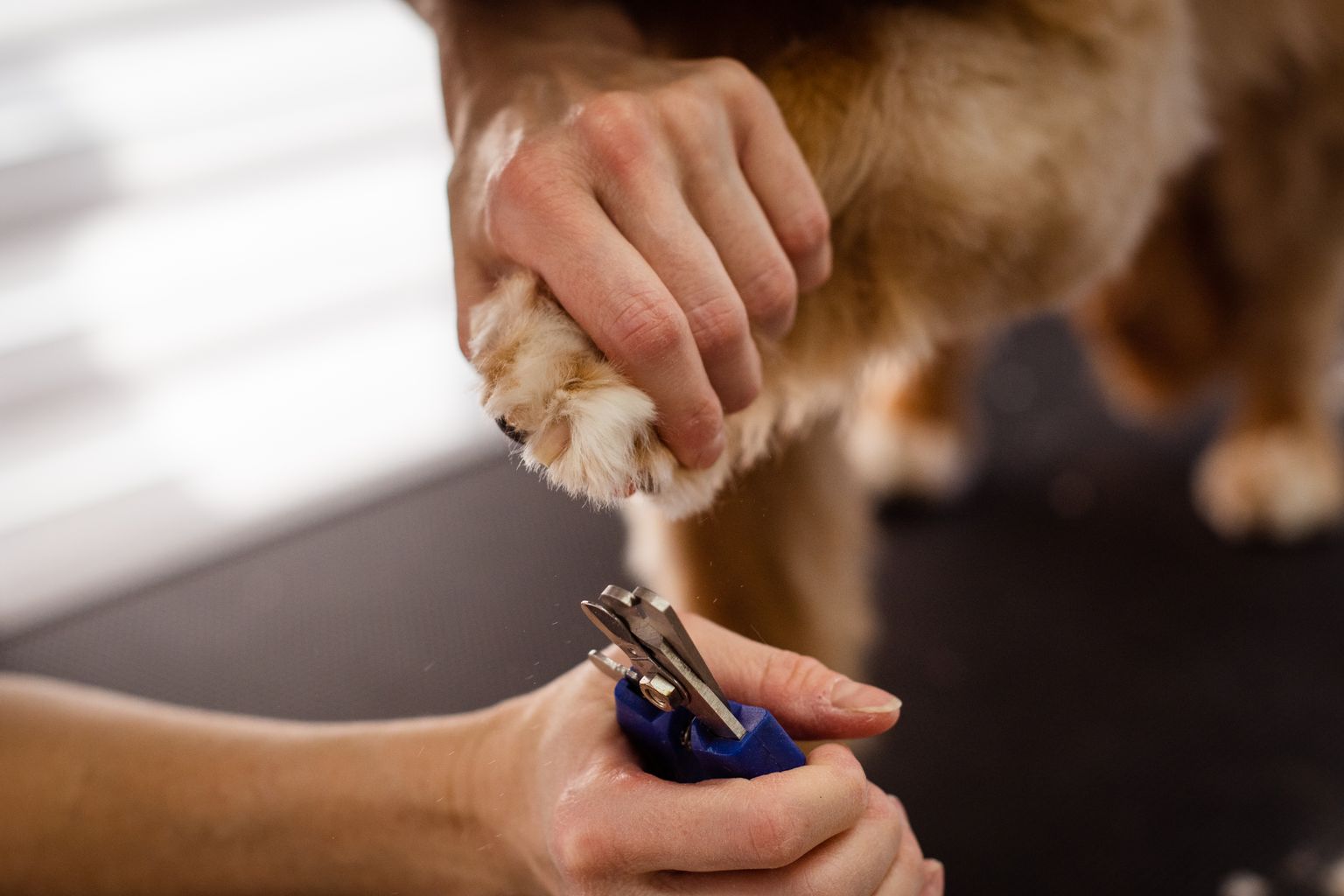
Pick up the paw and press your thumb on the pad and your finger on top of the toe, just behind the nail. This pushes the nail forward slightly and keeps the toe still. If your dog has long fur between their toes, push it back so you can see the whole nail.
3. Find the quick before you cut
On light nails, look for the pink line. On dark nails, assume the quick is longer than you think and plan to take thin slices.
4. Cut small slices at about 45 degrees
Hold the clippers so the blade cuts from underneath at about a 45-degree angle, following the nail’s natural curve. Take off 1 to 2 millimeters at a time. After each cut, look at the end of the nail. White and dry means you can take a little more. A gray or pink dot in the middle means you’re done with that nail.
5. Don’t forget the dewclaws
Check the inside of the front legs (and the back legs on some breeds) for dewclaws. Because they’re attached by loose skin and never wear down, they tend to curl and can grow into the skin. Scissor-style clippers usually reach them more easily.
6. Smooth the edges
Freshly clipped nails can be sharp. A few light passes with a grinder or a nail file round them off. With a grinder, touch each nail for a second or two at a time so it doesn’t heat up, and keep long fur well away from the spinning head.
7. Reward and stop
Give a treat after every nail or two, not just at the end. If your dog’s patience runs out after one paw, finish the rest tomorrow. Splitting the job across a few days is completely fine.
How do you trim black dog nails?
Black nails make most owners nervous because the quick is hidden, but the method is the same. You just go slower. Take very thin slices, look at the cut face each time, and stop the moment you see the dark dot or chalky ring in the center. Some people find it helps to shine a phone torch behind the nail, though this only works on nails that are dark gray rather than truly black.
A grinder is often the better tool for black nails. It takes off a fraction of a millimeter at a time, so you see the change in color long before you reach the quick. If you’re still unsure, trim just the hooked tip that curves past the pad. That part almost never contains the quick.
How do you trim overgrown dog nails?
You can’t fix very long nails in one session. Because the quick grows along with the nail, cutting back to a “normal” length in one go would mean cutting into living tissue. Instead, take a small amount off every week or so. Each trim exposes the quick tip to air and it gradually recedes, so over a month or two you can bring the nails back to a healthy length. Some groomers grind a little off every few days for faster progress.
If the nails are curling around toward the pads, have split, or your dog is limping, book a vet appointment instead. Vets can trim back further under sedation if needed and treat any nails that have grown into the pad.
How do you trim puppy nails?
Puppy nails are tiny and sharp, and they grow quickly. Small cat or human-style clippers often work better than full-size dog clippers at this age. Trim just the sharp tips once a week, which is less about length and more about getting your puppy used to the routine while the stakes are low. Keep sessions short and give plenty of treats. A puppy who learns that nail trims mean snacks grows into an adult dog you can trim in five minutes.
What to do if you cut the quick
It happens to almost everyone at some point, including vets and groomers, so don’t panic. Your dog will probably yelp and the nail will bleed more than you’d expect. Here’s what to do:
- Stay calm and keep hold of the paw.
- Press a pinch of styptic powder into the end of the nail and hold it there for 30 seconds or so. Cornstarch or plain flour works if you don’t have styptic powder.
- Keep gentle pressure with a clean cloth if it’s still oozing.
- Keep your dog quiet for a few minutes so they don’t start the bleeding again by running around.
Bleeding usually stops within five minutes. If it’s still going after 10 to 15 minutes, call your vet. Afterward, give your dog a break and some treats, and try the next trim on a different day with smaller cuts. Since a nicked quick can make a dog wary of trims for a while, it’s worth going back a step or two in the training plan.
When should a groomer or vet do it instead?
Doing it yourself saves money and time, but it’s not right for every dog. Consider a groomer or vet if your dog:
- Bites, snaps or panics even after weeks of gradual training
- Has very overgrown or ingrown nails
- Has a cracked, split or infected nail
- Is too large or strong for you to hold safely
Many groomers offer quick walk-in nail trims for a small fee, and some vets will trim nails during regular checkups. If your dog finds the whole thing extremely stressful, ask your vet about calming options before the next appointment.
Conclusion
Once you know how to trim dog nails safely, it becomes one of the most useful grooming skills you have, and it gets easier every time. Use sharp clippers or a grinder, take small slices at about 45 degrees, watch the cut surface for the quick, and keep styptic powder within reach. Spend time getting your dog comfortable with paw handling before you rush the trimming, and split the job across days if you need to. Aim for a trim every three to four weeks, or whenever you hear clicking on the floor. If your dog’s nails are badly overgrown or the stress is too much for either of you, a groomer or vet can step in. For more practical advice on grooming gear and pet supplies, browse the latest guides at Pet Products Guide.
Frequently asked questions
How do you trim a dog’s nails that won’t let you?
Go back to basics with paw handling. Spend a week or two just touching and holding the paws with lots of treats before bringing out the clippers. Try a lick mat for distraction, a helper to hold and comfort your dog, or a grinder if the clipper click is what scares them. Trimming one or two nails a day is a perfectly good routine. If your dog still won’t tolerate it, let a groomer or vet take over.
Is it better to trim dog nails wet or dry?
Nails are softer right after a bath, so they’re easier to cut and less likely to split. That makes bath day a good time for a trim. Dry nails are better for grinding, because wet nail dust clogs the grinder.
What angle do you trim a dog’s nails?
Cut from underneath at about a 45-degree angle, following the natural curve of the nail. The cut surface should sit roughly parallel to the floor when your dog is standing.
How short should you trim dog nails?
Trim until the nail tips sit just clear of the ground when your dog stands, and stop about 2 millimeters before the quick. On dark nails, stop as soon as you see a dark dot or chalky ring in the center of the cut surface.
How do I shorten my dog’s nails quickly?
There isn’t a safe quick fix for long nails, because the quick grows with them. Small trims every week, or grinding a little every few days, make the quick recede over several weeks. Regular walks on pavement help file the nails down between trims.
Can I use human nail clippers on my dog?
Only on very young puppies with tiny, soft nails. Adult dog nails are thicker and rounder than ours, and human clippers tend to crush or split them. A proper pair of dog clippers is inexpensive and much safer.
Do dogs feel pain when you cut their nails?
Not when you cut the hard outer part of the nail, which has no nerves. It only hurts if you cut into the quick, or if dull clippers squeeze the nail. Most “pain” reactions during trims are really fear of having the paws held.
