

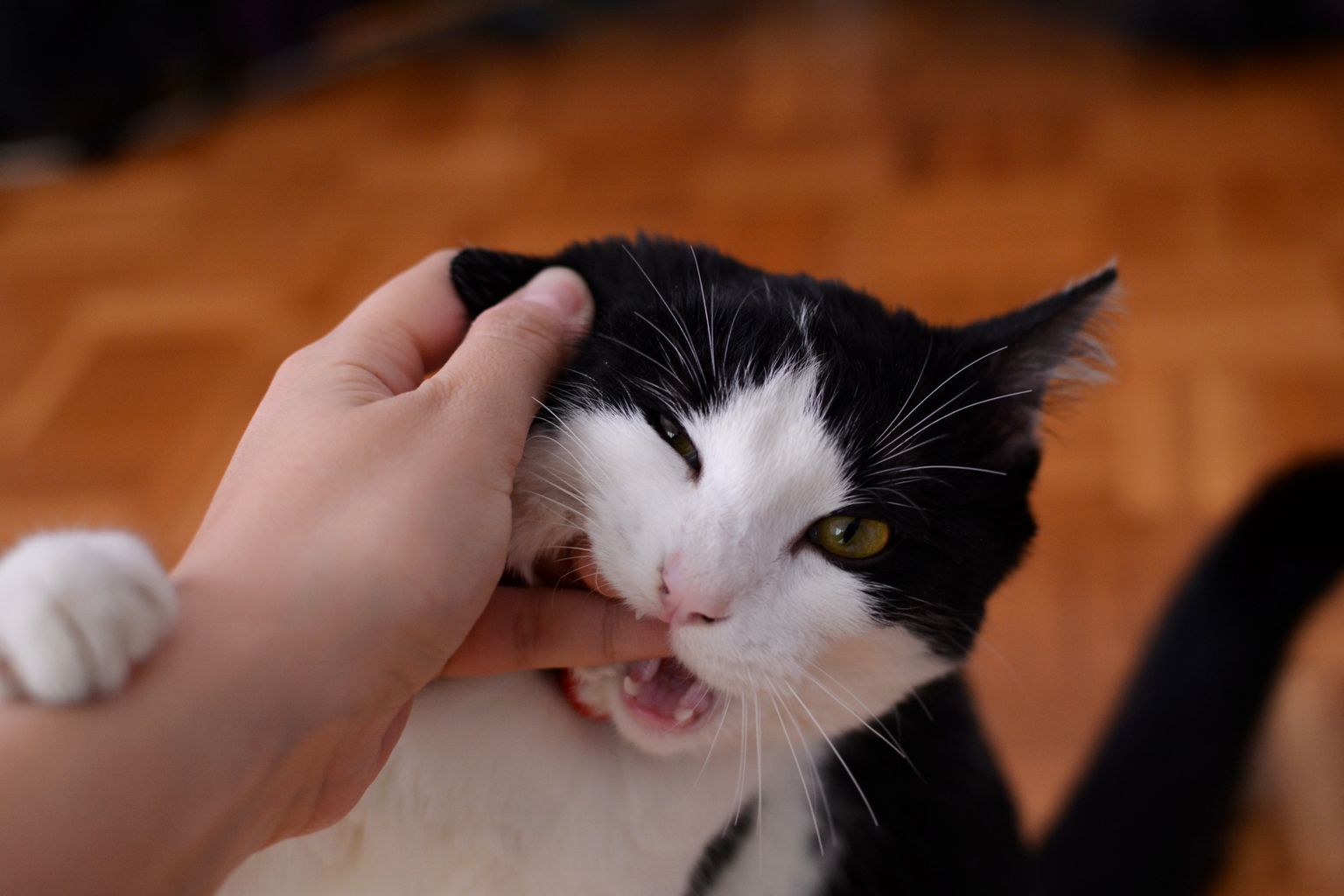
Quick answer: Kittens bite mainly because they are playing and practicing hunting, teething, or getting overstimulated during petting. Some never learned gentle play from their littermates. Most kittens grow out of it with steady training: never play with bare hands, redirect bites to toys, and stop the game when biting starts.
This blog is general information and is not veterinary advice. Talk to your vet about your kitten’s health and behavior. Read our full disclaimer.
Your new kitten crouches behind the couch, wiggles, and launches at your ankle the moment you walk past. That’s play-hunting, and for a young cat it’s completely normal. So when new pet parents ask, “Why does my kitten bite me?”, the answer is usually that the kitten is practicing the stalk, pounce, and bite every cat is born to do, and your moving hands and feet make the perfect target.
It doesn’t mean you brought home a mean kitten. The ASPCA calls play aggression the most common kind of aggressive behavior cats direct at their owners, and rough play is common in cats under two years old. The good news is that it can be redirected.
This guide covers the seven main reasons kittens bite, the warning signs that come before a bite, what to do in the moment, and how long the biting phase usually lasts.
Overview Table
| Reason | What it looks like | Quick fix |
|---|---|---|
| Play and hunting practice | Stalking, pouncing, ambushing hands and feet | Wand toys and daily play |
| Teething | Chewing everything, gnawing on fingers | Safe chew toys, no fingers |
| No bite inhibition | Hard bites that don’t soften | Consistent redirection and play |
| Overstimulation | A sudden bite during petting | Short petting sessions, watch for signs |
| Love bites | Soft nibbles, often with licking | Gently redirect before it escalates |
| Fear or stress | Biting when cornered or picked up | Give space and hiding spots |
| Pain or feeling unwell | Biting when touched in one spot | Call your vet |
The ages and behavior advice in this guide come from the ASPCA, the Cornell Feline Health Center, the Merck Veterinary Manual, and AAHA, checked in November 2026, and the owner experiences come from active cat forums.
Why Does My Kitten Bite Me? 7 Common Reasons
Most kitten biting is play and learning, not aggression. The seven reasons below cover nearly every bite, and each one has a simple fix.
1. Play and Hunting Practice
What it looks like: Your kitten hides, stalks, then pounces on your ankle, hand, or toes, often with a little kick of the back legs.
Why it happens: Kittens are born hunters, and play is how they practice. To a kitten, a moving hand or foot looks just like prey. The ASPCA notes that play aggression gets worse when cats spend long hours alone without a chance to play, or when people encourage them to chase hands and feet.
What to do: Give that hunting drive a better target, like a wand toy, several times a day. On r/CatAdvice, owners with ankle-biting kittens often hear the same diagnosis: the kitten is treating you like a littermate and rough-housing.
2. Teething
What it looks like: Your kitten chews on everything, including cords, shoes, and your fingers, and may seem extra mouthy.
Why it happens: Kittens start losing baby teeth as their adult teeth push through, usually starting around 3 to 4 months of age, with the full adult set in by about 6 to 7 months. Sore gums make chewing feel good.
What to do: Offer safe, kitten-sized chew toys and keep your fingers out of reach.
3. They Never Learned Bite Inhibition
What it looks like: Bites stay hard even during gentle play, and your kitten doesn’t seem to know when to ease off.
Why it happens: Mother cats and littermates teach kittens how hard is too hard. When a kitten bites a sibling too roughly, the play stops. Kittens that were orphaned, bottle-raised, or separated early miss some of those lessons. A University of Helsinki study of more than 5,700 cats found that kittens weaned before 8 weeks had a higher risk of aggression, based on owner surveys.
What to do: You become the teacher. Be consistent: every hard bite ends the game, and every gentle play session continues.
4. Overstimulation During Petting
What it looks like: Your kitten is purring on your lap, then suddenly turns and bites your hand. This is why many kittens bite when you pet them, even while purring.
Why it happens: Vets call this petting-induced aggression. Some cats can only enjoy so much stroking before it becomes irritating, and a bite is their way of saying “that’s enough.”
What to do: Keep petting sessions short and stop at the first warning sign. The body language section below shows exactly what to watch for.
5. Love Bites and Grooming Nibbles
What it looks like: Soft nibbles that don’t break the skin, often mixed with licking. Some kittens knead, then gently bite. Owners describe this on Quora as a soft nip that clearly isn’t meant to hurt.
Why it happens: Cats groom each other with small nibbles, and some kittens do the same to their people. It can also be a mild signal that they’ve had enough attention.
What to do: Enjoy the cuddle, but gently redirect to a toy before it escalates. Gentle bites can get harder as your kitten grows.
6. Fear or Stress
What it looks like: Biting when picked up, cornered, handled by a stranger, or startled by loud noises, often with flattened ears and hissing.
Why it happens: A new home, loud children, or other pets can overwhelm a young kitten. Biting is a defense when they feel trapped.
What to do: Let your kitten approach you, give them hiding spots, and avoid picking them up when they’re tense.
7. Pain or Feeling Unwell
What it looks like: Biting when you touch one particular spot, or a normally gentle kitten suddenly snapping.
Why it happens: The Cornell Feline Health Center notes that cats in pain may act aggressively, and that conditions such as dental disease and osteoarthritis can cause aggression.
What to do: Book a vet visit. The vet section below lists the signs to watch for.
How to Read Your Kitten’s Body Language Before a Bite
Most bites come after warning signs you can learn to spot. Cornell and the ASPCA both describe the same early signals:
| Sign | What it means | What to do |
|---|---|---|
| Dilated pupils | Your kitten is getting aroused or excited | Slow down or stop |
| Tail lashing or twitching | Patience is running out | Stop petting now |
| Ears flattened or turned back | Your kitten is uncomfortable | Give space |
| A quick head turn toward your hand | A bite is about to happen | Move your hand away calmly |
| Restlessness or changing position | Your kitten wants to leave | Let them go |
Learn your own kitten’s signals. Some give plenty of warning, while others go from purring to biting in seconds.
What to Do the Moment Your Kitten Bites You
Stop moving, then redirect or walk away. These steps work for most play bites:
- Freeze: Keep your hand still. Pulling away quickly makes your hand act like escaping prey, which can keep the game going.
- Interrupt calmly: A brief sound can break the moment. Cornell lists noise deterrents, such as “a person hissing,” used within seconds, with the goal of distracting rather than scaring your kitten. Avoid screaming, which can startle or excite.
- Offer a toy: Give your kitten something better to bite, like a kicker toy, as soon as they let go.
- Walk away: If the biting continues, calmly leave the room for a few minutes. Cornell notes that walking away and ignoring the cat can teach them that rough play ends playtime.
How Do I Get a Kitten to Stop Biting Me?
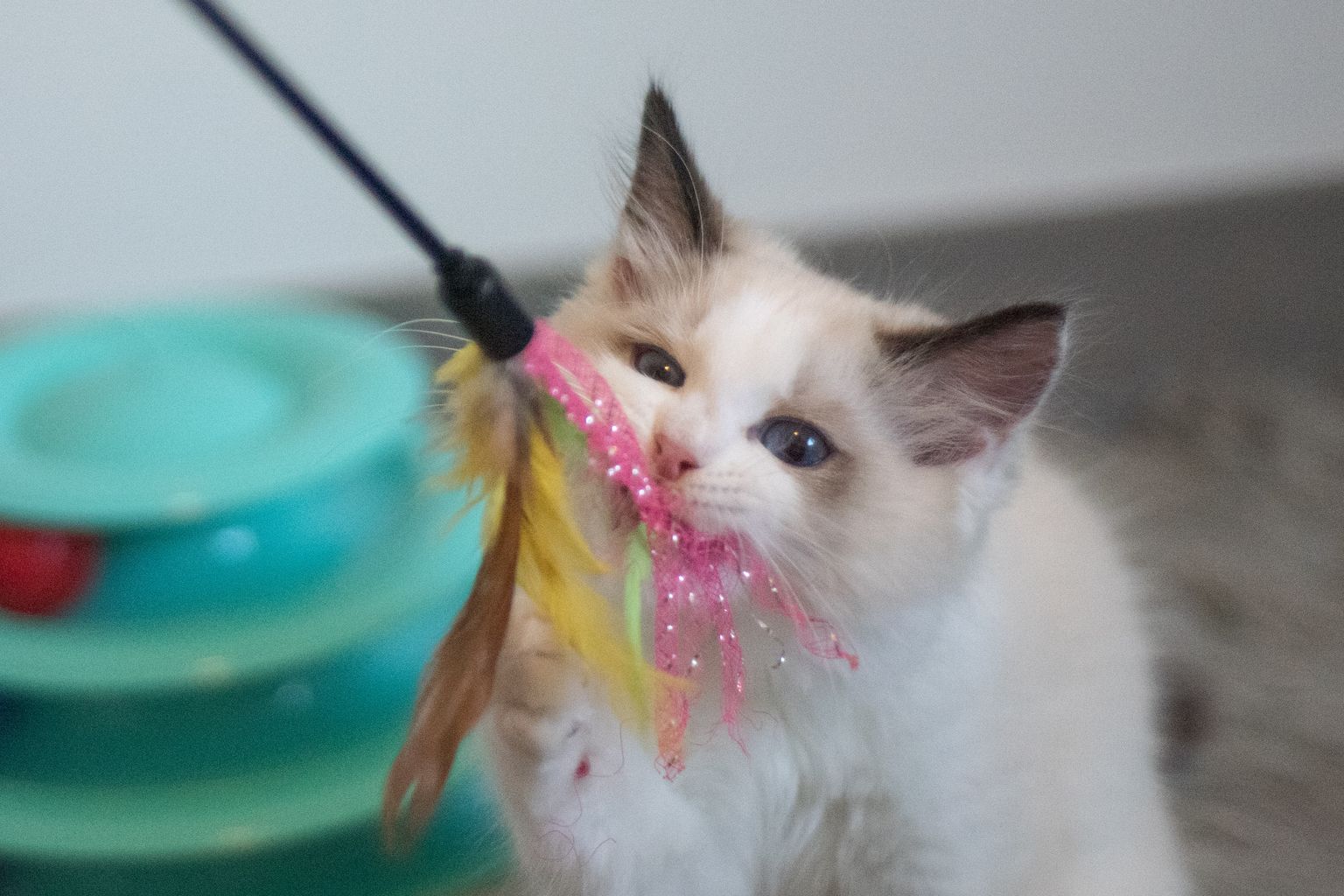
Give your kitten better things to bite, plenty of play, and the same rules from everyone in the house. These six habits do most of the work.
Never Use Your Hands or Feet as Toys
Wiggling fingers under a blanket is fun with a tiny kitten but teaches them that skin is a toy. Once that habit forms, it carries into adulthood, when bites hurt far more. Owners on r/CatAdvice often say the same thing: stop it early, because bites get harder as kittens grow. It’s one of the first habits to set when you take care of a kitten.
Give Them Something Better to Bite
Wand or teaser toys keep your hands at a safe distance, and kicker toys give your kitten something to grab and bunny-kick. Cornell advises keeping toys away from your hands, since a kitten attacking a toy may catch your fingers too.
Schedule Daily Play Sessions
AAHA suggests an average of two or three 10- to 15-minute play sessions a day for cats, and notes that kittens usually need several short sessions. Let your kitten stalk, chase, and finally catch the toy, then offer a meal. One r/CatAdvice owner’s fix for a biting kitten included feeding at regular mealtimes after play.
Add Enrichment Around the Home
Cat trees, window perches, hiding spots, and puzzle feeders give your kitten things to climb, watch, and solve when you’re busy. A bored kitten looks for action, and your ankles are often the nearest option. For ideas, see how to set up a pet-friendly home room by room.
Reward Gentle Play
When your kitten plays softly or chooses a toy over your hand, reward it with a treat or calm praise. Kittens repeat what works for them.
Keep Everyone Consistent
If one person lets the kitten wrestle with their hands and another doesn’t, your kitten gets mixed signals. Make sure everyone in the house, including kids and visitors, follows the same rules.
How to Discipline a Kitten When They Bite (Without Punishment)
Don’t punish your kitten; end the fun instead. Hitting, nose flicks, water sprays, yelling, and rough handling all teach fear, and fear makes biting worse.
Cornell is clear on this point: “Any type of physical punishment can increase a cat’s fear or anxiety and worsen aggression.” The ASPCA also says painful punishment doesn’t work for changing cat behavior. The most effective “discipline” is simple: the game stops the moment teeth touch skin, and starts again with a toy.
Do Kittens Grow Out of Biting? The Biting Phase by Age
Most kittens bite less as they mature, especially with consistent training. Untrained biting habits can carry into adulthood, though, so it pays to start early.
| Age | What’s normal | What to do |
|---|---|---|
| Birth to 8 weeks | Play-fighting with littermates begins around 4 weeks and peaks at 6 to 9 weeks | Keep kittens with their mother and litter so they learn bite limits |
| 2 to 4 months | Social play winds down by 12 to 14 weeks; baby teeth start falling out, and adult teeth arrive around 3 to 4 months | Offer chew toys and redirect every bite |
| 4 to 7 months | Object play peaks around 18 weeks (about 4 months); teething finishes by 6 to 7 months | Daily structured play with wand toys |
| 7 months to 2 years | Rough play is still common in cats under two years old | Keep the rules consistent |
| Adult | Play biting should be rare | Ask your vet about new or worsening biting |
Play ages from the Merck Veterinary Manual; teething ages from VCA Animal Hospitals; the under-two figure from the ASPCA.
Why Does My Kitten Bite Me at Night?
Kittens are naturally most active around dawn and dusk, and feet moving under the blankets look a lot like prey. A Colorado State University veterinary expert describes cats as crepuscular, meaning they’re most active in low light.
A few changes usually help:
- Play before bed: A 10- to 15-minute session tires your kitten out.
- Feed after play: A meal after the “hunt” helps your kitten settle.
- Leave a toy by the bed: It gives your kitten something to pounce on that isn’t you.
- Don’t reward night biting: Stay still and quiet, and save play for the morning.
If night biting comes with loud calling, it may be attention-seeking, much like why your cat is meowing so much at odd hours.
Why Does My Kitten Bite Me All of a Sudden? When to Call Your Vet
Sudden or new biting can mean pain, illness, or stress, especially if your kitten used to be gentle. Call your vet if you notice:
- Biting when you touch one specific area
- Hiding more than usual, or hissing at familiar people
- Changes in eating, drinking, or litter box habits
- Limping, drooling, or pawing at the mouth
- Biting that gets worse even with consistent training
Routine checkups and keeping up with pet vaccinations also give your vet a chance to spot problems early.
If a bite breaks your skin: Wash it with soap and water and contact a doctor. Cat bites can get infected easily because the bacteria Pasteurella lives in the mouths of 70% to 90% of cats, according to the Cleveland Clinic, which advises seeing a doctor within eight hours.
The Bottom Line
Kitten biting is normal, and with patience it’s very fixable. Keep your hands out of play, give your kitten wand and kicker toys to bite instead, and end the game calmly whenever teeth touch skin. Watch for warning signs during petting, and call your vet if biting starts suddenly. For more help with your cat’s behavior, browse our cat tips or the latest pet care guides.
Frequently Asked Questions
Why does my kitten bite me gently?
Gentle bites are usually play or grooming, and many kittens nibble their people the way they’d groom a littermate. It’s still worth redirecting to a toy, because gentle bites can get harder as your kitten grows and gets stronger.
What age are kittens most aggressive?
Play peaks early. The Merck Veterinary Manual says play-fighting peaks at 6 to 9 weeks and object play around 18 weeks. Rough play stays common until about two years old, but it’s play, not true aggression.
Why does my kitten bite me then lick me?
Cats often mix licks and nibbles when they groom each other, so your kitten may be grooming you. A bite after licking can also mean “that’s enough.” Watch their tail and ears to tell the difference.
Why does my 4 month old kitten bite me?
At 4 months, your kitten is teething, with adult teeth coming in around 3 to 4 months, and object play is reaching its peak. Expect extra biting at this age, and give them more play and safe toys to chew.
Why does my kitten keep biting me aggressively?
Look for fear, pain or a hands-as-toys habit. Hissing, growling, flattened ears, and biting when cornered are signs of real distress, not play. If the aggressive biting is sudden or getting worse, talk to your vet.
Do cats feel guilty after biting?
There’s no research showing that cats feel guilt. A “guilty” look is more likely a reaction to your tone or body language. That’s why a calmly ending play works better than scolding.
Where not to touch a cat?
A University of Lincoln study found the base of the tail drew the most negative reactions, while cats responded best to strokes on the cheeks, chin, and the area between the eyes and ears. Every cat is different, so follow your kitten’s lead.
Is it okay to yell at my kitten for biting?
No. Yelling can scare your kitten and may make biting worse, because fear is one of the reasons cats bite. Freeze, redirect to a toy, or calmly walk away instead.