
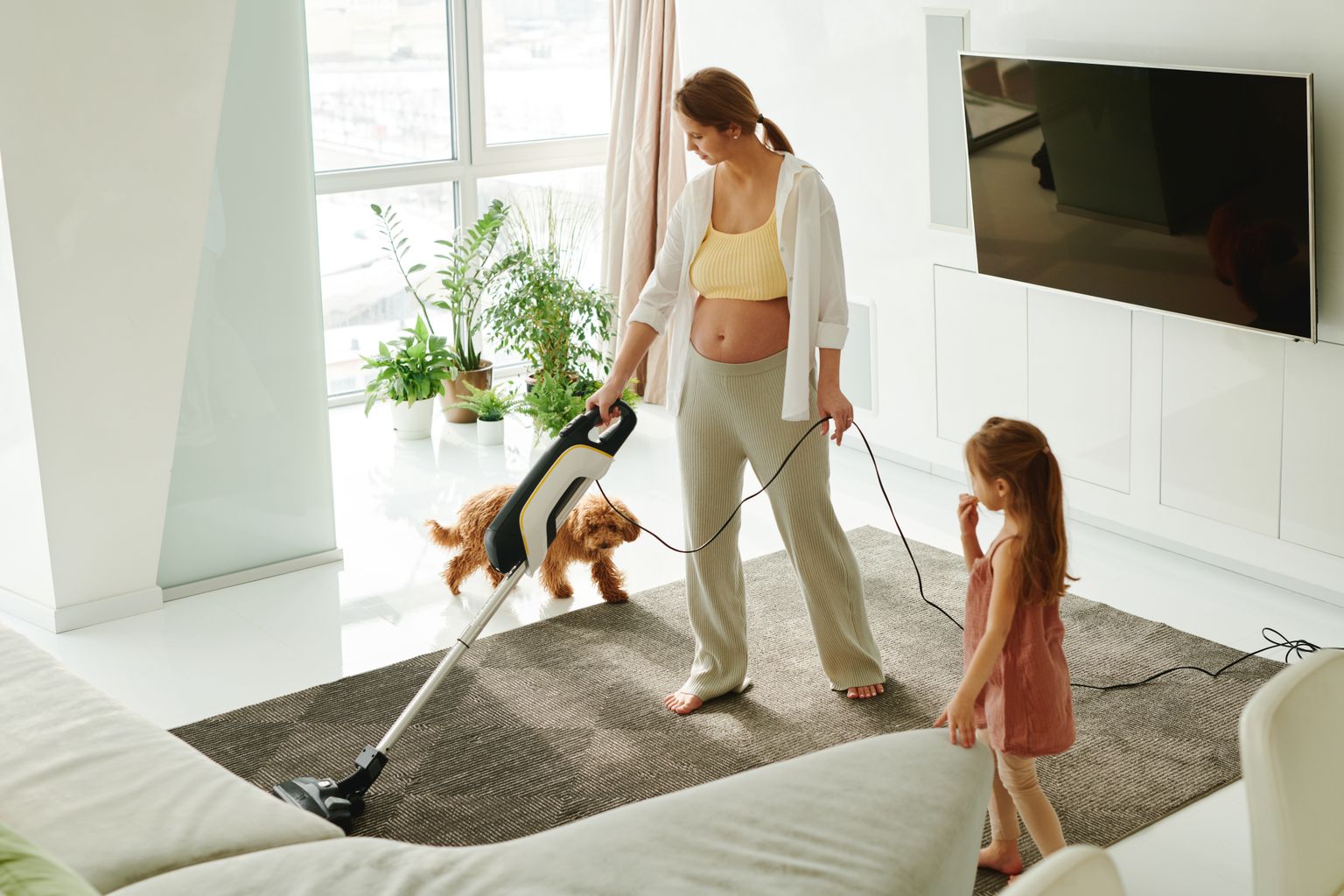
You stop smelling your own house within a few days, which is why the dog smell almost always gets pointed out by a visitor first. Owners on r/dogs call it nose blindness. Knowing how to remove pet odor starts with knowing where it is, and it is rarely in the air. The smell comes from something that keeps releasing it: urine soaked into the carpet pad, a dog bed nobody has washed in a month, a litter box a day overdue, or a couch cushion that has absorbed years of skin oil. Candles cover that for about an hour. Find each source, break it down with the right cleaner, and the smell goes with it. Each surface below needs a different first move, starting with the carpet.
Quick answer: Removing pet odor takes spot treatment plus routine cleaning and fresh air. Soak urine, vomit and feces with an enzyme or oxygen-based cleaner and give it time to work. Wash pet bedding weekly, vacuum with a HEPA filter, and run a HEPA and carbon air purifier. Sprays only cover the smell.
This blog is general information and is not veterinary advice. Talk to your vet about your pet’s health and behavior. Read our full disclaimer.
Safety points here come from Humane World for Animals, the ASPCA and the US EPA, and the cleaner comparison from Consumer Reports’ May 2026 spray test, all verified in November 2026.
Which Pet Odor Fix Do You Need?
Name the smell first, because the right opening move changes with both the source and the surface.
| Odor problem | Best first step | Section |
|---|---|---|
| Fresh urine | Blot, then enzyme cleaner | Carpet and rugs |
| Set-in urine | Black light, enzyme cleaner, repeat | Find the source, then carpet and rugs |
| Litter box smell | Scoop daily, wash the box | Litter box odor |
| Wet dog smell | Bath, dry fully, wash the bed | Bad smell off my dog |
| Couch or bedding | Vacuum, baking soda, wash covers | Couch, and clothes and bedding |
| Hardwood | Wipe fast, wood-safe cleaner | Wood floors |
| Whole-room smell | Air out, HEPA and carbon purifier | Best pet odor neutralizer |
One note on preferences: fragrance-free products are kinder to pets with sensitive skin or breathing trouble, and a label that says safe for dogs does not always mean safe for cats. If you have both, check the label covers both.
Why Does Your House Smell Like Pets?
Pet smell builds from a handful of sources that keep topping it back up, and most of them are soft and absorbent.
- Urine: The most stubborn source by a distance. Urine contains uric acid salts that do not dissolve in water, so they release odor again every time the humidity rises.
- Skin oils and dander: Dogs carry natural oils and yeast on their skin that rub off onto sofas, rugs and walls at nose height, slowly building a doggy film.
- Bedding and soft toys: These absorb drool, oil and dirt every single night.
- The litter box: Ammonia from cat urine builds fast, especially if the box is scooped less than once a day.
- A damp coat: Moisture wakes up the bacteria and yeast living on a dog’s coat, and that is the sharp wet-dog smell.
How Do You Find the Source of Pet Odor?
Use your nose first and a cheap UV black light second, because dried urine is invisible in daylight. Sniff at your pet’s height: the bed, the corners of rooms, baseboards and the underside of the couch.
Then turn the lights off after dark and scan the floor, the walls and the furniture. Dried urine usually glows a dull yellow or greenish color. Humane World for Animals recommends the same method, and adds the step most people skip: outline every spot with chalk as you find it, because you will not be able to see it again once the lights come back on.
Expect to find more than you smelled, because old messes dry invisibly.
How to Remove Pet Odor From Carpet and Rugs
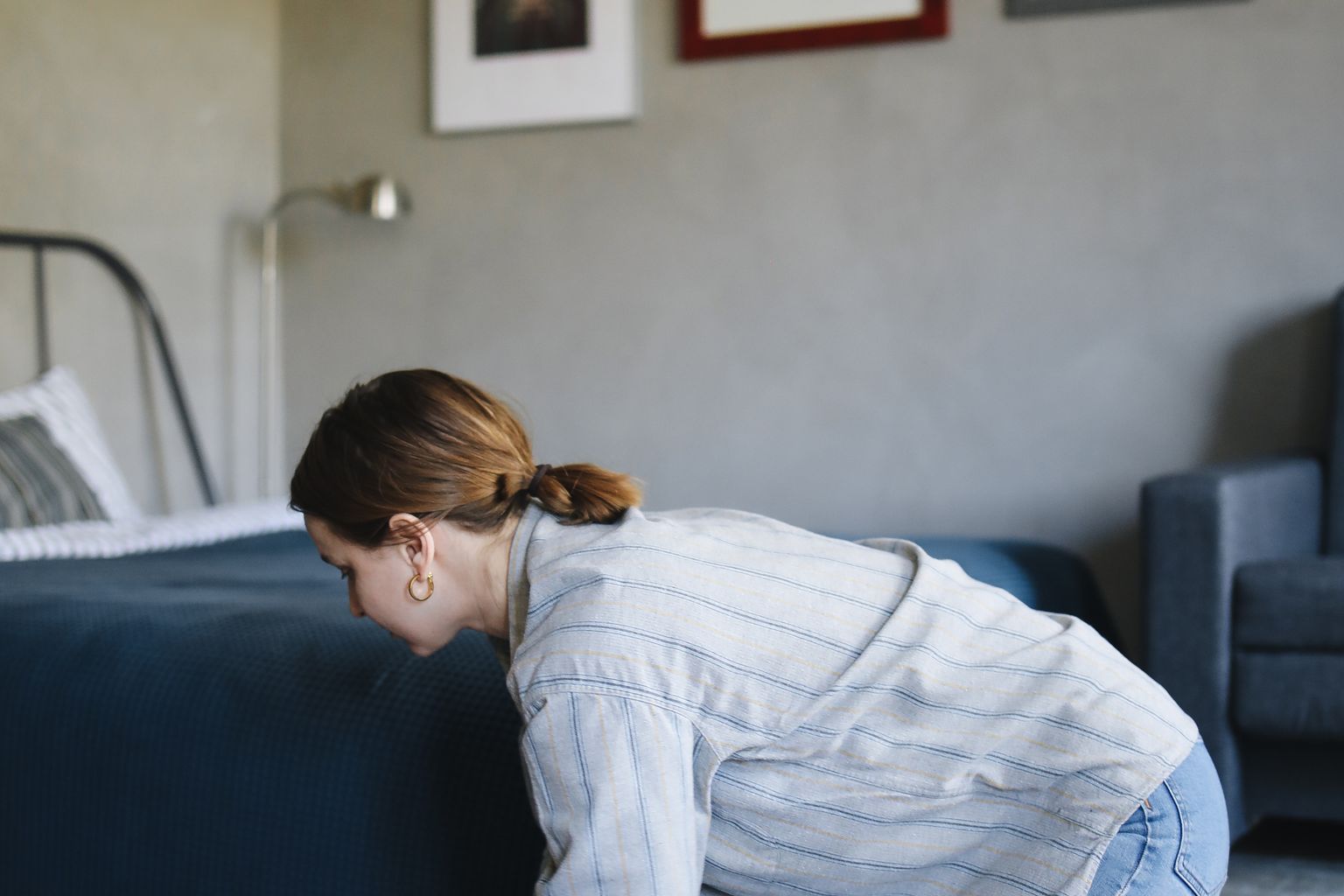
Carpet needs a cleaner that breaks the uric acid down, enough of it to reach as deep as the urine went, and the patience to let it finish. This is where pet odor removal usually goes wrong: ordinary household cleaners lift the stain and leave the uric acid behind, so the carpet looks clean and starts smelling again the next humid day.
Fresh Accidents
- Blot, do not rub. Press a thick layer of paper towels onto the spot and stand on it for about a minute. Humane World for Animals suggests newspaper over the towels, and more underneath the carpet if you can reach. Repeat until the area is barely damp. Rubbing drives urine deeper into the pad.
- Rinse with cool water, then blot again. Cool, not warm.
- Soak it with an enzyme or oxygen-based cleaner. Use enough to reach the pad. A light mist over the fibers does almost nothing.
- Leave it alone. Follow the label for timing, and let it air dry if the label allows.
- Cover the spot with a towel or an upturned laundry basket so your pet does not revisit it while it dries.
One trick from owners in r/CleaningTips: set a fan blowing across the treated patch until it is completely dry, because a spot that dries slowly from the bottom up tends to smell again.
Old or Set-In Stains
Old spots need more product and more rounds. Saturate the area, cover it with plastic wrap so it dries slowly and the cleaner keeps working, and leave it overnight. Two or three rounds is normal for a spot that has been there for months.
Two things make a set-in stain permanently worse. Humane World for Animals warns against steam cleaners on urine, because the heat bonds the protein into man-made fibers and locks in both the stain and the smell. The same guidance says to skip ammonia, since urine already contains ammonia and the smell can draw your pet back to mark the same place.
If the pad underneath is soaked through, cleaning may not win. Humane World says you may need to replace sections of carpet and padding, and a soaked pad is often faster to replace than to rescue. If one spot keeps reappearing, learning how to crate train a dog for overnight stops you repeating the whole job next month.
How to Remove Pet Odor From Wood Floors
On wood, speed is what saves the floor. Urine left on a sealed board works through the finish and into the wood underneath, and past that point you are refinishing rather than cleaning.
Wipe it up the moment you find it, then clean with a product made for sealed wood. Test any cleaner on a hidden patch first, behind a door or under a rug, because finishes react differently.
If a board has already darkened, Humane World for Animals explains what happened: the varnish or paint has reacted to the acid in the urine. Their advice is to remove and replace that layer of varnish or paint, and to check the replacement product is safe for pets before it goes on. Washable enamel paint and some washable wallpaper may respond to an enzyme cleaner instead.
If urine has gone through the boards and into the subfloor, that is a job for a flooring professional rather than a spray bottle.
How to Remove Pet Odor From a Couch
Vacuum before anything wet touches the couch. Owners in r/CleaningTips are firm about this: go slowly along the seams, under the cushions and down the sides, because loose hair and dander turn into a paste the moment you add moisture.
Then check the care tag, because upholstery carries a cleaning code that decides what you can safely put on it. W takes water-based cleaners only, S takes dry cleaning solvent and no water, WS or SW takes either as a spot clean, and X takes vacuuming or light brushing and nothing else, according to Ashley’s furniture care guide. Guessing is how a cushion ends up with a water ring on it.
For general smell on a W or WS fabric, sprinkle baking soda, leave it at least 30 minutes, then vacuum thoroughly. For urine, blot and treat it exactly as you would carpet, and keep steam well away.
Washable covers can go in the machine, with two warnings from r/CleaningTips. Check the tag for shrinkage first, and wash all of the covers rather than one, because dark fabric can come out patchy next to the cushions you left alone. Skip the dryer.
How Do You Get Pet Smell Out of Clothes and Bedding?
Wash pet bedding weekly, or every two weeks at the outside, and add baking soda to the load. Humane World for Animals is specific about the quantity: a one pound box of baking soda alongside your usual detergent, washed as normal, then air dried where you can. If you can still smell it afterwards, run the load again with an enzyme laundry additive.
Your own clothes follow the same route. Run a lint roller over them before they go in, because trapped hair carries the smell through the wash and straight back out again.
Two things get forgotten. Collars and leashes get as smelly as the bed and almost never reach the machine, so soak them in warm soapy water every few weeks. And the machine itself can start to smell after a run of pet laundry, so put an empty hot cycle through it now and then to clear the drum. Soft toys wash with the bedding.
What Is the Best Pet Odor Neutralizer?
The best pet odor neutralizer depends on what made the smell, so choose by formula type and not by brand. There is no single best deodorizer for pet odor, because the four types below do genuinely different jobs.
| Type | How it works | Best for |
|---|---|---|
| Enzyme cleaner | Enzymes and bacteria break down the proteins and uric acid in urine, vomit and feces | Accidents, marking, litter box spills |
| Oxidizing cleaner (hydrogen peroxide or oxygen-based) | Chemically breaks apart odor molecules | Hard surfaces, laundry, light-colored fabric (test first, it can bleach) |
| Odor absorber | Traps odor molecules (baking soda, activated charcoal) | General room and fabric freshness |
| Masking spray or plug-in | Covers the smell with fragrance | Nothing long term |
The standard advice used to be that an enzyme cleaner is the only thing that removes urine odor at the source. That was tested in May 2026, when researchers painted real dog urine and onion juice onto fabric and ran nine sprays at both. In both tests the top performers were a mix: hydrogen peroxide oxidizers and a plant-based surfactant that contained no enzymes at all, alongside bio-enzymatic blends of bacteria and enzymes. Jennifer Ford, who covers beauty and personal care for Consumer Reports, writes: “One formula type isn’t better or worse than the other; they have their pros and cons.” Enzyme cleaners need longer to work but are mostly biodegradable and non-toxic. Oxidizers are faster on stains, and because they carry peroxide and bleach they are not safe on every surface.
Activated charcoal bags near the litter box or the dog bed absorb odor for weeks at a time. Keep them somewhere your pet cannot chew one open.
Popular Types of Pet Odor Eliminators
- Bio-enzymatic sprays: Best for urine, feces and anything else organic. They need the longest dwell time, so follow the label instead of rushing them off.
- Oxygen-activated removers: Fastest on urine and fabric stains. Test on a hidden patch first, because peroxide and bleach can lift color.
- Odor absorbers: Baking soda and activated charcoal pull smell out of carpet, fabric and still air. They do nothing to urine residue.
- Room gels and continuous fresheners: These cover smell rather than removing it. Skip any that contains tea tree or another essential oil.
Do Pet Odor Eliminator Machines Work?
A true HEPA filter with an activated carbon layer does work: HEPA catches the dander, carbon absorbs the smell. Put one where your pet spends most of the day.
Ozone generators are a different proposition. The US EPA states, in guidance updated in February 2026, that “NO agency of the federal government has approved these devices for use in occupied spaces.” At levels within public health standards the EPA says ozone does little to indoor air pollutants, and on odor specifically it notes that ozone’s own smell can mask a smell without removing it. Where ozone is used to decontaminate an empty building, the EPA’s wording is that no person or pet should be exposed.
What Are Natural Ways to Remove Pet Odors?
Natural remedies handle general freshness well, though none of them break down old urine.
Baking soda. Sprinkle it over carpet, rugs and fabric sofas, leave it at least 30 minutes and overnight for a bad patch, then vacuum thoroughly. It absorbs odor rather than covering it.
White vinegar. Equal parts vinegar and water makes a decent deodorizing spray for hard surfaces and litter trays. Keep it off accident spots, though. Vinegar is acidic and does not break down uric acid, and Humane World for Animals advises against both vinegar and ammonia on urine, because the strong smell can encourage a pet to mark there again.
Fresh air and sunlight. Open windows on opposite sides of the house for 15 minutes a day, and dry washable beds outside when the weather allows.
A warning on essential oils. DIY recipes love tea tree, eucalyptus and citrus oils. The ASPCA warns that concentrated tea tree oil can cause problems with as few as seven or eight drops, and ASPCApro notes that cats, rabbits, guinea pigs and hamsters carry extra risk because they groom the oil straight off their own coat. Ask your vet before scenting a room, and never put oils on a pet or its bedding.
How Do You Get Rid of Dog Smell in the House Fast?
When someone is coming over in an hour, work in this order.
- Open two windows on opposite walls. Fifteen minutes of cross-draft clears more than any spray.
- Strip the dog bed and wash it hot, with baking soda in the load. Throws and blankets go in with it.
- Vacuum everything the dog touches. Carpet, rugs and upholstery, using a filter that keeps dander in rather than blowing it around the room.
- Sprinkle baking soda on the carpet, leave it while you do everything else, then vacuum it up.
- Wipe the hard surfaces at dog height, wash the bowls, and towel the dog down if it has been out in the rain.
None of this touches urine. If there is a spot, it still needs a proper soak and a full dry, and the quick version will only move the smell around. Owners in r/Pets make the same point in every thread: adding fragrance on top of a dirty room never works.
How Do I Get a Really Bad Smell Off My Dog?
Bathe with a shampoo made for dogs, rinse until the water runs completely clear, and dry the coat all the way down to the skin. A half-dried dog on the sofa is how the sofa starts to smell. Rinsing is the step people cut short, and leftover shampoo attracts dirt.
Frequency is its own question, since bathing too often strips the coat and can make odor worse. How often should you bathe your dog? It depends mostly on coat type.
If the smell is back within days, the bath was never the problem. A yeasty smell usually traces to the ears, and learning how to clean dog ears at home takes only a few minutes. Bad breath points at teeth, a fishy smell at the anal glands, and a greasy, sour coat at a skin condition. Any of those is a vet appointment rather than another bottle of shampoo.
How Do You Control Litter Box Odor?
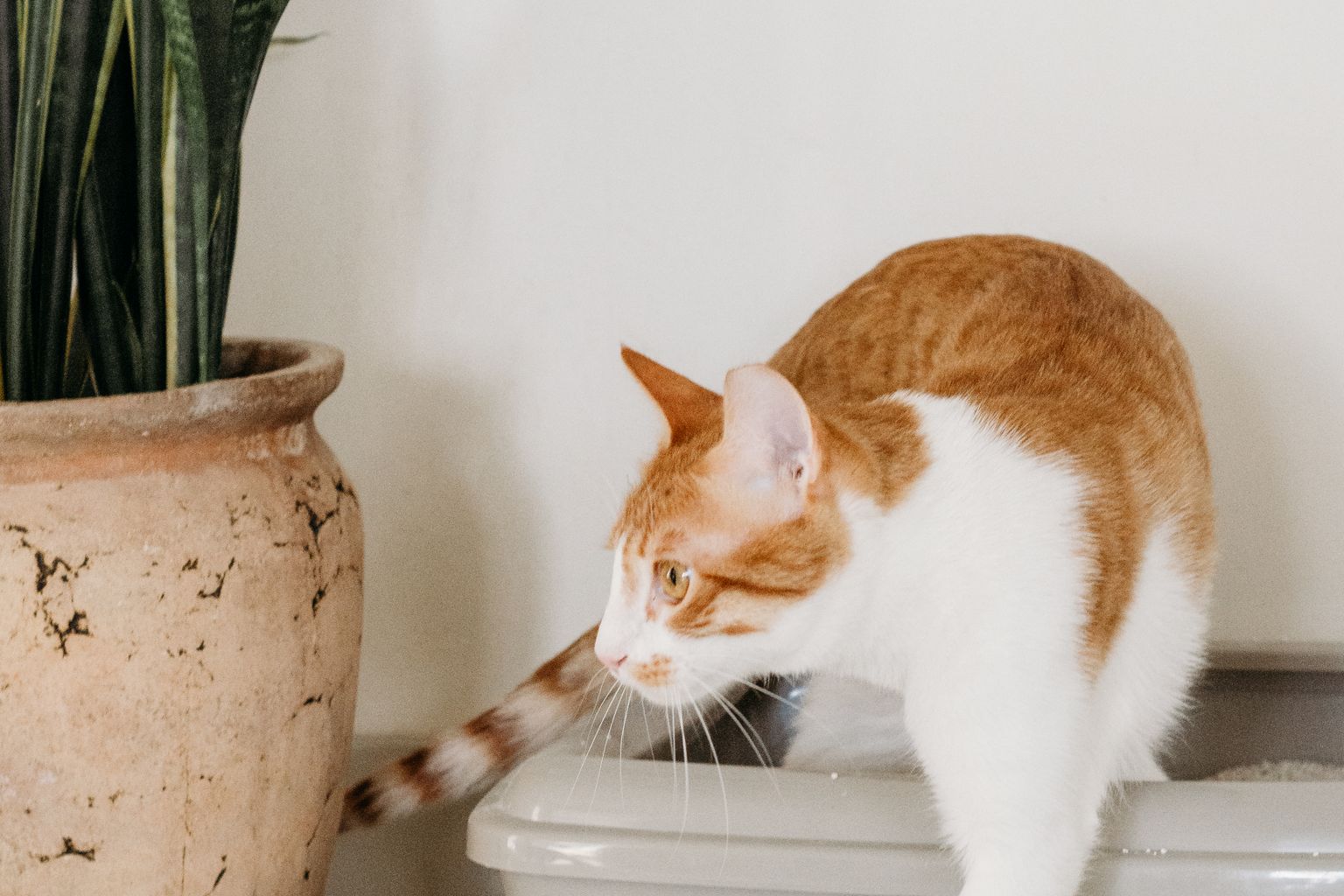
Scoop at least once a day, and twice with more than one cat, and the box stops being the strongest smell in the house.
Wash the box itself with mild unscented soap and water every week or two, and change the litter completely on the same schedule, in line with the usual advice on how often to change cat litter. The 2021 AAHA/AAFP feline guidelines give the rule of thumb as one litter box per cat plus one spare.
Litter choice does a lot of the work here. Clumping, unscented litter usually controls odor better than heavily perfumed types, which plenty of cats simply refuse to use. The best cat litter for odor control depends on whether you want clay, crystal or a plant-based litter.
Replace a plastic box once it is deeply scratched, because the grooves trap bacteria that scrubbing will not reach.
How Do You Keep Your House From Smelling Like Pets Long Term?
Turn the cleanup into small habits and odor never gets the chance to build.
| How often | What to do |
|---|---|
| Daily | Scoop litter, wipe up accidents right away, wash bowls, open windows briefly |
| 2 to 3 times a week | Vacuum carpets and furniture, brush your pet |
| Weekly | Wash pet bedding and throws, mop hard floors, baking soda on rugs |
| Monthly | Wash curtains or cushion covers, clean collars and leashes, check the HVAC filter |
| Every few months | Deep clean carpets, but only once urine spots are fully treated |
A purifier with a true HEPA filter and a carbon layer earns its place where your pet sleeps, and ENERGY STAR’s advice on your HVAC filter is to check it monthly and change it at least every three months, sooner with several pets. Owners in r/Landlord running forced-air systems go a step further and have the ductwork cleaned.
In a rental or an apartment, air flow does the heavy lifting, because pulling up carpet is not your call. Knowing how to create a pet-friendly home around washable surfaces keeps the problem small enough to manage. Brushing two or three times a week removes the dead hair and dander that carry smell into furniture, and the same habits behind how to prevent pet hair from taking over cut odor at the same time.
When Is Pet Odor a Sign of a Health Problem?
If the house is clean and your pet still smells strong, look at the pet. A coat that turns greasy and sour, a smell that returns within a day of a bath, or a sudden change in how strong the urine smells can all point to a skin, dental, ear or urinary problem. A change in how often or where your pet urinates is reason to call too, since house-soiling often begins as a medical issue rather than a behavioral one. Book the vet before you buy another cleaner.
Conclusion
Treat the source and the air sorts itself out. Find every spot with your nose and a black light, soak it with the right cleaner, and give it the time the label asks for. Then keep bedding, litter and grooming on a weekly rhythm. Litter boxes, pet hair and the rest of the pet home and cleaning routine run on exactly the same principle, as does every other pet care guide we publish.
Frequently Asked Questions
What Is the Fastest Way to Get Rid of Dog Smell in the House?
Open windows on opposite walls for 15 minutes, wash the dog bed hot with baking soda, vacuum carpet and upholstery, and leave baking soda on the rugs while you work. That clears general dog smell in about an hour. Urine still needs an enzyme or oxygen cleaner and a full dry.
Does Vinegar Get Rid of Pet Urine Smell?
Vinegar reduces light odor on hard surfaces, but it does not break down the uric acid that makes urine smell keep coming back. Humane World for Animals advises against vinegar and ammonia on urine spots, because the strong smell can encourage a pet to mark the same place again.
Will Pet Urine Smell Ever Go Away on Its Own?
Rarely. Uric acid salts do not dissolve in water, so they stay in the fibers and release odor again every time the humidity rises. The smell goes when something breaks the residue down or the material is replaced, and not before.
Are Plug-In Air Fresheners Safe for Pets?
Many contain fragrance or essential oils that can irritate a pet’s airways, and the ASPCA advises avoiding diffusers around pets with breathing problems and keeping them out of any house with birds. They also cover smell rather than removing it. Ask your vet before scenting a room.
What Gets Rid of the Smell of Pets?
Removing the source does. That means an enzyme or oxygen-based cleaner on urine, vomit and feces, weekly washing of bedding and soft toys, vacuuming with a HEPA filter, and a HEPA and carbon purifier for whatever is left in the air.
How Do I Get Rid of Dog Smell in a Rental House or Apartment?
Use the same steps, leaning harder on air flow and a purifier because replacing flooring is not your decision. If the smell came with the place, tell your landlord in writing early. Renters on r/Landlord report that deep urine in the padding or subfloor usually needs the carpet replaced.
Does Baking Soda Remove Pet Odor?
Baking soda absorbs odor from carpet, fabric and still air, which is why it works on general pet smell and in the wash. It does not break down urine residue, so a urine spot needs an enzyme or oxygen cleaner first and baking soda afterwards.

1 comment
[…] that spot until it’s fully broken down. An enzyme cleaner works best, and the same steps for how to remove pet odor work on carpets and […]