

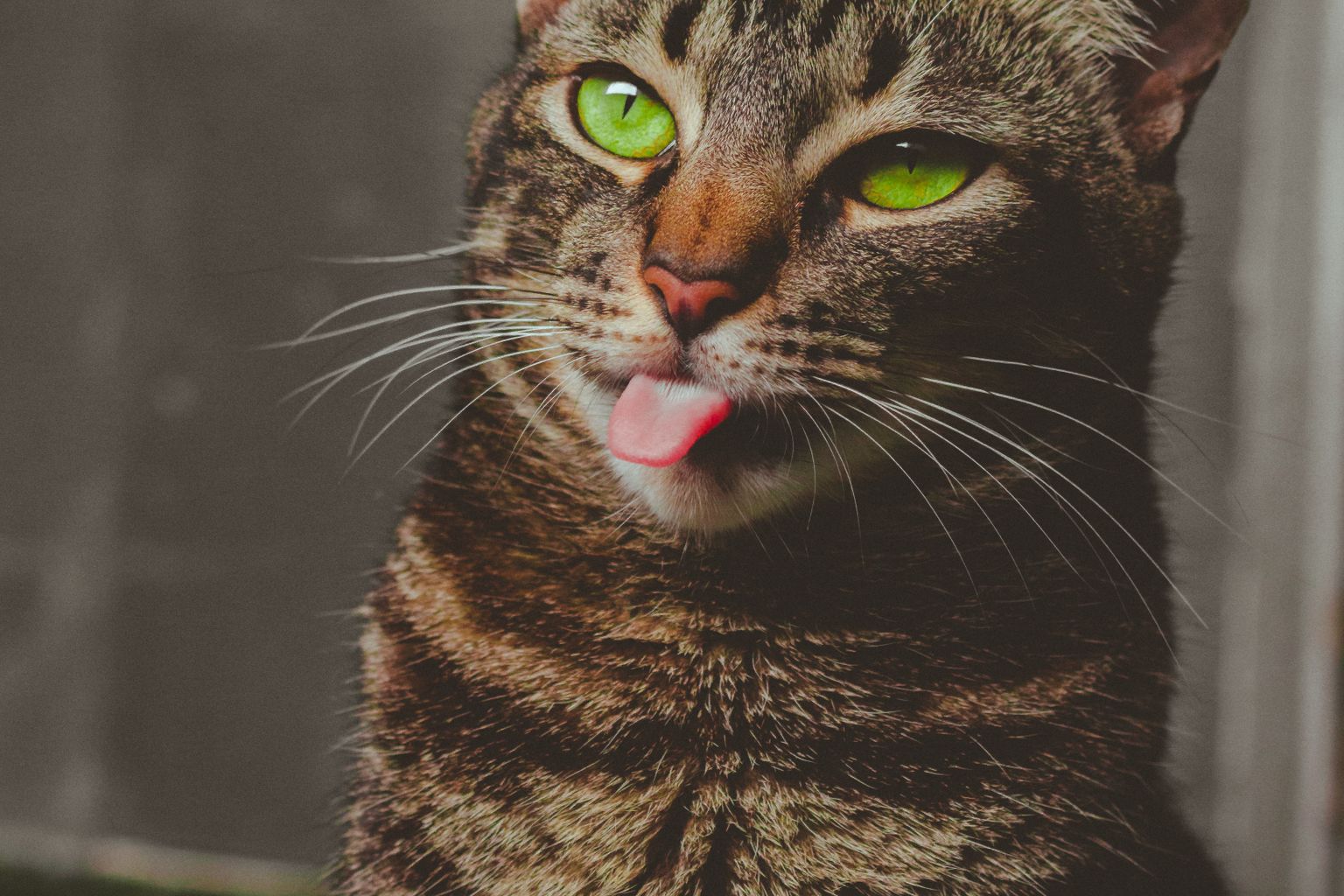
Has your cat always left a damp patch behind, or is this new? That one question decides almost everything about what the drool means. If you’re asking why is my cat drooling, the short version is that a few drops from a purring, kneading, half-asleep cat can be normal, though it’s less common than most owners assume. Drool that arrives out of the blue, or that soaks her chest, usually has something behind it: a sore mouth, nausea, something caught in there, or a toxin. Here are twelve causes and the clues that tell them apart.
Quick answer: Cats can drool a little when they’re relaxed, purring or kneading, after a bitter pill, or when they’re frightened or carsick. Drooling that’s new for your cat, heavier than usual or non-stop more often points to dental pain, a mouth injury, nausea or a toxin. A vet should see any of those.
This blog is general information and is not veterinary advice. Talk to your vet about your cat’s health and behavior. Read our full disclaimer.
| Go to an Emergency Vet Now If |
|---|
| Your cat is struggling to breathe, has collapsed, or is having a seizure |
| The face or muzzle is swelling |
| She’s hot, panting and limp |
| There’s any chance she licked, chewed or ate something toxic |
| Suspected poisoning: Call Pet Poison Helpline on (855) 764-7661, open 24/7, with a $99 per-incident fee that includes every follow-up call. Or call ASPCA Animal Poison Control on (888) 426-4435, available 24 hours a day, 365 days a year; a consultation fee may apply. Both numbers were confirmed in November 2026. Call on your way to the vet, not instead of going. |
Do Cats Drool? Is It Normal?
Some cats do drool a little when they’re content, but it’s rarer than you’d think. PetMD’s guide to the symptom, written by veterinarian Jamie Lovejoy, DVM, and updated in January 2026, puts it plainly: “While uncommon, a small amount of drooling is a normal behavior in some happy and relaxed cats.”
A cat who has always left a wet patch on your sleeve probably always will. In the big r/cats threads about happy droolers, owners describe cats who drool everywhere the moment they get “in the zone,” and have since kittenhood.
What isn’t normal is a change. A cat who never drooled and now does has changed something, and that change is the part to look into. Kittens are the exception, since everything is new at once; how to take care of a kitten covers what else to expect.
Why Is My Cat Drooling? 4 Harmless Reasons
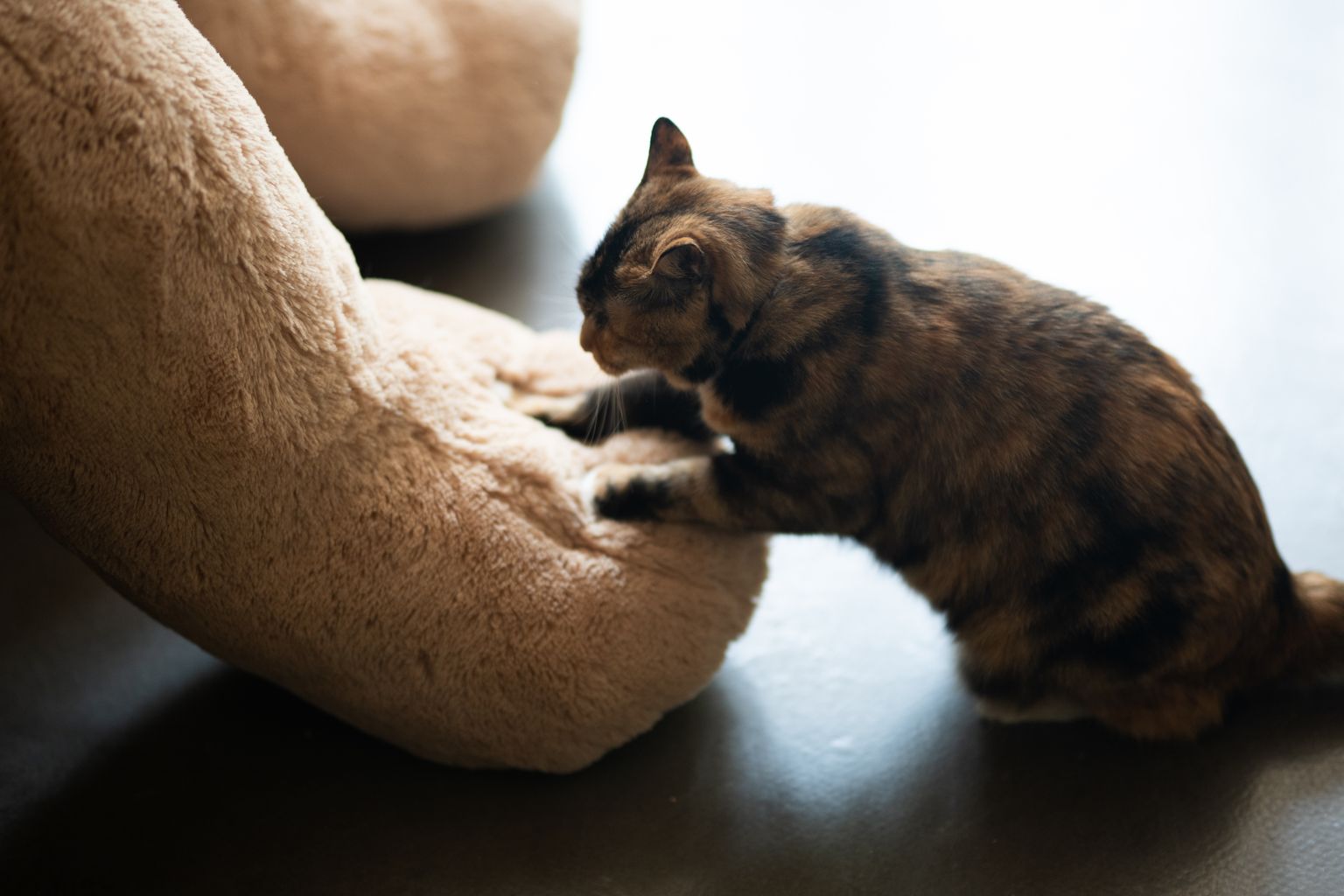
Four everyday causes account for most of the drool that turns out to be nothing. Each is short-lived, tied to something you can point at, and gone once the moment passes.
1. Happiness and Relaxation
- What it looks like: A few drops or a damp chin while she’s purring, kneading your leg or fast asleep on your chest.
- Why it happens: PetMD attributes it to endorphins released during purring and kneading, and links the behavior back to nursing.
- When to worry: When it’s new. A lifelong happy drooler is one thing; a cat doing it for the first time this month needs a mouth check, which is exactly what owners told each other in the r/OneOrangeBraincell thread about a heavily salivating ginger cat.
2. Food Anticipation or a Bitter Taste
- What it looks like: A short burst of drool when you open a pouch, or foamy saliva right after a tablet or liquid medicine.
- Why it happens: The smell of food can start saliva flowing before the bowl lands. PetMD notes drooling is common with liquid medicines and bitter pills, and owners in r/cats say the same about unflavored wormers.
- When to worry: If the foaming doesn’t settle within a few minutes, if she paws at her mouth, or if she won’t eat. Call the clinic that dispensed it.
3. Fear and Stress
- What it looks like: Drool in the carrier, at the clinic or during fireworks, usually with flattened ears, loud vocalizing and attempts to escape.
- Why it happens: PetMD describes drooling as part of the endorphin response to stress, and calls car rides and vet visits extremely common triggers.
- When to worry: When it carries on long after she’s home. A new cat is the tricky case, because stress drool and toxin drool look identical in the first hour. Owners in r/CATHELP posting about newly adopted cats were told exactly that: watch closely rather than assume.
4. Motion Sickness
- What it looks like: Drool that starts a few minutes into a car journey, often with crying, restlessness or vomiting.
- Why it happens: This is nausea rather than fear, and PetMD lists motion sickness among the nausea triggers for drooling.
- When to worry: If she’s still drooling an hour after the car stops, or won’t eat that evening. Talk to your vet before the next trip, because things that help exist and none of them are human medicines.
Medical Reasons Your Cat Is Drooling
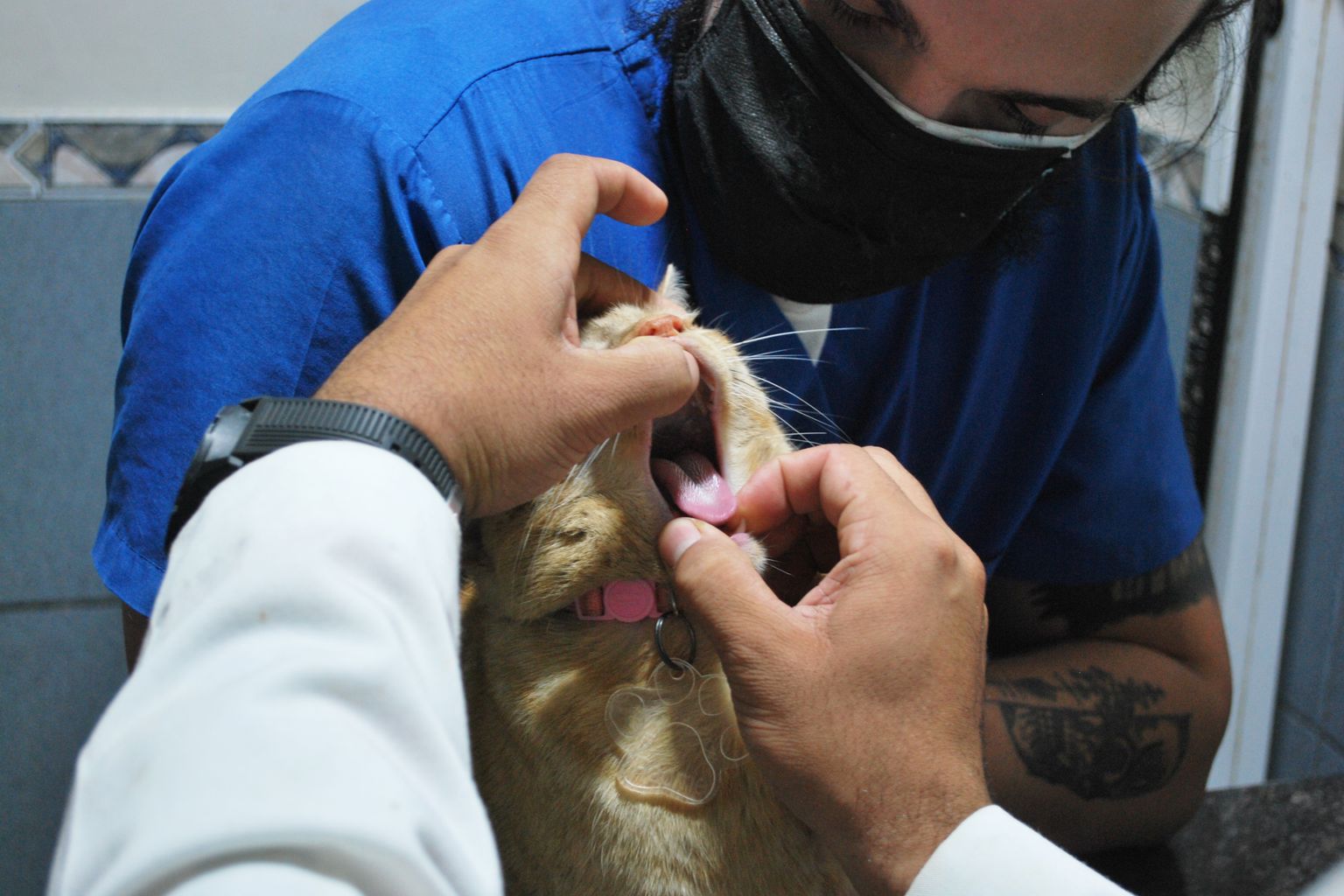
The eight causes below need a vet, and they’re roughly in order of how often they turn up. Dental disease leads by a long way. For each you’ll find the other signs, how fast to act, and what the vet is likely to do. No medicines or doses here: those are your vet’s call.
5. Dental Disease and Gum Inflammation
- Other signs: Bad breath, blood-tinged saliva, pawing at the face, chewing on one side, dropping food, or going off dry food.
- How urgent: Book an appointment this week. It’s painful, and cats hide it well.
- What the vet may do: A mouth exam, then usually X-rays and a dental under anesthesia. Cornell’s Feline Health Center names drooling as a sign of gingivitis, periodontitis and tooth resorption, and its page on gingivostomatitis lists “excessive salivation” and “blood in the saliva” together. Stomatitis is the cause owners in r/cats say gets missed most. If she also rubs one ear, mention that too, since face-pawing is a sign of ear mites as well, and how to get rid of ear mites in cats is a different job from treating a sore mouth.
6. A Mouth Injury or Something Stuck in the Mouth
- Other signs: Sudden drooling with gagging, pawing at the mouth, reluctance to close the jaw, or blood in the saliva. Cats get into string, tinsel, bones and chewed cords.
- How urgent: Same day, and straight away if you can see thread.
- What the vet may do: Sedate her to look properly, then remove it surgically if needed.
| Never pull on string, thread or tinsel coming out of your cat’s mouth or rear end. |
|---|
| The Merck Veterinary Manual explains why: string often anchors at the base of the tongue, and gut movement then drags the intestine along it in “a sawing or cutting motion,” which can perforate the bowel. Merck’s clinical guidance for vets goes further: a linear foreign body in the mouth “must never be pulled for retrieval,” because if it is embedded, pulling can perforate tissue. Cut nothing, pull nothing, drive to the vet. |
7. Nausea and Stomach Upset
- Other signs: Lip-licking, repeated swallowing, hiding, a smaller appetite, or vomiting shortly after.
- How urgent: Same-day call if she’s vomiting or refusing food; otherwise watch for 24 hours.
- What the vet may do: A physical exam, then bloodwork or imaging if it repeats. Owners in r/CATHELP describe drooling right before a vomit as the pattern they learn to recognize. If hairballs are the regular trigger, raise the best cat food for indoor cats question at the appointment.
8. Upper Respiratory Infection
- Other signs: Sneezing, runny or crusted eyes, nasal discharge, a smaller appetite, lethargy.
- How urgent: Within a day or two, sooner for a kitten or senior cat.
- What the vet may do: Examine the mouth and eyes for ulcers. Cornell’s page on feline respiratory infections lists “ulcers in the mouth, lethargy, and anorexia” among the signs, and notes calicivirus can ulcerate the mouth. Ulcers make swallowing hurt, and a cat who won’t swallow drools.
9. Toxins and Poisonous Plants
- Other signs: Sudden, heavy, foamy drool, often with pawing at the mouth, vomiting, wobbliness or a burned-looking tongue.
- How urgent: Emergency. Call a poison line and your vet now, and try nothing at home.
- What the vet may do: Decontamination and supportive care, guided by what she swallowed. Lilies, antifreeze, bleach and ice melt are the usual suspects. In one r/Pets thread, two cats in the same house started drooling at once after walking through a cleaning product and licking their paws. Check the ASPCA’s toxic and non-toxic plants list before buying a houseplant.
10. Heatstroke
- Other signs: Heavy panting, bright red gums, wobbling, vomiting, and a cat who feels hot to the touch. A parked car or a sunny bathroom is often behind it.
- How urgent: Emergency, immediately.
- What the vet may do: Cool her and treat for shock. PetMD lists heatstroke among the causes of drooling and calls it a case for an emergency vet right away. On your way, move her somewhere cool and offer water, but never pack her in ice.
11. Kidney or Liver Disease
- Other signs: Drinking and urinating more, weight loss, bad breath, mouth ulcers, a dull coat. These are older-cat problems and they arrive slowly.
- How urgent: An appointment in the next few days.
- What the vet may do: Blood and urine tests. The Merck Veterinary Manual lists metabolic disorders “such as hepatic encephalopathy or kidney failure” among the causes of excessive salivation, and VCA notes advanced kidney disease can bring bad breath with mouth ulcers. Keep this one low on your list unless the drinking has changed too.
12. Oral Tumors and Rabies (Rare)
- Other signs: For a growth, a lump you can see, an uneven-looking face, or a tooth that has loosened on its own. Merck notes that with oral tumors, “bad breath, reluctance to eat, and excessive drooling are common.”
- How urgent: Prompt, but don’t panic. Both are uncommon.
- What the vet may do: Biopsy a growth, since early mouth cancer can look like ordinary dental disease. Rabies is rarer still: PetMD describes it as very rare in vaccinated adult cats, usually with clear nervous-system changes. Current pet vaccinations make it very unlikely, which is one reason indoor cats are vaccinated too.
Why Is My Cat Drooling All of a Sudden?
Drool that appears out of nowhere is more likely a new problem than a slow-burning one. The short list is something stuck in the mouth, a toxin, nausea, overheating or fear, and the first two are why sudden drooling gets taken seriously.
Work backwards through the last hour. Did she have a tablet? Chew a plant or a cord? Walk through something you’d just sprayed? Each points at a different cause, and your vet will ask the same questions.
If any emergency sign at the top of this page is there too, stop reading and go. Otherwise, call your vet rather than waiting it out. Sudden changes in cats rarely mean nothing, which is also the answer if you’re asking why is my cat meowing so much all of a sudden.
Why Is My Cat Drooling but Acting Normal?
A cat can drool from a genuinely painful mouth and still eat, play and greet you at the door, because hiding weakness is what cats do. Early dental disease is the usual explanation, and it rarely announces itself any other way.
PetMD’s FAQ takes this position directly: because cats mask illness so well, a change in how much your cat drools is reason enough to book a vet visit even when she seems fine. It isn’t an emergency on its own, but it isn’t wait-and-see either.
Owners reach the same conclusion the hard way. In a recent r/CATHELP thread about a cat drooling heavily with normal energy, the replies converged on a tooth abscess.
Is Your Cat’s Drooling Normal or a Problem?
Five things separate harmless drool from the kind that needs an appointment: when it happens, how much there is, what the saliva looks like, how long it lasts, and what else is going on. One item in the right-hand column is reason to phone. Two or more, and book the visit.
| Clue | Usually Normal | See a Vet |
|---|---|---|
| When | During cuddles, purring, kneading or sleep; right after medicine; when a meal is coming | Out of nowhere, or on and off all day |
| Amount | A few drops or a damp chin | A wet chest or paws, puddles, soaked bedding |
| Saliva | Clear and thin | Thick, ropey, blood-tinged or foul-smelling |
| How long | Stops once she settles | Non-stop, or coming back day after day |
| Other signs | None; she’s eating and behaving as usual | Bad breath, pawing at the mouth, not eating, hiding, lethargy, vomiting |
Clear, watery drool is what owners describe as their cat “leaking water” from the mouth, and it still needs a look if it’s new. The real test for “how much is too much” isn’t a measurement: it’s whether this is more than normal for your cat.
What Should You Do If Your Cat Is Drooling?
- Check for emergency signs first. Run through the red flags at the top of this page. Breathing trouble, collapse, seizures, facial swelling or a suspected toxin means you leave now.
- Cool her down if she’s overheated. Move her to a shaded room, offer water, and call the vet. No ice.
- Call a poison line if a toxin is possible. Phone the vet or one of the numbers above. Don’t make her vomit, and don’t give milk or oil.
- Only look in her mouth if she’s calm. A gentle lift of the lip is enough. Don’t force her jaw open, and never pull on string.
- Write down what you’ve seen. When it started, roughly how much, and anything else that’s changed. A short video helps.
- Book the appointment. If the drool is new, heavy or still there tomorrow, that’s your answer.
When Should You Take Your Cat to the Vet for Drooling?
Any drooling that’s new, heavier than usual or non-stop deserves a vet’s opinion. The emergency signs are the same five at the top of this page. The list below is the other kind: the signs that earn a booking rather than a dash to the clinic.
Book a vet visit if you see:
- Drooling that’s new, or more than she normally produces
- Bad breath, bleeding, or pawing at her mouth
- Trouble eating, dropping food, or chewing on one side
- Hiding, vomiting, or any change in how she behaves
- Drool that’s still there the next day
How Can You Prevent Drooling Problems in Cats?
Most of what causes drooling is preventable, and dental care does the heavy lifting. Ask your vet about brushing at your next visit, and about how often your cat needs a professional dental, because the answer varies a lot between cats.
The rest is housekeeping. Put sewing kits, hair ties and ribbon in closed drawers, tidy charging cables away, and check any new plant against the ASPCA list first. Keep cleaning products off floors until they’re dry, and never leave her in a parked car. Cables, plants and cleaning products are the three to tackle first when you work out how to create a pet-friendly home.
The Bottom Line
A little drool from a blissed-out cat who’s always done it is usually just that. The drool that needs attention is the drool that’s new: heavier than usual, non-stop, thick or bloody, or arriving with bad breath, a smaller appetite or hiding. Dental pain is the most likely explanation, but a toxin or something caught in her mouth is why you don’t wait to find out.
You know your cat’s normal better than anyone. If this isn’t it, book the appointment. Cat Tips covers the other symptoms owners worry about most, alongside every other pet products guide we publish.
Frequently Asked Questions
Do Cats Drool If They Are Sick?
Yes. Drooling is a recognized sign of dental disease, nausea, mouth infections and poisoning, and it’s often the first thing an owner notices. PetMD is blunt about it: excessive, frequent or new drooling isn’t normal and often signals illness or pain. If it’s new or heavy, book a vet visit.
Why Is My Cat Dripping Clear Liquid From His Mouth?
Clear, watery liquid from a cat’s mouth is almost always saliva he isn’t swallowing. Nausea, a bitter taste and mouth pain are the usual reasons, and a tooth problem is the most common. In a bright, hungry cat it isn’t an emergency, but with vomiting or a refusal to eat it needs a same-day call.
Do Cats Drool When They Are Happy?
Some do, and it’s harmless in those cats. PetMD describes it as uncommon but normal in some happy, relaxed cats, and links it to the endorphins released while purring and kneading. The deciding question is whether it’s always been her habit. A cat who starts as an adult still needs her mouth checked.
Why Is My Cat Producing So Much Saliva?
Heavy saliva, which vets call hypersalivation or ptyalism, has two possible mechanisms: she’s making more than usual, or she can’t swallow what she makes. Merck lists mouth pain, toxins, nausea, foreign objects and metabolic disease among the causes. Book an appointment rather than monitoring this at home.
How Much Drool Is Too Much for a Cat?
There’s no set measurement, and the better test is what’s normal for your own cat. A few drops during a cuddle is fine if she’s always done it. A wet chest, puddles or soaked bedding is too much, and so is any amount that’s new or lasts all day.
Why Is My Cat Drooling and Lethargic?
That combination needs a vet promptly, not tomorrow. Drooling plus lethargy can point to poisoning, a painful mouth that’s stopped her eating, heatstroke or systemic illness, and severe lethargy with drooling is an emergency-room sign. Call an emergency clinic now.
Why Does My Cat Drool When I Pet Her?
Usually because she’s relaxed and enjoying it. Petting often brings on purring and kneading, and the endorphins behind both can increase saliva, which PetMD connects back to nursing as a kitten. If she’s otherwise well and has always done it, there’s nothing to fix. If it’s recent, have her mouth looked at.

3 comments
[…] so the sound is often the first clue, and a sore mouth often shows up the same way, which is why why is my cat drooling is a common question alongside […]
[…] and osteoarthritis can cause aggression. Dental pain also shows up as drool, and the guide to why is my cat drooling covers the other […]
[…] which is highly toxic to cats and can cause drooling, tremors and seizures. If you’re asking why is my cat drooling after a treatment, treat it as possible poisoning and call your vet straight away. Cats can even […]